+MN 57 Kukkuravatika:
The Ascetic Who Behaved Like a Dog
all
The Ascetic Who Behaved Like a Dog
+Opening
| (derived from B. Sujato 2018/12) | (選自B. Sujato 2018/12) | |
| Evaṃ me sutaṃ— | So I have heard. | 我曾這樣聽說。 |
| ekaṃ samayaṃ bhagavā koliyesu viharati haliddavasanaṃ nāma koliyānaṃ nigamo. | At one time the Buddha was staying in the land of the Koliyans, where they have a town named Haliddavasana. | 有一次,佛陀住在拘利耶人的土地上,那裡有一個名叫哈利達瓦薩納的城鎮。 |
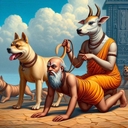
| Atha kho puṇṇo ca koliyaputto govatiko acelo ca seniyo kukkuravatiko yena bhagavā tenupasaṅkamiṃsu; upasaṅkamitvā puṇṇo koliyaputto govatiko bhagavantaṃ abhivādetvā ekamantaṃ nisīdi. Acelo pana seniyo kukkuravatiko bhagavatā saddhiṃ sammodi. Sammodanīyaṃ kathaṃ sāraṇīyaṃ vītisāretvā kukkurova palikujjitvā ekamantaṃ nisīdi. | Then Puṇṇa Koliyaputta, who had taken a vow to behave like a cow, and Seniya, a naked ascetic who had taken a vow to behave like a dog, went to see the Buddha. Puṇṇa bowed to the Buddha and sat down to one side, while Seniya exchanged greetings and polite conversation with him before sitting down to one side curled up like a dog. | 然後,發願行為像牛的普納·拘利耶子,以及發願行為像狗的裸體苦行僧塞尼亞,去見佛陀。普納向佛陀鞠躬,然後坐在一旁,而塞尼亞則與佛陀交換了問候和客套話,然後像狗一樣蜷縮著坐在一旁。 |
| Ekamantaṃ nisinno kho puṇṇo koliyaputto govatiko bhagavantaṃ etadavoca: | Puṇṇa said to the Buddha: | 普納對佛陀說: |
| “ayaṃ, bhante, acelo seniyo kukkuravatiko dukkarakārako chamānikkhittaṃ bhojanaṃ bhuñjati. | “Sir, this naked dog ascetic Seniya does a hard thing: he eats food placed on the ground. | “先生,這位裸體狗苦行僧塞尼亞做了一件艱難的事情:他吃地上放的食物。 |
| Tassa taṃ kukkuravataṃ dīgharattaṃ samattaṃ samādinnaṃ. | For a long time he has undertaken that observance to behave like a dog. | 他長期以來一直遵守這種像狗一樣的行為。 |
| Tassa kā gati, ko abhisamparāyo”ti? | Where will he be reborn in his next life?” | 他來世會投生到哪裡?” |
| “Alaṃ, puṇṇa, tiṭṭhatetaṃ; mā maṃ etaṃ pucchī”ti. | “Enough, Puṇṇa, let it be. Don’t ask me that.” | “夠了,普納,就這樣吧。別問我了。” |
| Dutiyampi kho puṇṇo koliyaputto govatiko … pe … | For a second time … | 第二次…… |
| tatiyampi kho puṇṇo koliyaputto govatiko bhagavantaṃ etadavoca: | and a third time, Puṇṇa said to the Buddha: | 第三次,普納對佛陀說: |
| “ayaṃ, bhante, acelo seniyo kukkuravatiko dukkarakārako chamānikkhittaṃ bhojanaṃ bhuñjati. | “Sir, this naked dog ascetic Seniya does a hard thing: he eats food placed on the ground. | “先生,這位裸體狗苦行僧塞尼亞做了一件艱難的事情:他吃地上放的食物。 |
| Tassa taṃ kukkuravataṃ dīgharattaṃ samattaṃ samādinnaṃ. | For a long time he has undertaken that observance to behave like a dog. | 他長期以來一直遵守這種像狗一樣的行為。 |
| Tassa kā gati, ko abhisamparāyo”ti? | Where will he be reborn in his next life?” | 他來世會投生到哪裡?” |
+57.1 – (dog ascetic practice leads to animal realm or hell)
| “Addhā kho te ahaṃ, puṇṇa, na labhāmi. | “Clearly, Puṇṇa, I’m not getting through to you when I say: | “顯然,普納,當我說: |
| Alaṃ, puṇṇa, tiṭṭhatetaṃ; mā maṃ etaṃ pucchīti; | ‘Enough, Puṇṇa, let it be. Don’t ask me that.’ | ‘夠了,普納,就這樣吧。別問我了。’的時候,我並沒有讓你明白。 |
| api ca tyāhaṃ byākarissāmi. | Nevertheless, I will answer you. | 儘管如此,我還是要回答你。 |
| Idha, puṇṇa, ekacco kukkuravataṃ bhāveti paripuṇṇaṃ abbokiṇṇaṃ, kukkurasīlaṃ bhāveti paripuṇṇaṃ abbokiṇṇaṃ, kukkuracittaṃ bhāveti paripuṇṇaṃ abbokiṇṇaṃ, kukkurākappaṃ bhāveti paripuṇṇaṃ abbokiṇṇaṃ. | Take someone who develops the dog observance fully and uninterruptedly. They develop a dog’s ethics, a dog’s mentality, and a dog’s behavior fully and uninterruptedly. | 假設一個人完全且不間斷地遵守狗戒。他們完全且不間斷地發展狗的道德、狗的心態和狗的行為。 |
| So kukkuravataṃ bhāvetvā paripuṇṇaṃ abbokiṇṇaṃ, kukkurasīlaṃ bhāvetvā paripuṇṇaṃ abbokiṇṇaṃ, kukkuracittaṃ bhāvetvā paripuṇṇaṃ abbokiṇṇaṃ, kukkurākappaṃ bhāvetvā paripuṇṇaṃ abbokiṇṇaṃ kāyassa bhedā paraṃ maraṇā kukkurānaṃ sahabyataṃ upapajjati. | When their body breaks up, after death, they’re reborn in the company of dogs. | 當他們的身體散壞,死後,他們投生到狗的伴侶中。 |
| Sace kho panassa evaṃdiṭṭhi hoti: ‘imināhaṃ sīlena vā vatena vā tapena vā brahmacariyena vā devo vā bhavissāmi devaññataro vā’ti, sāssa hoti micchādiṭṭhi. | But if they have such a view: ‘By this precept or observance or mortification or spiritual life, may I become one of the gods!’ This is their wrong view. | 但如果他們有這樣的觀點:‘通過這個戒律、戒行、苦行或靈脩生活,我可能會成為諸神之一!’這是他們的邪見。 |
| Micchādiṭṭhissa kho ahaṃ, puṇṇa, dvinnaṃ gatīnaṃ aññataraṃ gatiṃ vadāmi—nirayaṃ vā tiracchānayoniṃ vā. | An individual with wrong view is reborn in one of two places, I say: hell or the animal realm. | 我說,有邪見的人投生到兩個地方之一:地獄或畜生道。 |
| Iti kho, puṇṇa, sampajjamānaṃ kukkuravataṃ kukkurānaṃ sahabyataṃ upaneti, vipajjamānaṃ nirayan”ti. | So if the dog observance succeeds it leads to rebirth in the company of dogs, but if it fails it leads to hell.” | 所以,如果狗戒成功,它會導致投生到狗的伴侶中,但如果失敗,它會導致地獄。” |
| Evaṃ vutte, acelo seniyo kukkuravatiko parodi, assūni pavattesi. | When he said this, Seniya cried and burst out in tears. | 聽他這麼說,塞尼亞哭了,淚流滿面。 |
| Atha kho bhagavā puṇṇaṃ koliyaputtaṃ govatikaṃ etadavoca: | The Buddha said to Puṇṇa: | 佛陀對普納說: |
| “etaṃ kho te ahaṃ, puṇṇa, nālatthaṃ. | “This is what I didn’t get through to you when I said: | “這就是我當時對你說: |
| Alaṃ, puṇṇa, tiṭṭhatetaṃ; mā maṃ etaṃ pucchī”ti. | ‘Enough, Puṇṇa, let it be. Don’t ask me that.’” | ‘夠了,普納,就這樣吧。別問我了。’的原因。” |
| “Nāhaṃ, bhante, etaṃ rodāmi yaṃ maṃ bhagavā evamāha; | “Sir, I’m not crying because of what the Buddha said. | “先生,我不是因為佛陀說的話而哭。 |
| api ca me idaṃ, bhante, kukkuravataṃ dīgharattaṃ samattaṃ samādinnaṃ. | But, sir, for a long time I have undertaken this observance to behave like a dog. | 但是,先生,我長期以來一直遵守這種像狗一樣的行為。” |
+57.2 – (cow ascetic practice leads to animal realm or hell)
| Ayaṃ, bhante, puṇṇo koliyaputto govatiko. | Sir, this Puṇṇa has taken a vow to behave like a cow. | 先生,這位普納發願行為像牛。 |
| Tassa taṃ govataṃ dīgharattaṃ samattaṃ samādinnaṃ. | For a long time he has undertaken that observance to behave like a cow. | 他長期以來一直遵守這種像牛一樣的行為。 |
| Tassa kā gati, ko abhisamparāyo”ti? | Where will he be reborn in his next life?” | 他來世會投生到哪裡?” |
| “Alaṃ, seniya, tiṭṭhatetaṃ; mā maṃ etaṃ pucchī”ti. | “Enough, Seniya, let it be. Don’t ask me that.” | “夠了,塞尼亞,就這樣吧。別問我了。” |
| Dutiyampi kho acelo seniyo … pe … | For a second time … | 第二次…… |
| tatiyampi kho acelo seniyo kukkuravatiko bhagavantaṃ etadavoca: | and a third time Seniya said to the Buddha: | 第三次塞尼亞對佛陀說: |
| “ayaṃ, bhante, puṇṇo koliyaputto govatiko. | “Sir, this Puṇṇa has taken a vow to behave like a cow. | “先生,這位普納發願行為像牛。 |
| Tassa taṃ govataṃ dīgharattaṃ samattaṃ samādinnaṃ. | For a long time he has undertaken that observance to behave like a cow. | 他長期以來一直遵守這種像牛一樣的行為。 |
| Tassa kā gati, ko abhisamparāyo”ti? | Where will he be reborn in his next life?” | 他來世會投生到哪裡?” |
| “Addhā kho te ahaṃ, seniya, na labhāmi. | “Clearly, Seniya, I’m not getting through to you when I say: | “顯然,塞尼亞,當我說: |
| Alaṃ, seniya, tiṭṭhatetaṃ; mā maṃ etaṃ pucchīti; | ‘Enough, Seniya, let it be. Don’t ask me that.’ | ‘夠了,塞尼亞,就這樣吧。別問我了。’的時候,我並沒有讓你明白。 |
| api ca tyāhaṃ byākarissāmi. | Nevertheless, I will answer you. | 儘管如此,我還是要回答你。 |
| Idha, seniya, ekacco govataṃ bhāveti paripuṇṇaṃ abbokiṇṇaṃ, gosīlaṃ bhāveti paripuṇṇaṃ abbokiṇṇaṃ, gocittaṃ bhāveti paripuṇṇaṃ abbokiṇṇaṃ, gavākappaṃ bhāveti paripuṇṇaṃ abbokiṇṇaṃ. | Take someone who develops the cow observance fully and uninterruptedly. They develop a cow’s ethics, a cow’s mentality, and a cow’s behavior fully and uninterruptedly. | 假設一個人完全且不間斷地遵守牛戒。他們完全且不間斷地發展牛的道德、牛的心態和牛的行為。 |
| So govataṃ bhāvetvā paripuṇṇaṃ abbokiṇṇaṃ, gosīlaṃ bhāvetvā paripuṇṇaṃ abbokiṇṇaṃ, gocittaṃ bhāvetvā paripuṇṇaṃ abbokiṇṇaṃ, gavākappaṃ bhāvetvā paripuṇṇaṃ abbokiṇṇaṃ kāyassa bhedā paraṃ maraṇā gunnaṃ sahabyataṃ upapajjati. | When their body breaks up, after death, they’re reborn in the company of cows. | 當他們的身體散壞,死後,他們投生到牛的伴侶中。 |
| Sace kho panassa evaṃdiṭṭhi hoti: ‘imināhaṃ sīlena vā vatena vā tapena vā brahmacariyena vā devo vā bhavissāmi devaññataro vā’ti, sāssa hoti micchādiṭṭhi. | But if they have such a view: ‘By this precept or observance or mortification or spiritual life, may I become one of the gods!’ This is their wrong view. | 但如果他們有這樣的觀點:‘通過這個戒律、戒行、苦行或靈脩生活,我可能會成為諸神之一!’這是他們的邪見。 |
| Micchādiṭṭhissa kho ahaṃ, seniya, dvinnaṃ gatīnaṃ aññataraṃ gatiṃ vadāmi—nirayaṃ vā tiracchānayoniṃ vā. | An individual with wrong view is reborn in one of two places, I say: hell or the animal realm. | 我說,有邪見的人投生到兩個地方之一:地獄或畜生道。 |
| Iti kho, seniya, sampajjamānaṃ govataṃ gunnaṃ sahabyataṃ upaneti, vipajjamānaṃ nirayan”ti. | So if the cow observance succeeds it leads to rebirth in the company of cows, but if it fails it leads to hell.” | 所以,如果牛戒成功,它會導致投生到牛的伴侶中,但如果失敗,它會導致地獄。” |
| Evaṃ vutte, puṇṇo koliyaputto govatiko parodi, assūni pavattesi. | When he said this, Puṇṇa cried and burst out in tears. | 聽他這麼說,普納哭了,淚流滿面。 |
| Atha kho bhagavā acelaṃ seniyaṃ kukkuravatikaṃ etadavoca: | The Buddha said to Seniya: | 佛陀對塞尼亞說: |
| “etaṃ kho te ahaṃ, seniya, nālatthaṃ. | “This is what I didn’t get through to you when I said: | “這就是我當時對你說: |
| Alaṃ, seniya, tiṭṭhatetaṃ; mā maṃ etaṃ pucchī”ti. | ‘Enough, Seniya, let it be. Don’t ask me that.’” | ‘夠了,塞尼亞,就這樣吧。別問我了。’的原因。” |
| “Nāhaṃ, bhante, etaṃ rodāmi yaṃ maṃ bhagavā evamāha; | “Sir, I’m not crying because of what the Buddha said. | “先生,我不是因為佛陀說的話而哭。 |
| api ca me idaṃ, bhante, govataṃ dīgharattaṃ samattaṃ samādinnaṃ. | But, sir, for a long time I have undertaken this observance to behave like a cow. | 但是,先生,我長期以來一直遵守這種像牛一樣的行為。 |
| Evaṃ pasanno ahaṃ, bhante, bhagavati; | I am quite confident that the Buddha | 我非常相信佛陀 |
| pahoti bhagavā tathā dhammaṃ desetuṃ yathā ahaṃ cevimaṃ govataṃ pajaheyyaṃ, ayañceva acelo seniyo kukkuravatiko taṃ kukkuravataṃ pajaheyyā”ti. | is capable of teaching me so that I can give up this cow observance, and the naked ascetic Seniya can give up that dog observance.” | 能夠教導我放棄這種牛戒,而裸體苦行僧塞尼亞也能放棄那種狗戒。” |
| “Tena hi, puṇṇa, suṇāhi, sādhukaṃ manasi karohi, bhāsissāmī”ti. | “Well then, Puṇṇa, listen and pay close attention, I will speak.” | “那麼,普納,仔細聽好,我將要說。” |
| “Evaṃ, bhante”ti kho puṇṇo koliyaputto govatiko bhagavato paccassosi. | “Yes, sir,” he replied. | “是的,先生,”他回答道。 |
| Bhagavā etadavoca: | The Buddha said this: | 佛陀這樣說: |
❧
+57.4 – (four kinds of karma / action )
all
| “Cattārimāni, puṇṇa, kammāni mayā sayaṃ abhiññā sacchikatvā paveditāni. | “Puṇṇa, I declare these four kinds of deeds, having realized them with my own insight. | “普納,我憑自己的洞察力證悟了這四種業。 |
| Katamāni cattāri? | What four? | 哪四種呢? |
| Atthi, puṇṇa, kammaṃ kaṇhaṃ kaṇhavipākaṃ; | There are dark deeds with dark results; | 有黑業,有黑報; |
| atthi, puṇṇa, kammaṃ sukkaṃ sukkavipākaṃ; | bright deeds with bright results; | 有白業,有白報; |
| atthi, puṇṇa, kammaṃ kaṇhasukkaṃ kaṇhasukkavipākaṃ; | dark and bright deeds with dark and bright results; and | 有黑白業,有黑白報;以及 |
| atthi, puṇṇa, kammaṃ akaṇhaṃ asukkaṃ akaṇhaasukkavipākaṃ, kammakkhayāya saṃvattati. | neither dark nor bright deeds with neither dark nor bright results, which lead to the ending of deeds. | 非黑非白業,有非黑非白報,導致業盡。 |
+§4.1 – (And what are dark deeds with dark results?)
| Katamañca, puṇṇa, kammaṃ kaṇhaṃ kaṇhavipākaṃ? | And what are dark deeds with dark results? | 那麼,什麼是黑業,有黑報呢? |
| Idha, puṇṇa, ekacco sabyābajjhaṃ kāyasaṅkhāraṃ abhisaṅkharoti, sabyābajjhaṃ vacīsaṅkhāraṃ abhisaṅkharoti, sabyābajjhaṃ manosaṅkhāraṃ abhisaṅkharoti. | It’s when someone makes hurtful co-activities by way of body, speech, and mind. | 就是有人通過身體、言語和思想造作了有害的共同行為。 |
| So sabyābajjhaṃ kāyasaṅkhāraṃ abhisaṅkharitvā, sabyābajjhaṃ vacīsaṅkhāraṃ abhisaṅkharitvā, sabyābajjhaṃ manosaṅkhāraṃ abhisaṅkharitvā, sabyābajjhaṃ lokaṃ upapajjati. | Having made these co-activities, they’re reborn in a hurtful world, | 造作了這些共同行為之後,他們投生到一個有害的世界, |
| Tamenaṃ sabyābajjhaṃ lokaṃ upapannaṃ samānaṃ sabyābajjhā phassā phusanti. | where hurtful contacts touch them. | 在那裡有害的接觸觸及他們。 |
| So sabyābajjhehi phassehi phuṭṭho samāno sabyābajjhaṃ vedanaṃ vedeti ekantadukkhaṃ, seyyathāpi sattā nerayikā. | Touched by hurtful contacts, they experience hurtful feelings that are exclusively painful—like the beings in hell. | 被有害的接觸觸及,他們體驗到純粹痛苦的有害感受——就像地獄中的眾生一樣。 |
| Iti kho, puṇṇa, bhūtā bhūtassa upapatti hoti; | This is how a being is born from a being. | 這就是眾生從眾生中誕生的方式。 |
| yaṃ karoti tena upapajjati, | For your deeds determine your rebirth, | 因為你的業決定了你的投生, |
| upapannamenaṃ phassā phusanti. | and when you’re reborn contacts affect you. | 當你投生時,接觸會影響你。 |
| Evampāhaṃ, puṇṇa, ‘kammadāyādā sattā’ti vadāmi. | This is why I say that sentient beings are heirs to their deeds. | 這就是為什麼我說眾生是他們業的繼承者。 |
| Idaṃ vuccati, puṇṇa, kammaṃ kaṇhaṃ kaṇhavipākaṃ. (1) | These are called dark deeds with dark results. | 這些被稱為黑業,有黑報。 |
+§4.2 – (And what are bright deeds with bright results?)
| Katamañca, puṇṇa, kammaṃ sukkaṃ sukkavipākaṃ? | And what are bright deeds with bright results? | 那麼,什麼是白業,有白報呢? |
| Idha, puṇṇa, ekacco abyābajjhaṃ kāyasaṅkhāraṃ abhisaṅkharoti, abyābajjhaṃ vacīsaṅkhāraṃ abhisaṅkharoti, abyābajjhaṃ manosaṅkhāraṃ abhisaṅkharoti. | It’s when someone makes pleasing co-activities by way of body, speech, and mind. | 就是有人通過身體、言語和思想造作了令人愉悅的共同行為。 |
| So abyābajjhaṃ kāyasaṅkhāraṃ abhisaṅkharitvā, abyābajjhaṃ vacīsaṅkhāraṃ abhisaṅkharitvā, abyābajjhaṃ manosaṅkhāraṃ abhisaṅkharitvā abyābajjhaṃ lokaṃ upapajjati. | Having made these co-activities, they are reborn in a pleasing world, | 造作了這些共同行為之後,他們投生到一個令人愉悅的世界, |
| Tamenaṃ abyābajjhaṃ lokaṃ upapannaṃ samānaṃ abyābajjhā phassā phusanti. | where pleasing contacts touch them. | 在那裡令人愉悅的接觸觸及他們。 |
| So abyābajjhehi phassehi phuṭṭho samāno abyābajjhaṃ vedanaṃ vedeti ekantasukhaṃ, seyyathāpi devā subhakiṇhā. | Touched by pleasing contacts, they experience pleasing feelings that are exclusively happy—like the gods replete with glory. | 被令人愉悅的接觸觸及,他們體驗到純粹快樂的令人愉悅的感受——就像充滿榮耀的諸神一樣。 |
| Iti kho, puṇṇa, bhūtā bhūtassa upapatti hoti; | This is how a being is born from a being. | 這就是眾生從眾生中誕生的方式。 |
| yaṃ karoti tena upapajjati, | For your deeds determine your rebirth, | 因為你的業決定了你的投生, |
| upapannamenaṃ phassā phusanti. | and when you’re reborn contacts affect you. | 當你投生時,接觸會影響你。 |
| Evampāhaṃ, puṇṇa, ‘kammadāyādā sattā’ti vadāmi. | This is why I say that sentient beings are heirs to their deeds. | 這就是為什麼我說眾生是他們業的繼承者。 |
| Idaṃ vuccati, puṇṇa, kammaṃ sukkaṃ sukkavipākaṃ. (2) | These are called bright deeds with bright results. | 這些被稱為白業,有白報。 |
+§4.3 – (And what are dark and bright deeds with dark and bright results?)
| Katamañca, puṇṇa, kammaṃ kaṇhasukkaṃ kaṇhasukkavipākaṃ? | And what are dark and bright deeds with dark and bright results? | 那麼,什麼是黑白業,有黑白報呢? |
| Idha, puṇṇa, ekacco sabyābajjhampi abyābajjhampi kāyasaṅkhāraṃ abhisaṅkharoti, sabyābajjhampi abyābajjhampi vacīsaṅkhāraṃ abhisaṅkharoti, sabyābajjhampi abyābajjhampi manosaṅkhāraṃ abhisaṅkharoti. | It’s when someone makes both hurtful and pleasing co-activities by way of body, speech, and mind. | 就是有人通過身體、言語和思想造作了既有害又令人愉悅的共同行為。 |
| So sabyābajjhampi abyābajjhampi kāyasaṅkhāraṃ abhisaṅkharitvā, sabyābajjhampi abyābajjhampi vacīsaṅkhāraṃ abhisaṅkharitvā, sabyābajjhampi abyābajjhampi manosaṅkhāraṃ abhisaṅkharitvā sabyābajjhampi abyābajjhampi lokaṃ upapajjati. | Having made these co-activities, they are reborn in a world that is both hurtful and pleasing, | 造作了這些共同行為之後,他們投生到一個既有害又令人愉悅的世界, |
| Tamenaṃ sabyābajjhampi abyābajjhampi lokaṃ upapannaṃ samānaṃ sabyābajjhāpi abyābajjhāpi phassā phusanti. | where hurtful and pleasing contacts touch them. | 在那裡有害和令人愉悅的接觸觸及他們。 |
| So sabyābajjhehipi abyābajjhehipi phassehi phuṭṭho samāno sabyābajjhampi abyābajjhampi vedanaṃ vedeti vokiṇṇasukhadukkhaṃ, seyyathāpi manussā ekacce ca devā ekacce ca vinipātikā. | Touched by both hurtful and pleasing contacts, they experience both hurtful and pleasing feelings that are a mixture of pleasure and pain—like humans, some gods, and some beings in the underworld. | 被有害和令人愉悅的接觸觸及,他們體驗到既有害又令人愉悅的感受,是苦樂的混合體——就像人類、一些天神和一些地獄眾生。 |
| Iti kho, puṇṇa, bhūtā bhūtassa upapatti hoti; | This is how a being is born from a being. | 這就是眾生從眾生中誕生的方式。 |
| yaṃ karoti tena upapajjati. | For what you do brings about your rebirth, | 因為你的所作所為導致了你的投生, |
| Upapannamenaṃ phassā phusanti. | and when you’re reborn contacts affect you. | 當你投生時,接觸會影響你。 |
| Evampāhaṃ, puṇṇa, ‘kammadāyādā sattā’ti vadāmi. | This is why I say that sentient beings are heirs to their deeds. | 這就是為什麼我說眾生是他們業的繼承者。 |
| Idaṃ vuccati, puṇṇa, kammaṃ kaṇhasukkaṃ kaṇhasukkavipākaṃ. (3) | These are called dark and bright deeds with dark and bright results. | 這些被稱為黑白業,有黑白報。 |
+§4.4 – (And what are neither dark nor bright deeds with neither dark nor bright results, which lead to the ending of deeds?)
| Katamañca, puṇṇa, kammaṃ akaṇhaṃ asukkaṃ akaṇhaasukkavipākaṃ, kammakkhayāya saṃvattati? | And what are neither dark nor bright deeds with neither dark nor bright results, which lead to the ending of deeds? | 那麼,什麼是非黑非白業,有非黑非白報,導致業盡呢? |
| Tatra, puṇṇa, yamidaṃ kammaṃ kaṇhaṃ kaṇhavipākaṃ tassa pahānāya yā cetanā, yamidaṃ kammaṃ sukkaṃ sukkavipākaṃ tassa pahānāya yā cetanā, yamidaṃ kammaṃ kaṇhasukkaṃ kaṇhasukkavipākaṃ tassa pahānāya yā cetanā— | It’s the intention to give up dark deeds with dark results, bright deeds with bright results, and both dark and bright deeds with both dark and bright results. | 就是意欲放棄黑業黑報、白業白報,以及黑白業黑白報。 |
| idaṃ vuccati, puṇṇa, kammaṃ akaṇhaṃ asukkaṃ akaṇhaasukkavipākaṃ, kammakkhayāya saṃvattatīti. | These are called neither dark nor bright deeds with neither dark nor bright results, which lead to the ending of deeds. | 這些被稱為非黑非白業,有非黑非白報,導致業盡。 |
| Imāni kho, puṇṇa, cattāri kammāni mayā sayaṃ abhiññā sacchikatvā paveditānī”ti. (4) | These are the four kinds of deeds that I declare, having realized them with my own insight.” | 這些就是我憑自己的洞察力所宣說的四種業。” |
❧
+57.5 – (cow ascetic becomes lay follower)
| Evaṃ vutte, puṇṇo koliyaputto govatiko bhagavantaṃ etadavoca: | When he had spoken, Puṇṇa Koliyaputta the observer of cow behavior said to the Buddha: | 他說完後,遵守牛行儀的普納·拘利耶子對佛陀說: |
| “abhikkantaṃ, bhante, abhikkantaṃ, bhante. Seyyathāpi, bhante … pe … |
“Excellent, sir! Excellent! … | “太好了,先生!太好了!…… |
| upāsakaṃ maṃ bhagavā dhāretu ajjatagge pāṇupetaṃ saraṇaṃ gatan”ti. | From this day forth, may the Buddha remember me as a lay follower who has gone for refuge for life.” | 從今以後,願佛陀記住我是一個終身皈依的在家弟子。” |
+57.6 – (dog ascetic ordains, and soon becomes arahant)
| Acelo pana seniyo kukkuravatiko bhagavantaṃ etadavoca: | And Seniya the naked dog ascetic said to the Buddha: | 裸體狗苦行僧塞尼亞對佛陀說: |
| “abhikkantaṃ, bhante, abhikkantaṃ, bhante. Seyyathāpi, bhante … pe … pakāsito. |
“Excellent, sir! Excellent! … | “太好了,先生!太好了!…… |
| Esāhaṃ, bhante, bhagavantaṃ saraṇaṃ gacchāmi dhammañca bhikkhusaṅghañca. | I go for refuge to the Buddha, to The Dharma, and to the monk Saṅgha. | 我皈依佛、法、僧。 |
| Labheyyāhaṃ, bhante, bhagavato santike pabbajjaṃ, labheyyaṃ upasampadan”ti. | Sir, may I receive the going forth, the ordination in the Buddha’s presence?” | 先生,我能否在佛陀座下出家,受具足戒?” |
| “Yo kho, seniya, aññatitthiyapubbo imasmiṃ dhammavinaye ākaṅkhati pabbajjaṃ, ākaṅkhati upasampadaṃ so cattāro māse parivasati. Catunnaṃ māsānaṃ accayena āraddhacittā bhikkhū pabbājenti, upasampādenti bhikkhubhāvāya. | “Seniya, if someone formerly ordained in another sect wishes to take the going forth, the ordination in this Dharma and training, they must spend four months on probation. When four months have passed, if the monks are satisfied, they’ll give the going forth, the ordination into monkhood. | “塞尼亞,如果以前在其他教派出家的人,希望在這個教法中出家受戒,他們必須經過四個月的考察期。四個月過後,如果僧眾滿意,就會讓他們出家,受具足戒。 |
| Api ca mettha puggalavemattatā viditā”ti. | However, I have recognized individual differences in this matter.” | 然而,我在這方面認識到個體差異。” |
| “Sace, bhante, aññatitthiyapubbā imasmiṃ dhammavinaye ākaṅkhantā pabbajjaṃ ākaṅkhantā upasampadaṃ te cattāro māse parivasanti catunnaṃ māsānaṃ accayena āraddhacittā bhikkhū pabbājenti upasampādenti bhikkhubhāvāya, ahaṃ cattāri vassāni parivasissāmi catunnaṃ vassānaṃ accayena āraddhacittā bhikkhū pabbājentu, upasampādentu bhikkhubhāvāyā”ti. | “Sir, if four months probation are required in such a case, I’ll spend four years on probation. When four years have passed, if the monks are satisfied, let them give me the going forth, the ordination into monkhood.” | “先生,如果在這種情況下需要四個月的考察期,我願意考察四年。四年過後,如果僧眾滿意,就讓我出家,受具足戒。” |
| Alattha kho acelo seniyo kukkuravatiko bhagavato santike pabbajjaṃ, alattha upasampadaṃ. | And the naked dog ascetic Seniya received the going forth, the ordination in the Buddha’s presence. | 裸體狗苦行僧塞尼亞在佛陀座下出家,受具足戒。 |
| Acirūpasampanno kho panāyasmā seniyo eko vūpakaṭṭho appamatto ātāpī pahitatto viharanto nacirasseva—yassatthāya kulaputtā sammadeva agārasmā anagāriyaṃ pabbajanti, Tadanuttaraṃ—brahmacariyapariyosānaṃ diṭṭheva dhamme sayaṃ abhiññā sacchikatvā upasampajja vihāsi. | Not long after his ordination, Venerable Seniya, living alone, withdrawn, assiduous, ardent, and resolute, soon realized the supreme end of the spiritual path in this very life. He lived having achieved with his own insight the goal for which people from good families rightly go forth from the lay life to homelessness. | 出家後不久,尊者塞尼亞獨居、離群、精進、熱忱、堅決,很快就在這一生中證得了精神道路的最高目標。他憑藉自己的洞察力,實現了善家子弟離家出家所應達到的目標。 |
| “Khīṇā jāti, vusitaṃ brahmacariyaṃ, kataṃ karaṇīyaṃ, nāparaṃ itthattāyā”ti abbhaññāsi. | He understood: “Rebirth is ended; the spiritual journey has been completed; what had to be done has been done; there is no return to any state of existence.” | 他明白了:“輪迴已盡;精神之旅已完成;該做的都已做完;不再回到任何存在狀態。” |
| Aññataro kho panāyasmā seniyo arahataṃ ahosīti. | And Venerable Seniya became one of the perfected. | 尊者塞尼亞成為阿羅漢之一。 |
❧