+MN 137 Saḷ-āyatana-vibhaṅga:
six sense fields analysis
all
six sense fields analysis
+Opening
| Saḷ-āyatana-vibhaṅga-sutta | The Analysis of the Six Sense Fields | 六處分析 |
| Evaṁ me sutaṁ— | So I have heard. | 我曾聽聞。 |
| ekaṁ samayaṁ bhagavā sāvatthiyaṁ viharati jetavane anāthapiṇḍikassa ārāme. | At one time the Buddha was staying near Sāvatthī in Jeta’s Grove, Anāthapiṇḍika’s monastery. | 有一次,佛陀住在舍衛城附近的祇樹給孤獨園。 |
| Tatra kho bhagavā bhikkhū āmantesi: | There the Buddha addressed the monks, | 在那裡,佛陀對比丘們說: |
| “bhikkhavo”ti. | “monks!” | “比丘們!” |
| “Bhadante”ti te bhikkhū bhagavato paccassosuṁ. | “Venerable sir,” they replied. | “世尊,”他們回答。 |
| Bhagavā etadavoca: | The Buddha said this: | 佛陀說了這些: |
+137.1 – (six sense fields + dependently arisen effects)
all
| “saḷāyatanavibhaṅgaṁ vo, bhikkhave, desessāmi. | “monks, I shall teach you the analysis of the six sense fields. | “比丘們,我將教導你們六處分析。 |
| Taṁ suṇātha, sādhukaṁ manasi karotha, bhāsissāmī”ti. | Listen and pay close attention, I will speak.” | 仔細聽,我將要說。” |
| “Evaṁ, bhante”ti kho te bhikkhū bhagavato paccassosuṁ. | “Yes, sir,” they replied. | “是的,先生,”他們回答。 |
| Bhagavā etadavoca: | The Buddha said this: | 佛陀說了這些: |
| “‘Cha ajjhattikāni āyatanāni veditabbāni, cha bāhirāni āyatanāni veditabbāni, cha viññāṇakāyā veditabbā, cha phassakāyā veditabbā, aṭṭhārasa manopavicārā veditabbā, chattiṁsa sattapadā veditabbā, tatra idaṁ nissāya idaṁ pajahatha, tayo satipaṭṭhānā yadariyo sevati yadariyo sevamāno satthā gaṇamanusāsitumarahati, so vuccati yoggācariyānaṁ anuttaro purisadammasārathī’ti— Variant: yoggācariyānaṁ → yogācariyānaṁ (mr) | “‘The six interior sense fields should be understood. The six exterior sense fields should be understood. The six classes of consciousness should be understood. The six classes of contact should be understood. The eighteen mental explorations should be understood. The thirty-six positions of sentient beings should be understood. Therein, relying on this, give up that. The Noble One cultivates the establishment of rememberfulness [of Dharma] in three cases, by virtue of which they are a Teacher worthy to instruct a group. Of all meditation teachers, it is he that is called the supreme guide for those who wish to train.’ | “‘六內處應被理解。六外處應被理解。六識應被理解。六觸應被理解。十八意行應被理解。三十六有情處應被理解。其中,依此舍彼。聖者於三處修習念處[法],藉此,他是一位值得教導眾生的老師。在所有禪修老師中,他被稱為那些希望修行者的最高引導者。’ |
| ayamuddeso saḷāyatanavibhaṅgassa. | This is the recitation passage for the analysis of the six sense fields. | 這是六處分析的誦讀段落。 |
+§1.1 – (6 internal bases)
| ‘Cha ajjhattikāni āyatanāni veditabbānī’ti— | ‘The six interior sense fields should be understood.’ | ‘六內處應被理解。’ |
| iti kho panetaṁ vuttaṁ. Kiñcetaṁ paṭicca vuttaṁ? | That’s what I said, but why did I say it? | 我那樣說了,但我為什麼那樣說呢? |
| ‘Cakkhāyatanaṁ sotāyatanaṁ ghānāyatanaṁ jivhāyatanaṁ kāyāyatanaṁ manāyatanaṁ— | There are the sense fields of the eye, ear, nose, tongue, body, and mind. | 有眼處、耳處、鼻處、舌處、身處和意處。 |
| cha ajjhattikāni āyatanāni veditabbānī’ti— | ‘The six interior sense fields should be understood.’ | ‘六內處應被理解。’ |
| iti yaṁ taṁ vuttaṁ idametaṁ paṭicca vuttaṁ. | That’s what I said, and this is why I said it. | 我那樣說了,這就是我那樣說的原因。 |
+§1.2 – (6 external bases)
| ‘Cha bāhirāni āyatanāni veditabbānī’ti— | ‘The six exterior sense fields should be understood.’ | ‘六外處應被理解。’ |
| iti kho panetaṁ vuttaṁ. Kiñcetaṁ paṭicca vuttaṁ? | That’s what I said, but why did I say it? | 我那樣說了,但我為什麼那樣說呢? |
| ‘Rūpāyatanaṁ saddāyatanaṁ gandhāyatanaṁ rasāyatanaṁ phoṭṭhabbāyatanaṁ dhammāyatanaṁ— | There are the sense fields of forms, sounds, smells, tastes, touches, and [raw mental input] dharmas. | 有色處、聲處、香處、味處、觸處和法處。 |
| cha bāhirāni āyatanāni veditabbānī’ti— | ‘The six exterior sense fields should be understood.’ | ‘六外處應被理解。’ |
| iti yaṁ taṁ vuttaṁ idametaṁ paṭicca vuttaṁ. | That’s what I said, and this is why I said it. | 我那樣說了,這就是我那樣說的原因。 |
+§1.3 – (6 classes of consciousness)
| ‘Cha viññāṇakāyā veditabbā’ti— | ‘The six classes of consciousness should be understood.’ | ‘六識應被理解。’ |
| iti kho panetaṁ vuttaṁ. Kiñcetaṁ paṭicca vuttaṁ? | That’s what I said, but why did I say it? | 我那樣說了,但我為什麼那樣說呢? |
| ‘Cakkhuviññāṇaṁ sotaviññāṇaṁ ghānaviññāṇaṁ jivhāviññāṇaṁ kāyaviññāṇaṁ manoviññāṇaṁ— | There are eye, ear, nose, tongue, body, and mind consciousness. | 有眼識、耳識、鼻識、舌識、身識和意識。 |
| cha viññāṇakāyā veditabbā’ti— | ‘The six classes of consciousness should be understood.’ | ‘六識應被理解。’ |
| iti yaṁ taṁ vuttaṁ idametaṁ paṭicca vuttaṁ. | That’s what I said, and this is why I said it. | 我那樣說了,這就是我那樣說的原因。 |
+§1.4 – (6 classes of contact)
| ‘Cha phassakāyā veditabbā’ti— | ‘The six classes of contact should be understood.’ | ‘六觸應被理解。’ |
| iti kho panetaṁ vuttaṁ. Kiñcetaṁ paṭicca vuttaṁ? | That’s what I said, but why did I say it? | 我那樣說了,但我為什麼那樣說呢? |
| ‘Cakkhusamphasso sotasamphasso ghānasamphasso jivhāsamphasso kāyasamphasso manosamphasso— | There is contact through the eye, ear, nose, tongue, body, and mind. | 有眼觸、耳觸、鼻觸、舌觸、身觸和意觸。 |
| cha phassakāyā veditabbā’ti— | ‘The six classes of contact should be understood.’ | ‘六觸應被理解。’ |
| iti yaṁ taṁ vuttaṁ idametaṁ paṭicca vuttaṁ. | That’s what I said, and this is why I said it. | 我那樣說了,這就是我那樣說的原因。 |
❧
+137.2 – (18 mental vicāra/explorations = 6 x [so-manassa + do-manassa + upekkha])
| ‘Aṭṭhārasa manopavicārā veditabbā’ti— | ‘The eighteen mental explorations should be understood.’ | ‘十八意行應被理解。’ |
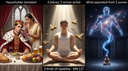
[Mental exploration is the process of evaluating thoughts (with vitakka and vicāra). In the householder case, these usually involve craving, delusion, proliferation. In the renunciate case, this is the mental talk of first jhāna remaining fixed on the Dharma.]
| iti kho panetaṁ vuttaṁ. Kiñcetaṁ paṭicca vuttaṁ? | That’s what I said, but why did I say it? | 我那樣說了,但我為什麼那樣說呢? |
| ‘Cakkhunā rūpaṁ disvā somanassaṭṭhānīyaṁ rūpaṁ upavicarati, domanassaṭṭhānīyaṁ rūpaṁ upavicarati, upekkhāṭṭhānīyaṁ rūpaṁ upavicarati. | Seeing a form with the eye, one explores a form that’s a basis for mental-joy or mental-distress or equanimous-observation. | 眼見色時,人會意行以樂為基礎、或以苦為基礎、或以舍為基礎的色。 |
| Sotena saddaṁ sutvā …pe… | Hearing a sound with the ear … | 耳聞聲時…… |
| ghānena gandhaṁ ghāyitvā … | Smelling an odor with the nose … | 鼻嗅香時…… |
| jivhāya rasaṁ sāyitvā … | Tasting a flavor with the tongue … | 舌嘗味時…… |
| kāyena phoṭṭhabbaṁ phusitvā … | Feeling a touch with the body … | 身覺觸時…… |
| manasā dhammaṁ viññāya somanassaṭṭhānīyaṁ dhammaṁ upavicarati, domanassaṭṭhānīyaṁ dhammaṁ upavicarati, upekkhāṭṭhānīyaṁ dhammaṁ upavicarati. | Becoming conscious of a [mental input] dharma with the mind, one explores a dharma that’s a basis for mental-joy or mental-distress or equanimous-observation. | 意識法時,人會意行以樂為基礎、或以苦為基礎、或以舍為基礎的法。 |
| Iti cha somanassūpavicārā, cha domanassūpavicārā, cha upekkhūpavicārā, aṭṭhārasa manopavicārā veditabbā’ti— | So there are six explorations with mental-joy, six explorations with mental-distress, and six explorations with equanimous-observation. ‘The eighteen mental explorations should be understood.’ | 所以有六種以樂為基礎的意行,六種以苦為基礎的意行,以及六種以舍為基礎的意行。‘十八意行應被理解。’ |
| iti yaṁ taṁ vuttaṁ idametaṁ paṭicca vuttaṁ. | That’s what I said, and this is why I said it. | 我那樣說了,這就是我那樣說的原因。 |
+137.3 – (36 positions of sentient beings = 18 x [householder + renunciate])
all
| ‘Chattiṁsa sattapadā veditabbā’ti— | ‘The thirty-six positions of sentient beings should be understood.’ | ‘三十六有情處應被理解。’ |
| iti kho panetaṁ vuttaṁ. Kiñcetaṁ paṭicca vuttaṁ? | That’s what I said, but why did I say it? | 我那樣說了,但我為什麼那樣說呢? |
| Cha gehasitāni somanassāni, cha nekkhammasitāni somanassāni, cha gehasitāni domanassāni, cha nekkhammasitāni domanassāni, cha gehasitā upekkhā, cha nekkhammasitā upekkhā. Variant: gehasitāni → gehassitāni (?) | There are six kinds of householder mental-joy and six kinds of renunciate mental-joy. There are six kinds of householder mental-distress and six kinds of renunciate mental-distress. There are six kinds of householder equanimous-observation and six kinds of renunciate equanimous-observation. | 有六種居士喜和六種出離喜。有六種居士憂和六種出離憂。有六種居士舍和六種出離舍。 |
+§3.1 – (6 kinds of householder mental-joy)
| Tattha katamāni cha gehasitāni somanassāni? | And in this context what are the six kinds of householder mental-joy? | 在這種情況下,什麼是六種居士喜? |
| Cakkhuviññeyyānaṁ rūpānaṁ iṭṭhānaṁ kantānaṁ manāpānaṁ manoramānaṁ lokāmisapaṭisaṁyuttānaṁ paṭilābhaṁ vā paṭilābhato samanupassato pubbe vā paṭiladdhapubbaṁ atītaṁ niruddhaṁ vipariṇataṁ samanussarato uppajjati somanassaṁ. | There are forms known by the eye that are likable, desirable, agreeable, pleasing, connected with the world’s material delights. mental-joy arises when you regard it as a gain to obtain such forms, or when you recollect forms you formerly obtained that have passed, ceased, and perished. | 有眼所識的色是可愛、可欲、可意、悅人、與世間物質享受相關的。當人認為獲得這些色是一種收穫,或者回憶起過去已經過去、止息、滅盡的色時,就會生起喜悅。 |
| Yaṁ evarūpaṁ somanassaṁ idaṁ vuccati gehasitaṁ somanassaṁ. | Such mental-joy is called householder mental-joy. | 這種喜悅被稱為居士喜。 |
| Sotaviññeyyānaṁ saddānaṁ … | There are sounds known by the ear … | 有耳所聞的聲…… |
| ghānaviññeyyānaṁ gandhānaṁ … | Smells known by the nose … | 鼻所嗅的香…… |
| jivhāviññeyyānaṁ rasānaṁ … | Tastes known by the tongue … | 舌所嘗的味…… |
| kāyaviññeyyānaṁ phoṭṭhabbānaṁ … | Touches known by the body … | 身所覺的觸…… |
| manoviññeyyānaṁ dhammānaṁ iṭṭhānaṁ kantānaṁ manāpānaṁ …pe… somanassaṁ. | [raw mental input] dharmas known by the mind that are likable, desirable, agreeable, pleasing, connected with the world’s material delights. mental-joy arises when you regard it as a gain to obtain such [raw mental input] dharmas, or when you recollect [raw mental input] dharmas you formerly obtained that have passed, ceased, and perished. | 意所識的法是可愛、可欲、可意、悅人、與世間物質享受相關的。當人認為獲得這些法是一種收穫,或者回憶起過去已經過去、止息、滅盡的法時,就會生起喜悅。 |
| Yaṁ evarūpaṁ somanassaṁ idaṁ vuccati gehasitaṁ somanassaṁ. | Such mental-joy is called householder mental-joy. | 這種喜悅被稱為居士喜。 |
| Imāni cha gehasitāni somanassāni. | These are the six kinds of householder mental-joy. | 這些是六種居士喜。 |
+§3.2 – (6 kinds of renunciate mental-joy = pīti of 7sb and 4 jhānas)
| Tattha katamāni cha nekkhammasitāni somanassāni? | And in this context what are the six kinds of renunciate mental-joy? | 在這種情況下,什麼是六種出離喜? |
[These 6 kind of mental joy are the rapture awakening factor that predominates first jhāna, the mental joy of understanding and seeing beauty in the Dharma.]
| Rūpānaṁ tveva aniccataṁ viditvā vipariṇāmavirāganirodhaṁ, ‘pubbe ceva rūpā etarahi ca sabbe te rūpā aniccā dukkhā vipariṇāmadhammā’ti evametaṁ yathābhūtaṁ sammappaññāya passato uppajjati somanassaṁ. | When you’ve understood the impermanence of forms—their perishing, fading away, and cessation—mental-joy arises as you truly understand through right understanding that both formerly and now all those forms are impermanent, suffering, and perishable. | 當人理解了色的無常——它們的壞滅、衰退和止息——通過正見真實理解到過去和現在所有這些色都是無常、苦和壞滅的,喜悅就會生起。 |
| Yaṁ evarūpaṁ somanassaṁ idaṁ vuccati nekkhammasitaṁ somanassaṁ. | Such mental-joy is called renunciate mental-joy. | 這種喜悅被稱為出離喜。 |
| Saddānaṁ tveva … | When you’ve understood the impermanence of sounds … | 當人理解了聲的無常…… |
| gandhānaṁ tveva … | smells … | 香的無常…… |
| rasānaṁ tveva … | tastes … | 味的無常…… |
| phoṭṭhabbānaṁ tveva … | touches … | 觸的無常…… |
| dhammānaṁ tveva aniccataṁ viditvā vipariṇāmavirāganirodhaṁ, ‘pubbe ceva dhammā etarahi ca sabbe te dhammā aniccā dukkhā vipariṇāmadhammā’ti evametaṁ yathābhūtaṁ sammappaññāya passato uppajjati somanassaṁ. | [raw mental input] dharmas—their perishing, fading away, and cessation—mental-joy arises as you truly understand through right understanding that both formerly and now all those [raw mental input] dharmas are impermanent, suffering, and perishable. | 法的無常——它們的壞滅、衰退和止息——通過正見真實理解到過去和現在所有這些法都是無常、苦和壞滅的,喜悅就會生起。 |
| Yaṁ evarūpaṁ somanassaṁ idaṁ vuccati nekkhammasitaṁ somanassaṁ. | Such mental-joy is called renunciate mental-joy. | 這種喜悅被稱為出離喜。 |
| Imāni cha nekkhammasitāni somanassāni. | These are the six kinds of renunciate mental-joy. | 這些是六種出離喜。 |
+§3.3 – (6 kinds of householder mental-distress: This is what 4th jhāna formula references)
| Tattha katamāni cha gehasitāni domanassāni? | And in this context what are the six kinds of householder mental-distress? | 在這種情況下,什麼是六種居士憂? |
| Cakkhuviññeyyānaṁ rūpānaṁ … | There are forms known by the eye that are likable, desirable, agreeable, pleasing, connected with the world’s material delights. mental-distress arises when you regard it as a loss to lose such forms, or when you recollect forms you formerly lost that have passed, ceased, and perished. | 有眼所識的色是可愛、可欲、可意、悅人、與世間物質享受相關的。當人認為失去這些色是一種損失,或者回憶起過去已經失去、止息、滅盡的色時,就會生起憂苦。 |
| pe… | Such mental-distress is called householder mental-distress. | 這種憂苦被稱為居士憂。 |
| sotaviññeyyānaṁ saddānaṁ … | There are sounds known by the ear … | 有耳所聞的聲…… |
| ghānaviññeyyānaṁ gandhānaṁ … | There are smells known by the nose … | 有鼻所嗅的香…… |
| jivhāviññeyyānaṁ rasānaṁ … | There are tastes known by the tongue … | 有舌所嘗的味…… |
| kāyaviññeyyānaṁ phoṭṭhabbānaṁ … | There are touches known by the body … | 有身所覺的觸…… |
| manoviññeyyānaṁ dhammānaṁ iṭṭhānaṁ kantānaṁ manāpānaṁ manoramānaṁ lokāmisapaṭisaṁyuttānaṁ appaṭilābhaṁ vā appaṭilābhato samanupassato pubbe vā appaṭiladdhapubbaṁ atītaṁ niruddhaṁ vipariṇataṁ samanussarato uppajjati domanassaṁ. | There are [raw mental input] dharmas known by the mind that are likable, desirable, agreeable, pleasing, connected with the world’s material delights. mental-distress arises when you regard it as a loss to lose such [raw mental input] dharmas, or when you recollect [raw mental input] dharmas you formerly lost that have passed, ceased, and perished. | 有意所識的法是可愛、可欲、可意、悅人、與世間物質享受相關的。當人認為失去這些法是一種損失,或者回憶起過去已經失去、止息、滅盡的法時,就會生起憂苦。 |
| Yaṁ evarūpaṁ domanassaṁ idaṁ vuccati gehasitaṁ domanassaṁ. | Such mental-distress is called householder mental-distress. | 這種憂苦被稱為居士憂。 |
| Imāni cha gehasitāni domanassāni. | These are the six kinds of householder mental-distress. | 這些是六種居士憂。 |
+§3.4 – (6 kinds of renunciate mental-distress)
| “Tattha katamāni cha nekkhammasitāni domanassāni? | And in this context what are the six kinds of renunciate mental-distress? | 在這種情況下,什麼是六種出離憂? |
| Rūpānaṁ tveva aniccataṁ viditvā vipariṇāmavirāganirodhaṁ, ‘pubbe ceva rūpā etarahi ca sabbe te rūpā aniccā dukkhā vipariṇāmadhammā’ti evametaṁ yathābhūtaṁ sammappaññāya disvā anuttaresu vimokkhesu pihaṁ upaṭṭhāpeti: | When you’ve understood the impermanence of forms—their perishing, fading away, and cessation—you truly understand through right understanding that both formerly and now all those forms are impermanent, suffering, and perishable. Upon seeing this, you give rise to yearning for the supreme liberations: | 當人理解了色的無常——它們的壞滅、衰退和止息——通過正見真實理解到過去和現在所有這些色都是無常、苦和壞滅的。看到這一點後,人就會對殊勝解脫生起嚮往: |
| ‘kudāssu nāmāhaṁ tadāyatanaṁ upasampajja viharissāmi yadariyā etarahi āyatanaṁ upasampajja viharantī’ti iti anuttaresu vimokkhesu pihaṁ upaṭṭhāpayato uppajjati pihapaccayā domanassaṁ. Variant: kudāssu → kudassu (bj); kadāssu (sya-all, km, pts1ed) | ‘Oh, when will I enter and remain in the same dimension that the noble ones enter and remain in today?’ When you give rise to yearning for the supreme liberations like this, mental-distress arises because of the yearning. | “哦,我何時才能進入並安住在聖者們今天所進入和安住的同一境界?”當人這樣對殊勝解脫生起嚮往時,因為這種嚮往就會生起憂苦。 |
| Yaṁ evarūpaṁ domanassaṁ idaṁ vuccati nekkhammasitaṁ domanassaṁ. | Such mental-distress is called renunciate mental-distress. | 這種憂苦被稱為出離憂。 |
| Saddānaṁ tveva …pe… | When you’ve understood the impermanence of sounds … | 當人理解了聲的無常…… |
| gandhānaṁ tveva … | smells … | 香的無常…… |
| rasānaṁ tveva … | tastes … | 味的無常…… |
| phoṭṭhabbānaṁ tveva … | touches … | 觸的無常…… |
| dhammānaṁ tveva aniccataṁ viditvā vipariṇāmavirāganirodhaṁ, ‘pubbe ceva dhammā etarahi ca sabbe te dhammā aniccā dukkhā vipariṇāmadhammā’ti evametaṁ yathābhūtaṁ sammappaññāya disvā anuttaresu vimokkhesu pihaṁ upaṭṭhāpeti: | [raw mental input] dharmas—their perishing, fading away, and cessation—you truly understand through right understanding that both formerly and now all those [raw mental input] dharmas are impermanent, suffering, and perishable. Upon seeing this, you give rise to yearning for the supreme liberations: | 法的無常——它們的壞滅、衰退和止息——通過正見真實理解到過去和現在所有這些法都是無常、苦和壞滅的。看到這一點後,人就會對殊勝解脫生起嚮往: |
| ‘kudāssu nāmāhaṁ tadāyatanaṁ upasampajja viharissāmi yadariyā etarahi āyatanaṁ upasampajja viharantī’ti iti anuttaresu vimokkhesu pihaṁ upaṭṭhāpayato uppajjati pihapaccayā domanassaṁ. | ‘Oh, when will I enter and remain in the same dimension that the noble ones enter and remain in today?’ When you give rise to yearning for the supreme liberations like this, mental-distress arises because of the yearning. | “哦,我何時才能進入並安住在聖者們今天所進入和安住的同一境界?”當人這樣對殊勝解脫生起嚮往時,因為這種嚮往就會生起憂苦。 |
| Yaṁ evarūpaṁ domanassaṁ idaṁ vuccati nekkhammasitaṁ domanassaṁ. | Such mental-distress is called renunciate mental-distress. | 這種憂苦被稱為出離憂。 |
| Imāni cha nekkhammasitāni domanassāni. | These are the six kinds of renunciate mental-distress. | 這些是六種出離憂。 |
+§3.5 – (6 kinds of householder equanimous-observation)
| Tattha katamā cha gehasitā upekkhā? | And in this context what are the six kinds of householder equanimous-observation? | 在這種情況下,什麼是六種居士舍? |
| Cakkhunā rūpaṁ disvā uppajjati upekkhā bālassa mūḷhassa puthujjanassa anodhijinassa avipākajinassa anādīnavadassāvino assutavato puthujjanassa. Variant: bālassa mūḷhassa → mūḷhassa mandassa (mr) | sā → sāyaṁ (mr) | When seeing a form with the eye, equanimous-observation arises for the uneducated ordinary person—a foolish ordinary person who has not overcome their limitations and the results of deeds, and is blind to the drawbacks. | 當眼見色時,對於未受教育的凡夫,一種愚痴的凡夫,尚未超越其侷限和業報,對過患視而不見,就會生起舍。 |
| Yā evarūpā upekkhā, rūpaṁ sā nātivattati. | Such equanimous-observation does not transcend the form. | 這種舍不超越色。 |
| Tasmā sā upekkhā ‘gehasitā’ti vuccati. | That’s why it’s called householder equanimous-observation. | 所以它被稱為居士舍。 |
| Sotena saddaṁ sutvā … | When hearing a sound with the ear … | 當耳聞聲時…… |
| ghānena gandhaṁ ghāyitvā … | When smelling an odor with the nose … | 當鼻嗅香時…… |
| jivhāya rasaṁ sāyitvā … | When tasting a flavor with the tongue … | 當舌嘗味時…… |
| kāyena phoṭṭhabbaṁ phusitvā … | When feeling a touch with the body … | 當身覺觸時…… |
| manasā dhammaṁ viññāya uppajjati upekkhā bālassa mūḷhassa puthujjanassa anodhijinassa avipākajinassa anādīnavadassāvino assutavato puthujjanassa. | When knowing a [raw mental input] dharma with the mind, equanimous-observation arises for the uneducated ordinary person—a foolish ordinary person who has not overcome their limitations and the results of deeds, and is blind to the drawbacks. | 當意識法時,對於未受教育的凡夫,一種愚痴的凡夫,尚未超越其侷限和業報,對過患視而不見,就會生起舍。 |
| Yā evarūpā upekkhā, dhammaṁ sā nātivattati. | Such equanimous-observation does not transcend the [raw mental input] dharma. | 這種舍不超越法。 |
| Tasmā sā upekkhā ‘gehasitā’ti vuccati. | That’s why it’s called householder equanimous-observation. | 所以它被稱為居士舍。 |
| Imā cha gehasitā upekkhā. | These are the six kinds of householder equanimous-observation. | 這些是六種居士舍。 |
+§3.6 – (6 kinds of renunciate equanimous-observation: is what’s in 3rd and 4th jhāna, mind connected to 5 sense fields!)
| Tattha katamā cha nekkhammasitā upekkhā? | And in this context what are the six kinds of renunciate equanimous-observation? | 在這種情況下,什麼是六種出離舍? |
| Rūpānaṁ tveva aniccataṁ viditvā vipariṇāmavirāganirodhaṁ, ‘pubbe ceva rūpā etarahi ca sabbe te rūpā aniccā dukkhā vipariṇāmadhammā’ti evametaṁ yathābhūtaṁ sammappaññāya passato uppajjati upekkhā. | When you’ve understood the impermanence of forms—their perishing, fading away, and cessation—equanimous-observation arises as you truly understand through right understanding that both formerly and now all those forms are impermanent, suffering, and perishable. | 當人理解了色的無常——它們的壞滅、衰退和止息——通過正見真實理解到過去和現在所有這些色都是無常、苦和壞滅的,舍就會生起。 |
| Yā evarūpā upekkhā, rūpaṁ sā ativattati. | Such equanimous-observation transcends the form. | 這種舍超越色。 |
| Tasmā sā upekkhā ‘nekkhammasitā’ti vuccati. | That’s why it’s called renunciate equanimous-observation. | 所以它被稱為出離舍。 |
| Saddānaṁ tveva … | When you’ve understood the impermanence of sounds … | 當人理解了聲的無常…… |
| gandhānaṁ tveva … | smells … | 香的無常…… |
| rasānaṁ tveva … | tastes … | 味的無常…… |
| phoṭṭhabbānaṁ tveva … | touches … | 觸的無常…… |
| dhammānaṁ tveva aniccataṁ viditvā vipariṇāmavirāganirodhaṁ, ‘pubbe ceva dhammā etarahi ca sabbe te dhammā aniccā dukkhā vipariṇāmadhammā’ti evametaṁ yathābhūtaṁ sammappaññāya passato uppajjati upekkhā. | [raw mental input] dharmas—their perishing, fading away, and cessation—equanimous-observation arises as you truly understand through right understanding that both formerly and now all those [raw mental input] dharmas are impermanent, suffering, and perishable. | 法的無常——它們的壞滅、衰退和止息——通過正見真實理解到過去和現在所有這些法都是無常、苦和壞滅的,舍就會生起。 |
| Yā evarūpā upekkhā, dhammaṁ sā ativattati. | Such equanimous-observation transcends the [raw mental input] dharma. | 這種舍超越法。 |
| Tasmā sā upekkhā ‘nekkhammasitā’ti vuccati. | That’s why it’s called renunciate equanimous-observation. | 所以它被稱為出離舍。 |
| Imā cha nekkhammasitā upekkhā. | These are the six kinds of renunciate equanimous-observation. | 這些是六種出離舍。 |
| ‘Chattiṁsa sattapadā veditabbā’ti— | ‘The thirty-six positions of sentient beings should be understood.’ | ‘三十六有情處應被理解。’ |
| iti yaṁ taṁ vuttaṁ idametaṁ paṭicca vuttaṁ. | That’s what I said, and this is why I said it. | 我那樣說了,這就是我那樣說的原因。 |
❧
+137.4 – (rely on something superior to give up something inferior)
all
| ‘Tatra idaṁ nissāya idaṁ pajahathā’ti— | ‘Therein, relying on this, give up that.’ | ‘其中,依此舍彼。’ |
| iti kho panetaṁ vuttaṁ; Kiñcetaṁ paṭicca vuttaṁ? | That’s what I said, but why did I say it? | 我那樣說了,但我為什麼那樣說呢? |
+§4.1 – (rely on renunciate mental-joy to give up householder mental-joy)
| Tatra, bhikkhave, yāni cha nekkhammasitāni somanassāni tāni nissāya tāni āgamma yāni cha gehasitāni somanassāni tāni pajahatha, tāni samatikkamatha. | Therein, by relying and depending on the six kinds of renunciate mental-joy, give up and go beyond the six kinds of householder mental-joy. | 其中,依靠和依賴六種出離喜,捨棄和超越六種居士喜。 |
| Evametesaṁ pahānaṁ hoti, evametesaṁ samatikkamo hoti. | That’s how they are given up. | 它們就是這樣被捨棄的。 |
+§4.2 – (rely on renunciate mental-distress to give up householder mental-distress)
| Tatra, bhikkhave, yāni cha nekkhammasitāni domanassāni tāni nissāya tāni āgamma yāni cha gehasitāni domanassāni tāni pajahatha, tāni samatikkamatha. | Therein, by relying on the six kinds of renunciate mental-distress, give up the six kinds of householder mental-distress. | 其中,依靠六種出離憂,捨棄六種居士憂。 |
| Evametesaṁ pahānaṁ hoti, evametesaṁ samatikkamo hoti. | That’s how they are given up. | 它們就是這樣被捨棄的。 |
+§4.3 – (rely on renunciate equanimous-observation to give up householder equanimous-observation)
| Tatra, bhikkhave, yā cha nekkhammasitā upekkhā tā nissāya tā āgamma, yā cha gehasitā upekkhā tā pajahatha tā samatikkamatha. | Therein, by relying on the six kinds of renunciate equanimous-observation, give up the six kinds of householder equanimous-observation. | 其中,依靠六種出離舍,捨棄六種居士舍。 |
| Evametāsaṁ pahānaṁ hoti, evametāsaṁ samatikkamo hoti. | That’s how they are given up. | 它們就是這樣被捨棄的。 |
+§4.4 – (rely on renunciate mental-joy to give up renunciate mental-distress: use first two jhānas to give up renunciate mental-distress)
| Tatra, bhikkhave, yāni cha nekkhammasitāni somanassāni tāni nissāya tāni āgamma yāni cha nekkhammasitāni domanassāni tāni pajahatha, tāni samatikkamatha. | Therein, by relying on the six kinds of renunciate mental-joy, give up the six kinds of renunciate mental-distress. | 其中,依靠六種出離喜,捨棄六種出離憂。 |
| Evametesaṁ pahānaṁ hoti, evametesaṁ samatikkamo hoti. | That’s how they are given up. | 它們就是這樣被捨棄的。 |
[In other words, rely on the rapture awakening factor of first jhāna to give up renunciate mental-distress.]
+§4.5 – (rely on renunciate equanimous-observation to give up renunciate mental-joy: use 4th and 3rd jhāna to give up 1st and 2nd jhāna)
| Tatra, bhikkhave, yā cha nekkhammasitā upekkhā tā nissāya tā āgamma yāni cha nekkhammasitāni somanassāni tāni pajahatha, tāni samatikkamatha. | Therein, by relying on the six kinds of renunciate equanimous-observation, give up the six kinds of renunciate mental-joy. | 其中,依靠六種出離舍,捨棄六種出離喜。 |
| Evametesaṁ pahānaṁ hoti, evametesaṁ samatikkamo hoti. | That’s how they are given up. | 它們就是這樣被捨棄的。 |
[In other words, rely on the superior physical pleasure of 3rd jhāna and the equanimous-observation of fourth jhāna to give up the less refined mental-joy of rapture from the first two jhānas.]
+137.5 – (two kinds of upekkha equanimous-observation)
all
| Atthi, bhikkhave, upekkhā nānattā nānattasitā, atthi upekkhā ekattā ekattasitā. | There is equanimous-observation that is diversified, based on diversity, and equanimous-observation that is unified, based on unity. | 有以多樣性為基礎的舍,有以統一性為基礎的舍。 |
+§5.1 – (upekkha based on diversity/nanatta are 3rd and 4th jhāna)
| Katamā ca, bhikkhave, upekkhā nānattā nānattasitā? | And what is equanimous-observation based on diversity? | 什麼是以多樣性為基礎的舍? |
| Atthi, bhikkhave, upekkhā rūpesu, atthi saddesu, atthi gandhesu, atthi rasesu, atthi phoṭṭhabbesu— | There is equanimous-observation towards forms, sounds, smells, tastes, and touches. | 有對色、聲、香、味、觸的舍。 |
| ayaṁ, bhikkhave, upekkhā nānattā nānattasitā. | This is equanimous-observation based on diversity. | 這是以多樣性為基礎的舍。 |
[Diversity (nanatta) of 5 sense fields connected to the mind is what’s abandoned when one enters dimension of infinite space. This also means that those 5 bodily senses are active in the four jhānas.]
+§5.2 – (upekkha based on unity/ekatta are 4 a-rūpa attainments)
| Katamā ca, bhikkhave, upekkhā ekattā ekattasitā? | And what is equanimous-observation based on unity? | 什麼是以統一性為基礎的舍? |
| Atthi, bhikkhave, upekkhā ākāsānañcāyatananissitā, atthi viññāṇañcāyatananissitā, atthi ākiñcaññāyatananissitā, atthi nevasaññānāsaññāyatananissitā— | There is equanimous-observation based on the dimensions of infinite space, infinite consciousness, nothingness, and neither perception nor non-perception. | 有以空無邊處、識無邊處、無所有處和非想非非想處為基礎的舍。 |
| ayaṁ, bhikkhave, upekkhā ekattā ekattasitā. | This is equanimous-observation based on unity. | 這是以統一性為基礎的舍。 |
+§4.6 – (rely on upekkha of formless to give up upekkha of fourth jhāna)
| Tatra, bhikkhave, yāyaṁ upekkhā ekattā ekattasitā taṁ nissāya taṁ āgamma yāyaṁ upekkhā nānattā nānattasitā taṁ pajahatha, taṁ samatikkamatha. | Therein, relying on equanimous-observation based on unity, give up equanimous-observation based on diversity. | 其中,依靠以統一性為基礎的舍,捨棄以多樣性為基礎的舍。 |
| Evametissā pahānaṁ hoti, evametissā samatikkamo hoti. | That’s how it is given up. | 它就是這樣被捨棄的。 |
+§4.7 – (rely on non-identification to give up upekkha of formless)
all
| Atammayataṁ, bhikkhave, nissāya atammayataṁ āgamma yāyaṁ upekkhā ekattā ekattasitā taṁ pajahatha, taṁ samatikkamatha. | Relying on non-identification, give up equanimous-observation based on unity. | 依靠無相,捨棄以統一性為基礎的舍。 |
| Evametissā pahānaṁ hoti, evametissā samatikkamo hoti. | That’s how it is given up. | 它就是這樣被捨棄的。 |
+(end of rely and give up sequence)
| ‘Tatra idaṁ nissāya idaṁ pajahathā’ti— | ‘Therein, relying on this, give up that.’ | ‘其中,依此舍彼。’ |
| iti yaṁ taṁ vuttaṁ idametaṁ paṭicca vuttaṁ. | That’s what I said, and this is why I said it. | 我那樣說了,這就是我那樣說的原因。 |
+137.7 – (The teacher -buddha- uses 3 types of sati, to illustrate upekkha reaction)
all
| ‘Tayo satipaṭṭhānā yadariyo sevati, yadariyo sevamāno satthā gaṇamanusāsitumarahatī’ti— | ‘The Noble One cultivates the establishment of rememberfulness [of Dharma] in three cases, by virtue of which they are a Teacher worthy to instruct a group.’ | ‘聖者於三處修習念處[法],藉此,他是一位值得教導眾生的老師。’ |
| iti kho panetaṁ vuttaṁ; | That’s what I said, | 我那樣說了, |
| kiñcetaṁ paṭicca vuttaṁ? | but why did I say it? | 但我為什麼那樣說呢? |
+§7.1 – (bad disciples)
| Idha, bhikkhave, satthā sāvakānaṁ dhammaṁ deseti anukampako hitesī anukampaṁ upādāya: | The first case is when the Teacher teaches the Dhamma out of kindness and compassion: | 第一種情況是,老師出於慈悲教導佛法: |
| ‘idaṁ vo hitāya, idaṁ vo sukhāyā’ti. | ‘This is for your welfare. This is for your mental-joy.’ | “這是為了你們的福利。這是為了你們的喜悅。” |
| Tassa sāvakā na sussūsanti, na sotaṁ odahanti, na aññā cittaṁ upaṭṭhapenti, vokkamma ca satthusāsanā vattanti. | But their disciples don’t want to listen. They don’t pay attention or apply their minds to understand. They proceed having turned away from the Teacher’s instruction. | 但他們的弟子不想聽。他們不專心,也不用心去理解。他們背離了老師的教導。 |
| Tatra, bhikkhave, tathāgato na ceva anattamano hoti, na ca anattamanataṁ paṭisaṁvedeti, anavassuto ca viharati sato sampajāno. | In this case the Realized One is not displeased, he does not feel displeasure. He remains unaffected, rememberful [of the Dharma] [of Dharma] and lucidly-discerning. | 在這種情況下,如來不感到不悅,他沒有不悅。他保持不受影響,正念[法]和明晰地分辨。 |
| Idaṁ, bhikkhave, paṭhamaṁ satipaṭṭhānaṁ yadariyo sevati, yadariyo sevamāno satthā gaṇamanusāsitumarahati. | This is the first case in which the Noble One cultivates the establishment of rememberfulness [of Dharma]. | 這是聖者修習念處[法]的第一種情況。 |
+§7.2 – (some good some bad disciples)
| Puna caparaṁ, bhikkhave, satthā sāvakānaṁ dhammaṁ deseti anukampako hitesī anukampaṁ upādāya: | The next case is when the Teacher teaches the Dhamma out of kindness and compassion: | 下一種情況是,老師出於慈悲教導佛法: |
| ‘idaṁ vo hitāya, idaṁ vo sukhāyā’ti. | ‘This is for your welfare. This is for your mental-joy.’ | “這是為了你們的福利。這是為了你們的喜悅。” |
| Tassa ekacce sāvakā na sussūsanti, na sotaṁ odahanti, na aññā cittaṁ upaṭṭhapenti, vokkamma ca satthusāsanā vattanti; | And some of their disciples don’t want to listen. They don’t pay attention or apply their minds to understand. They proceed having turned away from the Teacher’s instruction. | 他們的一些弟子不想聽。他們不專心,也不用心去理解。他們背離了老師的教導。 |
| ekacce sāvakā sussūsanti, sotaṁ odahanti, aññā cittaṁ upaṭṭhapenti, na ca vokkamma satthusāsanā vattanti. | But some of their disciples do want to listen. They pay attention and apply their minds to understand. They don’t proceed having turned away from the Teacher’s instruction. | 但他們的一些弟子確實想聽。他們專心,也用心去理解。他們不背離老師的教導。 |
| Tatra, bhikkhave, tathāgato na ceva anattamano hoti, na ca anattamanataṁ paṭisaṁvedeti; | In this case the Realized One is not displeased, | 在這種情況下,如來不感到不悅, |
| na ca attamano hoti, na ca attamanataṁ paṭisaṁvedeti. Anattamanatā ca attamanatā ca— | nor is he pleased. | 他也不感到喜悅。 |
| tadubhayaṁ abhinivajjetvā upekkhako viharati sato sampajāno. | Rejecting both displeasure and pleasure, he remains equanimously-observing, rememberful [of the Dharma] [of Dharma] and lucidly-discerning. | 他捨棄不悅和喜悅,保持舍,正念[法]和明晰地分辨。 |
| Idaṁ vuccati, bhikkhave, dutiyaṁ satipaṭṭhānaṁ yadariyo sevati, yadariyo sevamāno satthā gaṇamanusāsitumarahati. | This is the second case in which the Noble One cultivates the establishment of rememberfulness [of Dharma]. | 這是聖者修習念處[法]的第二種情況。 |
+§7.3 – (all good disciples)
| Puna caparaṁ, bhikkhave, satthā sāvakānaṁ dhammaṁ deseti anukampako hitesī anukampaṁ upādāya: | The next case is when the Teacher teaches the Dhamma out of kindness and compassion: | 下一種情況是,老師出於慈悲教導佛法: |
| ‘idaṁ vo hitāya, idaṁ vo sukhāyā’ti. | ‘This is for your welfare. This is for your mental-joy.’ | “這是為了你們的福利。這是為了你們的喜悅。” |
| Tassa sāvakā sussūsanti, sotaṁ odahanti, aññācittaṁ upaṭṭhapenti, na ca vokkamma satthusāsanā vattanti. | And their disciples want to listen. They pay attention and apply their minds to understand. They don’t proceed having turned away from the Teacher’s instruction. | 他們的弟子想聽。他們專心,也用心去理解。他們不背離老師的教導。 |
| Tatra, bhikkhave, tathāgato attamano ceva hoti, attamanatañca paṭisaṁvedeti, anavassuto ca viharati sato sampajāno. | In this case the Realized One is pleased, and he feels pleasure. He remains unaffected [by the audience response], rememberful [of the Dharma] [of Dharma] and lucidly-discerning. | 在這種情況下,如來感到喜悅,他感到快樂。他保持不受影響[被聽眾的反應],正念[法]和明晰地分辨。 |
| Idaṁ vuccati, bhikkhave, tatiyaṁ satipaṭṭhānaṁ yadariyo sevati, yadariyo sevamāno satthā gaṇamanusāsitumarahati. | This is the third case in which the Noble One cultivates the establishment of rememberfulness [of Dharma]. | 這是聖者修習念處[法]的第三種情況。 |
| ‘Tayo satipaṭṭhānā yadariyo sevati, yadariyo sevamāno satthā gaṇamanusāsitumarahatī’ti— | ‘The Noble One cultivates the establishment of rememberfulness [of Dharma] in three cases, by virtue of which they are a Teacher worthy to instruct a group.’ | ‘聖者於三處修習念處[法],藉此,他是一位值得教導眾生的老師。’ |
| iti yaṁ taṁ vuttaṁ idametaṁ paṭicca vuttaṁ. | That’s what I said, and this is why I said it. | 我那樣說了,這就是我那樣說的原因。 |
❧
+137.8 – (8 vimokkha + simile of horse and ox trainer in 4 directions)
all
| ‘So vuccati yoggācariyānaṁ anuttaro purisadammasārathī’ti— | ‘Of all meditation teachers, it is he that is called the supreme guide for those who wish to train.’ | ‘在所有禪修老師中,他被稱為那些希望修行者的最高引導者。’ |
| iti kho panetaṁ vuttaṁ. Kiñcetaṁ paṭicca vuttaṁ? | That’s what I said, but why did I say it? | 我那樣說了,但我為什麼那樣說呢? |
| Hatthidamakena, bhikkhave, hatthidammo sārito ekaṁyeva disaṁ dhāvati— | Driven by an elephant trainer, an elephant in training proceeds in just one direction: | 被馴象師驅趕的受訓大象只朝一個方向前進: |
| puratthimaṁ vā pacchimaṁ vā uttaraṁ vā dakkhiṇaṁ vā. | east, west, north, or south. | 東、西、北、南。 |
| Assadamakena, bhikkhave, assadammo sārito ekaññeva disaṁ dhāvati— | Driven by a horse trainer, a horse in training proceeds in just one direction: | 被馴馬師驅趕的受訓馬匹只朝一個方向前進: |
| puratthimaṁ vā pacchimaṁ vā uttaraṁ vā dakkhiṇaṁ vā. | east, west, north, or south. | 東、西、北、南。 |
| Godamakena, bhikkhave, godammo sārito ekaññeva disaṁ dhāvati— | Driven by an ox trainer, an ox in training proceeds in just one direction: | 被馴牛師驅趕的受訓牛隻朝一個方向前進: |
| puratthimaṁ vā pacchimaṁ vā uttaraṁ vā dakkhiṇaṁ vā. | east, west, north, or south. | 東、西、北、南。 |
| Tathāgatena hi, bhikkhave, arahatā sammāsambuddhena purisadammo sārito aṭṭha disā vidhāvati. | But driven by the Realized One, the perfected one, the fully awakened Buddha, a person in training proceeds in eight directions: | 但被如來、應供、正等正覺的佛陀驅趕的受訓者則朝八個方向前進: |
+(8 vimokkha)
all
+(1. Has rūpa, sees rūpa)
rūpī rūpāni passati. |
[From a samādhi where the mind can perceive the 5 senses, the meditator] sees form [internally and externally, his own body and external objects]. |
ayaṁ ekā disā; |
This is the first direction. |
| [All four jhānas can fall under this first liberation, though the primary one must be the imperturbable version of 4th jhāna since only there is it strong and reliable enough to have all day luminosity, divine eye, and ability to see internal body organs and their colors as in the 8 abhi-bha-ayatana.] | |
+(2. Doesn’t perceive internal rūpa, perceives external rūpa)
“ajjhattaṃ a-rūpa-saññī, |
[From a samādhi where the mind is no longer connected to the 5 senses of the body, the meditator] can not see his own body and internal organs, |
bahiddhā rūpāni passati. |
but he can see external forms [and their colors as described in 8 abhi-bha-ayatana]. |
ayaṁ dutiyā disā; |
This is the second direction. |
| [The four jhānas are not included in the second liberation, since one is in a formless attainment where one can not perceive the physical body.] | |
+(3. Focused on ‘subha’ beautiful)
“subha-nteva adhimutto hoti. |
They’re focused only on ‘beauty’ [, a code word referring to metta, friendly-kindness, or any of the four brahma vihāras, the divine abidings]. |
| [Following the standard formula for brahma-vihāras, they pervade that energy in 8 directions.] | |
ayaṁ tatiyā disā; |
This is the third direction. |
+(4. ākāsā-nañcā-(a)yatanaṃ: Dimension of infinite space)
sabbaso rūpa-saññānaṃ samatikkamā |
Going totally beyond perceptions of [both the internal physical body and external] forms, |
Paṭigha-saññānaṃ atthaṅgamā |
with the ending of perceptions of impingement, [such as extreme cold, heat, bug bites that can only be felt when the mind is still connected to the 5 senses], |
nānatta-saññānaṃ a-manasikārā |
not focusing on perceptions of diversity [that occur when the five sense faculties are active], |
‘an-anto ākāso’ti |
[one perceives that] ‘space is infinite’, |
ākāsānañcā-(a)yatanaṃ upasampajja viharati. |
they enter and remain in the dimension of infinite space. |
ayaṁ catutthī disā; |
This is the fourth direction. |
+(5. Viññāṇañcā-(a)yatanaṃ: Dimension of infinite consciousness)
sabbaso ākāsānañcā-(a)yatanaṃ samatikkamma |
Going totally beyond the dimension of infinite space, |
'An-antaṃ viññāṇan’ti |
[one perceives that] ‘the consciousness [that remains when the perception of infinite space drops out is also] infinite’, |
viññāṇañcā-(a)yatanaṃ upasampajja viharati. |
they enter and remain in the dimension of infinite consciousness. |
ayaṁ pañcamī disā; |
This is the fifth direction. |
+(6. ākiñcaññā-(a)yatanaṃ: Dimension of nothingness)
sabbaso viññāṇañcā-(a)yatanaṃ samatikkamma |
Going totally beyond the dimension of infinite consciousness, |
'N-atthi kiñcī’ti |
[one perceives that] ‘there is nothing at all’ [after one drops the perception of infinite consciousness], |
ākiñcaññā-(a)yatanaṃ upasampajja viharati. |
they enter and remain in the dimension of nothingness. |
ayaṁ chaṭṭhī disā; |
This is the sixth direction. |
+(7. Neva-saññā-nāsaññā-(a)yatanaṃ: Dimension of neither perception nor non-perception)
sabbaso ākiñcaññā-(a)yatanaṃ samatikkamma |
Going totally beyond the dimension of nothingness, |
Neva-saññā-nāsaññā-(a)yatanaṃ upasampajja viharati. |
they enter and remain in the dimension of neither perception nor non-perception. |
| [This means that awareness is too subtle to be considered ‘perception’, but there is enough awareness to know you’re not unconscious.] | |
ayaṁ sattamī disā; |
This is the seventh direction. |
+(8. Saññā-vedayita-nirodhaṃ: Cessation of perception and sensation)
sabbaso neva-saññā-nāsaññā-(a)yatanaṃ samatikkamma |
Going totally beyond the dimension of neither perception nor non-perception, |
Saññā-vedayita-nirodhaṃ upasampajja viharati |
they enter and remain in the cessation of perception and sensation. |
ayaṁ aṭṭhamī disā. |
This is the eighth direction. |
| Tathāgatena, bhikkhave, arahatā sammāsambuddhena purisadammo sārito imā aṭṭha disā vidhāvati. | Driven by the Realized One, the perfected one, the fully awakened Buddha, a person in training proceeds in these eight directions. | 被如來、應供、正等正覺的佛陀驅趕的受訓者,朝這八個方向前進。 |
❧
+137.10 – (conclusion)
| So vuccati: ‘yoggācariyānaṁ anuttaro purisadammasārathī’ti— | ‘Of all meditation teachers, it is he that is called the supreme guide for those who wish to train.’ | ‘在所有禪修老師中,他被稱為那些希望修行者的最高引導者。’ |
| iti yaṁ taṁ vuttaṁ idametaṁ paṭicca vuttan”ti. | That’s what I said, and this is why I said it.” | 我那樣說了,這就是我那樣說的原因。” |
| Idamavoca bhagavā. | That is what the Buddha said. | 佛陀就是這樣說的。 |
| Attamanā te bhikkhū bhagavato bhāsitaṁ abhinandunti. | Satisfied, the monks were happy with what the Buddha said. | 比丘們心滿意足,對佛陀所說的話感到高興。 |
| Saḷāyatanavibhaṅgasuttaṁ niṭṭhitaṁ sattamaṁ. | (end of sutta) | (經文結束) |
❧