+MN 22 Alagaddū-’pama:
Simile of the Snake
all
Simile of the Snake
+Opening
| (derived from B. Sujato 2018/12) | (出自 B. Sujato 2018/12) | |
| Evaṁ me sutaṁ— | So I have heard. | 如是我聞。 |
| ekaṁ samayaṁ bhagavā sāvatthiyaṁ viharati jeta·vane a·nātha·piṇḍi·kassa ārāme. |
At one time the Buddha was staying near Sāvatthī in Jeta’s Grove, Anāthapiṇḍika’s monastery. | 一時,佛在舍衛國祇樹給孤獨園。 |
+22.1 – (Monk Ariṭtha's harmful view: What Buddha calls obstructions are not)
| Tena kho pana samayena ariṭṭhassa nāma bhikkhuno gaddha·bādhi·pubbassa evarūpaṁ pāpakaṁ diṭṭhi·gataṁ uppannaṁ hoti: | Now at that time a monk called Ariṭtha, who had previously been a vulture trapper, had the following harmful misconception: | 當時,一位名叫阿利吒的比丘,他以前是捕禿鷹的,生起了以下這種有害的邪見: |
| “tathāhaṁ bhagavatā dhammaṁ desitaṁ ājānāmi yathā yeme antarāyikā dhammā vuttā bhagavatā te paṭi·sevato nālaṁ antarā·yāyā”ti. |
“As I understand the Buddha’s Dharmas, the acts that he says are obstructions are not really obstructions for the one who performs them.” | 「據我對佛陀法的理解,祂所說的障礙法,對於行此法者而言,並非真正的障礙。」 |
| Assosuṁ kho sambahulā bhikkhū: | Several monks heard about this. | 有幾位比丘聽聞此事。 |
| “ariṭṭhassa kira nāma bhikkhuno gaddha·bādhi·pubbassa evarūpaṁ pāpakaṁ diṭṭhi·gataṁ uppannaṁ: | ||
| ‘tathāhaṁ bhagavatā dhammaṁ desitaṁ ājānāmi yathā yeme antarāyikā dhammā vuttā bhagavatā te paṭi·sevato nālaṁ antarā·yāyā’”ti. |
||
| Atha kho te bhikkhū yena ariṭṭho bhikkhu gaddha·bādhi·pubbo tenupasaṅkamiṁsu; upasaṅkamitvā ariṭṭhaṁ bhikkhuṁ gaddha·bādhi·pubbaṁ etadavocuṁ: |
They went up to Ariṭṭha and said to him: | 他們去到阿利吒那裡,對他說: |
| “sa·c·caṁ kira te, āvuso ariṭṭha, evarūpaṁ pāpakaṁ diṭṭhi·gataṁ uppannaṁ: | “Is it really true, Reverend Ariṭṭha, that you have such a harmful misconception: | 「阿利吒尊者,您真的有這樣的有害邪見嗎: |
| ‘tathāhaṁ bhagavatā dhammaṁ desitaṁ ājānāmi yathā yeme antarāyikā dhammā vuttā bhagavatā te paṭi·sevato nālaṁ antarā·yāyā’”ti. |
‘As I understand the Buddha’s Dharmas, the acts that he says are obstructions are not really obstructions for the one who performs them’?” | 『據我對佛陀法的理解,祂所說的障礙法,對於行此法者而言,並非真正的障礙』?」 |
| “Evaṁ byā kho ahaṁ, āvuso, bhagavatā dhammaṁ desitaṁ ājānāmi yathā yeme antarāyikā dhammā vuttā bhagavatā te paṭi·sevato nālaṁ antarā·yāyā”ti. |
“Absolutely, reverends. As I understand the Buddha’s Dharmas, the acts that he says are obstructions are not really obstructions for the one who performs them.” | 「確實如此,尊者們。據我對佛陀法的理解,祂所說的障礙法,對於行此法者而言,並非真正的障礙。」 |
| Atha kho tepi bhikkhū ariṭṭhaṁ bhikkhuṁ gaddha·bādhi·pubbaṁ etasmā pāpakā diṭṭhi·gatā vivecetu·kāmā samanuyuñjanti samanugāhanti samanubhāsanti: |
Then, wishing to dissuade Ariṭṭha from his view, the monks pursued, pressed, and grilled him: | 然後,為了勸退阿利吒的這種見解,諸比丘追問、逼問、盤問他: |
| “mā hevaṁ, āvuso ariṭṭha, a·vaca, mā bhagavantaṁ abbh·ācikkhi; na hi sādhu bhagavato abbh·akkhānaṁ, na hi bhagavā evaṁ vadeyya. |
“Don’t say that, Ariṭṭha! Don’t misrepresent the Buddha, for misrepresentation of the Buddha is not good. And the Buddha would not say that. | 「不要那樣說,阿利吒!不要誹謗佛陀,因為誹謗佛陀是不好的。而且佛陀不會那樣說。 |
| A·neka·pari·yāyen·āvuso ariṭṭha, antarāyikā dhammā antarāyikā vuttā bhagavatā, alañca pana te paṭi·sevato antarā·yāya. | In many ways the Buddha has said that obstructive acts are obstructive, and that they really do obstruct the one who performs them. | 佛陀在許多方面都說過障礙法是障礙,它們確實會障礙行此法者。 |
| Appa·s·sādā kāmā vuttā bhagavatā bahu·dukkhā bahu·pāyāsā, ādīnavo ettha bhiyyo. | The Buddha says that sensual pleasures give little gratification and much suffering and distress, and they are all the more full of drawbacks. | 佛陀說欲樂少味、多苦、多惱,充滿更多過患。 |
| Aṭṭhi·kaṅkalū·pamā kāmā vuttā bhagavatā … | With the similes of a skeleton … | 以骸骨喻… |
| maṁsa·pesū·pamā kāmā vuttā bhagavatā … | a piece of flesh … | 肉塊喻… |
| tiṇukkū·pamā kāmā vuttā bhagavatā … | a grass torch … | 草火炬喻… |
| aṅgāra·kāsū·pamā kāmā vuttā bhagavatā … | a pit of glowing coals … | 火炭坑喻… |
| supinakū·pamā kāmā vuttā bhagavatā … | a dream … | 夢喻… |
| yācitakū·pamā kāmā vuttā bhagavatā … | borrowed goods … | 借來物品喻… |
| rukkha·phalū·pamā kāmā vuttā bhagavatā … | fruit on a tree … | 樹上果實喻… |
| asisūnū·pamā kāmā vuttā bhagavatā … | a butcher’s knife and chopping block … | 屠夫刀俎喻… |
| satti·sūlū·pamā kāmā vuttā bhagavatā … | a staking sword … | 利劍喻… |
| sappasirūpamā kāmā vuttā bhagavatā bahu·dukkhā bahu·pāyāsā, ādīnavo ettha bhiyyo”ti. | a snake’s head, the Buddha says that sensual pleasures give little gratification and much suffering and distress, and they are all the more full of drawbacks.” | 蛇頭喻,佛陀說欲樂少味、多苦、多惱,充滿更多過患。」 |
| Evampi kho ariṭṭho bhikkhu gaddha·bādhi·pubbo tehi bhikkhūhi samanu·yuñjiya·māno samanu·gāhiya·māno samanu·bhāsiya·māno tadeva pāpakaṁ diṭṭhi·gataṁ thāmasā parā·māsā abhi·nivissa voharati: |
But even though the monks pursued, pressed, and grilled him in this way, Ariṭṭha obstinately stuck to his misconception and insisted on stating it. | 但即使諸比丘如此追問、逼問、盤問他,阿利吒仍固執地堅持他的邪見,並堅稱如此。 |
| “evaṁ byā kho ahaṁ, āvuso, bhagavatā dhammaṁ desitaṁ ājānāmi yathā yeme antarāyikā dhammā vuttā bhagavatā te paṭi·sevato nālaṁ antarā·yāyā”ti. |
❧
+22.2 – (unable to dissuade Ariṭṭha, monks go to Buddha )
| Yato kho te bhikkhū nāsakkhiṁsu ariṭṭhaṁ bhikkhuṁ gaddha·bādhi·pubbaṁ etasmā pāpakā diṭṭhi·gatā vi·vecetuṁ, atha kho te bhikkhū yena bhagavā tenupasaṅkamiṁsu; upasaṅkamitvā bhagavantaṁ abhi·vādetvā ekam·antaṁ nisīdiṁsu. Ekam·antaṁ nisinnā kho te bhikkhū bhagavantaṁ etadavocuṁ: |
When they weren’t able to dissuade Ariṭṭha from his view, the monks went to the Buddha, bowed, sat down to one side, and told him what had happened. | 當他們無法勸退阿利吒的見解時,諸比丘便去到佛陀那裡,頂禮後,坐在一旁,將所發生的事告訴了他。 |
| “ariṭṭhassa nāma, bhante, bhikkhuno gaddha·bādhi·pubbassa evarūpaṁ pāpakaṁ diṭṭhi·gataṁ uppannaṁ: |
||
| ‘tathāhaṁ bhagavatā dhammaṁ desitaṁ ājānāmi yathā yeme antarāyikā dhammā vuttā bhagavatā te paṭi·sevato nālaṁ antarā·yāyā’ti. |
||
| Assumha kho mayaṁ, bhante: | ||
| ‘ariṭṭhassa kira nāma bhikkhuno gaddha·bādhi·pubbassa evarūpaṁ pāpakaṁ diṭṭhi·gataṁ uppannaṁ— | ||
| tathāhaṁ bhagavatā dhammaṁ desitaṁ ājānāmi yathā yeme antarāyikā dhammā vuttā bhagavatā te paṭi·sevato nālaṁ antarā·yāyā’ti. |
||
| Atha kho bhagavā añña·taraṁ bhikkhuṁ āmantesi: | So the Buddha said to a certain monk: | 於是佛陀對某位比丘說: |
| “ehi tvaṁ, bhikkhu, mama vacanena ariṭṭhaṁ bhikkhuṁ gaddha·bādhi·pubbaṁ āmantehi: |
“Please, monk, in my name tell the monk Ariṭṭha, formerly a vulture trapper, that | 「比丘,請你以我的名義告訴比丘阿利吒,以前是捕禿鷹的, |
| ‘satthā taṁ, āvuso ariṭṭha, āmantetī’”ti. | the teacher summons him.” | 說導師召見他。」 |
| “Evaṁ, bhante”ti kho so bhikkhu bhagavato paṭi·s·sutvā, yena ariṭṭho bhikkhu gaddha·bādhi·pubbo tenupasaṅkami; upasaṅkamitvā ariṭṭhaṁ bhikkhuṁ gaddha·bādhi·pubbaṁ etadavoca: |
“Yes, sir,” that monk replied. He went to Ariṭṭha and said to him: | 「是的,世尊。」那位比丘回答。他去到阿利吒那裡,對他說: |
| “satthā taṁ, āvuso ariṭṭha, āmantetī”ti. | “Reverend Ariṭṭha, the teacher summons you.” | 「阿利吒尊者,導師召見您。」 |
| “Evam·āvuso”ti kho ariṭṭho bhikkhu gaddha·bādhi·pubbo tassa bhikkhuno paṭi·s·sutvā yena bhagavā tenupasaṅkami; upasaṅkamitvā bhagavantaṁ abhi·vādetvā ekam·antaṁ nisīdi. Ekam·antaṁ nisinnaṁ kho ariṭṭhaṁ bhikkhuṁ gaddha·bādhi·pubbaṁ bhagavā etadavoca: |
“Yes, reverend,” Ariṭṭha replied. He went to the Buddha, bowed, and sat down to one side. The Buddha said to him: | 「是的,尊者。」阿利吒回答。他去到佛前,頂禮後,坐在一旁。佛陀對他說: |
| “sa·c·caṁ kira te, ariṭṭha, evarūpaṁ pāpakaṁ diṭṭhi·gataṁ uppannaṁ: | “Is it really true, Ariṭṭha, that you have such a harmful misconception: | 「阿利吒,你真的有這樣的有害邪見嗎: |
| ‘tathāhaṁ bhagavatā dhammaṁ desitaṁ ājānāmi yathā yeme antarāyikā dhammā vuttā bhagavatā te paṭi·sevato nālaṁ antarā·yāyā’”ti? |
‘As I understand the Buddha’s Dharmas, the acts that he says are obstructions are not really obstructions for the one who performs them’?” | 『據我對佛陀法的理解,祂所說的障礙法,對於行此法者而言,並非真正的障礙』?」 |
| “Evaṁ byā kho ahaṁ, bhante, bhagavatā dhammaṁ desitaṁ ājānāmi: ‘yathā yeme antarāyikā dhammā vuttā bhagavatā te paṭi·sevato nālaṁ antarā·yāyā’”ti. |
“Absolutely, sir. As I understand the Buddha’s Dharmas, the acts that he says are obstructions are not really obstructions for the one who performs them.” | 「確實如此,世尊。據我對佛陀法的理解,祂所說的障礙法,對於行此法者而言,並非真正的障礙。」 |
❧
+22.3 – (Buddha calls him a fool)
| “Kassa kho nāma tvaṁ, mogha·purisa, mayā evaṁ dhammaṁ desitaṁ ājānāsi? | “Foolish man, who on earth have you ever known me to teach in that way? | 「愚人,你可知我曾對誰如此說法? |
| Nanu mayā, mogha·purisa, a·neka·pari·yāyena antarāyikā dhammā antarāyikā vuttā? Alañca pana te paṭi·sevato antarā·yāya. |
Haven’t I said in many ways that obstructive acts are obstructive, and that they really do obstruct the one who performs them? | 我豈非在許多方面說過障礙法是障礙,它們確實會障礙行此法者? |
| Appa·s·sādā kāmā vuttā mayā, bahu·dukkhā bahu·pāyāsā, ādīnavo ettha bhiyyo. | I’ve said that sensual pleasures give little gratification and much suffering and distress, and they are all the more full of drawbacks. | 我說過欲樂少味、多苦、多惱,充滿更多過患。 |
| Aṭṭhi·kaṅkalū·pamā kāmā vuttā mayā … | With the similes of a skeleton … | 以骸骨喻… |
| maṁsa·pesū·pamā kāmā vuttā mayā … | a piece of flesh … | 肉塊喻… |
| tiṇukkū·pamā kāmā vuttā mayā … | a grass torch … | 草火炬喻… |
| aṅgāra·kāsū·pamā kāmā vuttā mayā … | a pit of glowing coals … | 火炭坑喻… |
| supinakū·pamā kāmā vuttā mayā … | a dream … | 夢喻… |
| yācitakū·pamā kāmā vuttā mayā … | borrowed goods … | 借來物品喻… |
| rukkha·phalū·pamā kāmā vuttā mayā … | fruit on a tree … | 樹上果實喻… |
| asisūnū·pamā kāmā vuttā mayā … | a butcher’s knife and chopping block … | 屠夫刀俎喻… |
| satti·sūlū·pamā kāmā vuttā mayā … | a staking sword … | 利劍喻… |
| sappasirūpamā kāmā vuttā mayā, bahu·dukkhā bahu·pāyāsā, ādīnavo ettha bhiyyo. | a snake’s head, I’ve said that sensual pleasures give little gratification and much suffering and distress, and they are all the more full of drawbacks. | 蛇頭喻,我說過欲樂少味、多苦、多惱,充滿更多過患。 |
| Atha ca pana tvaṁ, mogha·purisa, attanā duggahitena amhe ceva abbh·ācikkhasi, attānañca khanasi, bahuñca a·puññaṁ pasavasi. |
But still you misrepresent me by your wrong grasp, harm yourself, and make much bad karma. | 但你仍以你的錯解來誹謗我,傷害你自己,並造下許多惡業。 |
| Tañhi te, mogha·purisa, bhavissati dīgha·rattaṁ a·hitāya dukkhāyā”ti. |
This will be for your lasting harm and suffering.” | 這將為你帶來長久的傷害和痛苦。」 |
+22.4 – (Buddha asks monks if they misunderstand like Ariṭṭha)
| Atha kho bhagavā bhikkhū āmantesi: | Then the Buddha said to the monks: | 然後佛陀對諸比丘說: |
| “Taṁ kiṁ maññatha, bhikkhave, | “What do you think, monks? | 「你們認為如何,諸比丘? |
| api nāyaṁ ariṭṭho bhikkhu gaddha·bādhi·pubbo usmīkatopi imasmiṁ dhamma·vinaye”ti? | Has this monk Ariṭṭha even begun to warm up in this Dharma and training?” | 這位比丘阿利吒可曾在此法與律中得到絲毫暖意?」 |
| “Kiñhi siyā, bhante; | “How could that be, sir? | 「怎麼可能呢,世尊? |
| no hetaṁ, bhante”ti. | No, sir.” | 沒有,世尊。」 |
| Evaṁ vutte, ariṭṭho bhikkhu gaddha·bādhi·pubbo tuṇhī·bhūto maṅku·bhūto patta·k·khandho adho·mukho pajjhāyanto a·p·paṭi·bhāno nisīdi. |
When this was said, Ariṭṭha sat silent, embarrassed, shoulders drooping, downcast, depressed, with nothing to say. | 此話一出,阿利吒默然無語,羞愧地垂下肩膀,低著頭,沮喪消沉,無話可說。 |
| Atha kho bhagavā ariṭṭhaṁ bhikkhuṁ gaddha·bādhi·pubbaṁ tuṇhī·bhūtaṁ maṅku·bhūtaṁ patta·k·khandhaṁ adho·mukhaṁ pajjhāyantaṁ a·p·paṭi·bhānaṁ viditvā ariṭṭhaṁ bhikkhuṁ gaddha·bādhi·pubbaṁ etadavoca: |
Knowing this, the Buddha said: | 佛陀知道這一點,便說: |
| “paññāyissasi kho tvaṁ, mogha·purisa, etena sa·kena pāpa·kena diṭṭhi·gatena. | “Foolish man, you will be known by your own harmful misconception. | 「愚人,你將因你自己的有害邪見而被識知。 |
| Idhāhaṁ bhikkhū paṭi·pucchi·s·sāmī”ti. | I’ll question the monks about this.” | 我將就此事問諸比丘。」 |
| Atha kho bhagavā bhikkhū āmantesi: | Then the Buddha said to the monks: | 於是佛陀對諸比丘說: |
| “tumhepi me, bhikkhave, evaṁ dhammaṁ desitaṁ ājānātha yathāyaṁ ariṭṭho bhikkhu gaddha·bādhi·pubbo attanā duggahitena amhe ceva abbh·ācikkhati, attānañca khanati, bahuñca a·puññaṁ pasavatī”ti? |
“monks, do you understand my Dharmas as Ariṭṭha does, when he misrepresents me by his wrong grasp, harms himself, and makes much bad karma?” | 「諸比丘,你們是否像阿利吒那樣理解我的法,他以錯解誹謗我,傷害自己,並造下許多惡業?」 |
| “No hetaṁ, bhante. | “No, sir. | 「不,世尊。 |
| A·neka·pari·yāyena hi no, bhante, antarāyikā dhammā antarāyikā vuttā bhagavatā; |
For in many ways the Buddha has said that obstructive acts are obstructive, and that they really do obstruct the one who performs them. | 因為佛陀在許多方面都說過障礙法是障礙,它們確實會障礙行此法者。 |
| alañca pana te paṭi·sevato antarā·yāya. | ||
| Appa·s·sādā kāmā vuttā bhagavatā bahu·dukkhā bahu·pāyāsā, ādīnavo ettha bhiyyo. | The Buddha has said that sensual pleasures give little gratification and much suffering and distress, and they are all the more full of drawbacks. | 佛陀說過欲樂少味、多苦、多惱,充滿更多過患。 |
| Aṭṭhi·kaṅkalū·pamā kāmā vuttā bhagavatā …pe… | With the similes of a skeleton … | 以骸骨喻… |
| sappasirūpamā kāmā vuttā bhagavatā bahu·dukkhā bahu·pāyāsā, ādīnavo ettha bhiyyo”ti. | a snake’s head, the Buddha has said that sensual pleasures give little gratification and much suffering and distress, and they are all the more full of drawbacks.” | 蛇頭喻,佛陀說過欲樂少味、多苦、多惱,充滿更多過患。」 |
| “Sādhu sādhu, bhikkhave, sādhu, kho me tumhe, bhikkhave, evaṁ dhammaṁ desitaṁ ājānātha. | “Good, good, monks! It’s good that you understand my teaching like this. | 「善哉,善哉,諸比丘!你們能如此理解我的教法很好。 |
| A·neka·pari·yāyena hi kho, bhikkhave, antarāyikā dhammā vuttā mayā, alañca pana te paṭi·sevato antarā·yāya. | For in many ways I have said that obstructive acts are obstructive … | 因為我在許多方面都說過障礙法是障礙… |
| Appa·s·sādā kāmā vuttā mayā, bahu·dukkhā bahu·pāyāsā, ādīnavo ettha bhiyyo. | ||
| Aṭṭhi·kaṅkalū·pamā kāmā vuttā mayā …pe… |
❧
+22.5 – (it’s not possible to perform sensual acts without sensual pleasures-perceptions-thoughts)
| sappasirūpamā kāmā vuttā mayā, bahu·dukkhā bahu·pāyāsā, ādīnavo ettha bhiyyo. | I’ve said that sensual pleasures give little gratification and much suffering and distress, and they are all the more full of drawbacks. | 我說過欲樂少味、多苦、多惱,充滿更多過患。 |
| Atha ca panāyaṁ ariṭṭho bhikkhu gaddha·bādhi·pubbo attanā duggahitena amhe ceva abbh·ācikkhati, attānañca khanati, bahuñca a·puññaṁ pasavati. |
But still this Ariṭṭha misrepresents me by his wrong grasp, harms himself, and makes much bad karma. | 但這位阿利吒仍以他的錯解來誹謗我,傷害他自己,並造下許多惡業。 |
| Tañhi tassa mogha·purisassa bhavissati dīgha·rattaṁ a·hitāya dukkhāya. |
This will be for his lasting harm and suffering. | 這將為他帶來長久的傷害和痛苦。 |
| So vata, bhikkhave, añña·treva kāmehi aññatra kāma·saññāya aññatra kāma·vi·takkehi kāme paṭi·sevissa·tīti—netaṁ ṭhānaṁ vijjati. |
Truly, monks, it’s not possible to perform sensual acts without sensual pleasures, sensual perceptions, and sensual thoughts. | 誠然,諸比丘,若無欲樂、欲想、欲尋,是不可能行欲事的。 |
+22.6 – (wrong grasp of Dharma, for wrong motivations)
all
| Idha, bhikkhave, ekacce mogha·purisā dhammaṁ pari·yāpuṇanti— | Take a foolish person who memorizes The Dharma— | 譬如愚人記誦法—— |
| suttaṁ, geyyaṁ, veyy·ākara·ṇaṁ, gāthaṁ, udānaṁ, itivuttakaṁ, jātakaṁ, abbhuta·dhammaṁ, ve·dallaṁ. | statements, songs, discussions, verses, inspired sayings, legends, stories of past lives, amazing stories, and analyses. | 經、歌、論、偈、感興語、傳奇、本生譚、希有法及分析。 |
| Te taṁ dhammaṁ pari·yāpuṇitvā tesaṁ dhammānaṁ paññāya atthaṁ na upaparikkhanti. |
But they don’t examine the meaning of those Dharmas with wisdom, | 但他們不用智慧審察那些法的意義, |
| Tesaṁ te dhammā paññāya atthaṁ an·upaparikkhataṁ na nijjhānaṁ khamanti. |
and so don’t come to a reflective acceptance of them. | 因此未能反思接受它們。 |
| Te upārambh·ānisaṁsā ceva dhammaṁ pari·yāpuṇanti itivādappamokkhānisaṁsā ca. | They just memorize The Dharma for the sake of finding fault and winning debates. | 他們記誦法只是為了吹毛求疵和贏得辯論。 |
| Yassa catthāya dhammaṁ pari·yāpuṇanti tañcassa atthaṁ nānubhonti. | They don’t realize the goal for which they memorized them. | 他們沒有實現他們記誦法的目的。 |
| Tesaṁ te dhammā duggahitā dīgha·rattaṁ a·hitāya dukkhāya saṁvattanti. | Because they’re wrongly grasped, those Dharmas lead to their lasting harm and suffering. | 因為被錯誤地執取,那些法導致他們長久的傷害和痛苦。 |
| Taṁ kissa hetu? | Why is that? | 為何如此? |
| Duggahitattā, bhikkhave, dhammānaṁ. | Because of their wrong grasp of the Dharmas. | 因為他們對法的錯誤執取。 |
+§6.2 – (simile of grasping snake tail ↔ wrong grasp of Dharma)
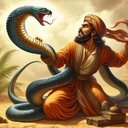
| Seyyathāpi, bhikkhave, puriso ala·gadda·t·thiko ala·gadda·gavesī ala·gadda·pari·yesanaṁ cara·māno. | Suppose there was a person in need of a snake. And while wandering in search of a snake | 譬如有人需要一條蛇。當他四處尋找蛇時 |
| So passeyya maha·ntaṁ ala·gaddaṁ. | they’d see a big snake, | 他看到一條大蛇, |
| Tamenaṁ bhoge vā naṅguṭṭhe vā gaṇheyya. | and grasp it by the coil or the tail. | 並抓住牠的身體中段或尾巴。 |
| Tassa so ala·gaddo paṭi·pari·vattitvā hatthe vā bāhāya vā añña·tarasmiṁ vā aṅga·paccaṅge ḍaṁseyya. | But that snake would twist back and bite them on the hand or the arm or limb, | 但那條蛇會轉過身來咬他的手、臂或肢體, |
| So tato·nidānaṁ maraṇaṁ vā nigaccheyya maraṇa·mattaṁ vā dukkhaṁ. |
resulting in death or deadly pain. | 導致死亡或致命的痛苦。 |
| Taṁ kissa hetu? | Why is that? | 為何如此? |
| Duggahitattā, bhikkhave, ala·gaddassa. | Because of their wrong grasp of the snake. | 因為他錯誤地抓住了蛇。 |
| Evameva kho, bhikkhave, idhekacce mogha·purisā dhammaṁ pari·yāpuṇanti— | In the same way, a foolish person memorizes The Dharma … | 同樣地,愚人記誦法… |
| suttaṁ, geyyaṁ, veyy·ākara·ṇaṁ, gāthaṁ, udānaṁ, itivuttakaṁ, jātakaṁ, abbhuta·dhammaṁ, ve·dallaṁ. | ||
| Te taṁ dhammaṁ pari·yāpuṇitvā tesaṁ dhammānaṁ paññāya atthaṁ na upaparikkhanti. |
||
| Tesaṁ te dhammā paññāya atthaṁ an·upaparikkhataṁ na nijjhānaṁ khamanti. |
||
| Te upārambh·ānisaṁsā ceva dhammaṁ pari·yāpuṇanti itivādappamokkhānisaṁsā ca. | ||
| Yassa catthāya dhammaṁ pari·yāpuṇanti tañcassa atthaṁ nānubhonti. | ||
| Tesaṁ te dhammā duggahitā dīgha·rattaṁ a·hitāya dukkhāya saṁvattanti. | and those Dharmas lead to their lasting harm and suffering. | 而那些法導致他們長久的傷害和痛苦。 |
| Taṁ kissa hetu? | Why is that? | 為何如此? |
| Duggahitattā, bhikkhave, dhammānaṁ. | Because of their wrong grasp of the Dharmas. | 因為他們對法的錯誤執取。 |
❧
+22.8 – (correct grasp of the Dharmas.)
all
| Idha pana, bhikkhave, ekacce kula·puttā dhammaṁ pari·yāpuṇanti— | Now, take a respectable person who memorizes The Dharma— | 現在,譬如善男子記誦法—— |
| suttaṁ, geyyaṁ, veyy·ākara·ṇaṁ, gāthaṁ, udānaṁ, itivuttakaṁ, jātakaṁ, abbhuta·dhammaṁ, ve·dallaṁ. | statements, songs, discussions, verses, inspired sayings, legends, stories of past lives, amazing stories, and analyses. | 經、歌、論、偈、感興語、傳奇、本生譚、希有法及分析。 |
| Te taṁ dhammaṁ pari·yāpuṇitvā tesaṁ dhammānaṁ paññāya atthaṁ upaparikkhanti. |
And once they’ve memorized them, they examine their meaning with wisdom, | 記誦之後,他們用智慧審察其意義, |
| Tesaṁ te dhammā paññāya atthaṁ upaparikkhataṁ nijjhānaṁ khamanti. |
and come to a reflective acceptance of them. | 並反思接受它們。 |
| Te na ceva upārambh·ānisaṁsā dhammaṁ pari·yāpuṇanti na itivādappamokkhānisaṁsā ca. | They don’t memorize The Dharma for the sake of finding fault and winning debates. | 他們不為吹毛求疵和贏得辯論而記誦法。 |
| Yassa catthāya dhammaṁ pari·yāpuṇanti tañcassa atthaṁ anubhonti. | They realize the goal for which they memorized them. | 他們實現了他們記誦法的目的。 |
| Tesaṁ te dhammā suggahitā dīgha·rattaṁ hitāya sukhāya saṁvattanti. | Because they’re correctly grasped, those Dharmas lead to their lasting welfare and happiness. | 因為被正確地執取,那些法導致他們長久的福祉和快樂。 |
| Taṁ kissa hetu? | Why is that? | 為何如此? |
| Suggahitattā bhikkhave dhammānaṁ. | Because of their correct grasp of the Dharmas. | 因為他們對法的正確執取。 |
+§8.2 – (simile of grasping snake neck ↔ correct grasp of Dharma)
| Seyyathāpi, bhikkhave, puriso ala·gadda·t·thiko ala·gadda·gavesī ala·gadda·pari·yesanaṁ cara·māno. | Suppose there was a person in need of a snake. And while wandering in search of a snake | 譬如有人需要一條蛇。當他四處尋找蛇時 |
| So passeyya maha·ntaṁ ala·gaddaṁ. | they’d see a big snake, | 他看到一條大蛇, |
| Tamenaṁ aja·padena daṇḍena suniggahitaṁ niggaṇheyya. | and hold it down carefully with a cleft stick. | 並用一支開叉的棍子小心地按住它。 |
| Aja·padena daṇḍena suniggahitaṁ niggahitvā, gīvāya suggahitaṁ gaṇheyya. | Only then would they correctly grasp it by the neck. | 只有這樣,他才能正確地抓住它的脖子。 |
| Kiñcāpi so, bhikkhave, ala·gaddo tassa purisassa hatthaṁ vā bāhaṁ vā añña·taraṁ vā aṅga·pacc·aṅgaṁ bhogehi pali·veṭheyya, atha kho so neva tato·nidānaṁ maraṇaṁ vā nigaccheyya maraṇa·mattaṁ vā dukkhaṁ. |
And even though that snake might wrap its coils around that person’s hand or arm or some other limb, that wouldn’t result in death or deadly pain. | 即使那條蛇可能會用身體纏繞那個人的手、臂或其他肢體,那也不會導致死亡或致命的痛苦。 |
| Taṁ kissa hetu? | Why is that? | 為何如此? |
| Suggahitattā, bhikkhave, ala·gaddassa. | Because of their correct grasp of the snake. | 因為他正確地抓住了蛇。 |
| Evameva kho, bhikkhave, idhekacce kula·puttā dhammaṁ pari·yāpuṇanti— | In the same way, a respectable person memorizes The Dharma … | 同樣地,善男子記誦法… |
| suttaṁ, geyyaṁ, veyy·ākara·ṇaṁ, gāthaṁ, udānaṁ, itivuttakaṁ, jātakaṁ, abbhuta·dhammaṁ, ve·dallaṁ. | ||
| Te taṁ dhammaṁ pari·yāpuṇitvā tesaṁ dhammānaṁ paññāya atthaṁ upaparikkhanti. |
||
| Tesaṁ te dhammā paññāya atthaṁ upaparikkhataṁ nijjhānaṁ khamanti. |
||
| Te na ceva upārambh·ānisaṁsā dhammaṁ pari·yāpuṇanti, na itivādappamokkhānisaṁsā ca. | ||
| Yassa catthāya dhammaṁ pari·yāpuṇanti, tañcassa atthaṁ anubhonti. | ||
| Tesaṁ te dhammā suggahitā dīgha·rattaṁ atthāya hitāya sukhāya saṁvattanti. | and those Dharmas lead to their lasting welfare and happiness. | 而那些法導致他們長久的福祉和快樂。 |
| Taṁ kissa hetu? | Why is that? | 為何如此? |
| Suggahitattā, bhikkhave, dhammānaṁ. | Because of their correct grasp of the Dharmas. | 因為他們對法的正確執取。 |
| Tasmā·tiha, bhikkhave, yassa me bhāsitassa atthaṁ ājāneyyātha, tathā naṁ dhāreyyātha. |
So, monks, when you understand what I’ve said, you should remember it accordingly. | 所以,諸比丘,當你們理解我所說的話時,應當照此憶持。 |
| Yassa ca pana me bhāsitassa atthaṁ na ājāneyyātha, ahaṁ vo tattha paṭi·pucchitabbo, ye vā panāssu viyattā bhikkhū. |
But if I’ve said anything that you don’t understand, you should ask me about it, or some competent monks. | 但如果我說的任何話你們不理解,你們應當來問我,或問某些有能力的諸比丘。 |
❧
+22.9 – (Dhamma ↔ simile of raft)
| Kullū·pamaṁ vo, bhikkhave, dhammaṁ desessāmi nittharaṇa·t·thāya, no gahaṇa·t·thāya. |
monks, I will teach you how the Dhamma is similar to a raft: it’s for crossing over, not for holding on. | 諸比丘,我將教你們法如何如筏喻:是為了渡河,而非執取。 |
| Taṁ suṇātha, sādhukaṁ manasikarotha, bhāsi·s·sāmī”ti. | Listen and pay close attention, I will speak.” | 諦聽並善思念之,我將要說。」 |
| “Evaṁ, bhante”ti kho te bhikkhū bhagavato pacc·assosuṁ. |
“Yes, sir,” they replied. | 「是的,世尊。」他們回答。 |
| Bhagavā etadavoca: | The Buddha said this: | 佛陀如此說: |
| “Seyyathāpi, bhikkhave, puriso addh·āna·magga·p·paṭi·panno. | “Suppose there was a person travelling along the road. | 「譬如有人在路上旅行。 |
| So passeyya maha·ntaṁ udaka·ṇ·ṇavaṁ, orimaṁ tīraṁ sāsaṅkaṁ sappaṭibhayaṁ, pārimaṁ tīraṁ khemaṁ a·p·paṭi·bhayaṁ; | They’d see a large deluge, whose near shore was dubious and perilous, while the far shore was a sanctuary free of peril. | 他看到一大片洪水,此岸可疑而危險,而彼岸則是安全無虞的庇護所。 |
| na cassa nāvā santāraṇī uttara·setu vā a·pārā pāraṁ gamanāya. | But there was no ferryboat or bridge for crossing over. | 但沒有渡船或橋樑可以渡過。 |
| Tassa evam·assa: | They’d think: | 他會想: |
| ‘ayaṁ kho mahā·udaka·ṇ·ṇavo, orimaṁ tīraṁ sāsaṅkaṁ sappaṭibhayaṁ, pārimaṁ tīraṁ khemaṁ a·p·paṭi·bhayaṁ; | ||
| natthi ca nāvā santāraṇī uttara·setu vā a·pārā pāraṁ gamanāya. | ||
| Yannūnāhaṁ tiṇa·kaṭṭha·sākhā·palāsaṁ saṅkaḍḍhitvā, kullaṁ bandhitvā, taṁ kullaṁ nissāya hatthehi ca pādehi ca vāyama·māno sotthinā pāraṁ uttareyyan’ti. |
‘Why don’t I gather grass, sticks, branches, and leaves and make a raft? Riding on the raft, and paddling with my hands and feet, I can safely reach the far shore.’ | 『我何不收集草、木、枝、葉,做一個木筏?乘著木筏,用手腳划水,我便能安全到達彼岸。』 |
| Atha kho so, bhikkhave, puriso tiṇa·kaṭṭha·sākhā·palāsaṁ saṅkaḍḍhitvā, kullaṁ bandhitvā taṁ kullaṁ nissāya hatthehi ca pādehi ca vāyama·māno sotthinā pāraṁ uttareyya. |
And so they’d do exactly that. | 於是他便照此行事。 |
| Tassa purisassa uttiṇṇassa pāraṅgatassa evam·assa: | And when they’d crossed over to the far shore, they’d think: | 當他渡到彼岸後,他會想: |
| ‘bahu·kāro kho me ayaṁ kullo; | ‘This raft has been very helpful to me. | 『這個木筏對我幫助很大。 |
| imāhaṁ kullaṁ nissāya hatthehi ca pādehi ca vāyama·māno sotthinā pāraṁ uttiṇṇo. | Riding on the raft, and paddling with my hands and feet, I have safely crossed over to the far shore. | 乘著木筏,用手腳划水,我已安全渡到彼岸。 |
| Yannūnāhaṁ imaṁ kullaṁ sīse vā āropetvā khandhe vā uccāretvā yena kāmaṁ pakkameyyan’ti. | Why don’t I hoist it on my head or pick it up on my shoulder and go wherever I want?’ | 我何不將它頂在頭上或扛在肩上,去我想去的任何地方?』 |
| Taṁ kiṁ maññatha, bhikkhave, | What do you think, monks? | 你們認為如何,諸比官? |
| api nu so puriso evaṅkārī tasmiṁ kulle kicca·kārī assā”ti? | Would that person be doing what should be done with that raft?” | 那個人對那個木筏所做的,是應當做的事嗎?」 |
| “No hetaṁ, bhante”. | “No, sir.” | 「不,世尊。」 |
| “Kathaṅkārī ca so, bhikkhave, puriso tasmiṁ kulle kicca·kārī assa? | “And what, monks, should that person do with the raft? | 「那麼,諸比丘,那個人應當如何處理那個木筏呢? |
| Idha, bhikkhave, tassa purisassa uttiṇṇassa pāraṅgatassa evam·assa: | When they’d crossed over they should think: | 當他渡過後,他應當想: |
| ‘bahu·kāro kho me ayaṁ kullo; | ‘This raft has been very helpful to me. … | 『這個木筏對我幫助很大。… |
| imāhaṁ kullaṁ nissāya hatthehi ca pādehi ca vāyama·māno sotthinā pāraṁ uttiṇṇo. | ||
| Yannūnāhaṁ imaṁ kullaṁ thale vā ussādetvā udake vā opilāpetvā yena kāmaṁ pakkameyyan’ti. | Why don’t I beach it on dry land or set it adrift on the water and go wherever I want?’ | 我何不將它拖上岸,或讓它在水中漂流,然後去我想去的任何地方?』 |
| Evaṅkārī kho so, bhikkhave, puriso tasmiṁ kulle kicca·kārī assa. | That’s what that person should do with the raft. | 這才是那個人應當對那個木筏做的事。 |
| Evameva kho, bhikkhave, kullū·pamo mayā dhammo desito nittharaṇa·t·thāya, no gahaṇa·t·thāya. | In the same way, I have taught how The Dharma is similar to a raft: it’s for crossing over, not for holding on. | 同樣地,我教導的法如何如筏喻:是為了渡河,而非執取。 |
| Kullū·pamaṁ vo, bhikkhave, dhammaṁ desitaṁ, ājāna·ntehi dhammāpi vo pahātabbā pageva a·dhammā. | By understanding the simile of the raft, you will even give up the Dharmas, let alone what is against the Dharmas. | 通過理解筏喻,你們甚至將捨棄法,何況是非法呢? |
❧
+22.10 – (six grounds for views)
| Cha·yimāni, bhikkhave, diṭṭhi·ṭ·ṭhānāni. | monks, there are these six grounds for views. | 比丘們,有這六種見地。 |
| Katamāni cha? | What six? | 哪六種? |
| Idha, bhikkhave, a·s·sutavā puthu·j·jano ariyānaṁ a·dassāvī ariya·dhammassa a·kovido ariya·dhamme a·vinīto, sappurisānaṁ a·dassāvī sappurisa·dhammassa a·kovido sappurisa·dhamme a·vinīto, |
Take an uneducated ordinary person who has not seen the noble ones, and is neither skilled nor trained in The Dharma of the noble ones. They’ve not seen good persons, and are neither skilled nor trained in The Dharma of the good persons. | 未受教育的普通人,沒有見過高尚的人,也沒有受過高尚之法的薰陶和訓練。他們沒有見過善人,也沒有受過善人法的薰陶和訓練。 |
| rūpaṁ ‘etaṁ mama, esohamasmi, eso me attā’ti samanupassati; |
They regard form like this: ‘This is mine, I am this, this is my self.’ | 他們這樣看待形式:“這是我的,我就是這個,這是我的自我。” |
| vedanaṁ ‘etaṁ mama, esohamasmi, eso me attā’ti samanupassati; |
They also regard feeling … | 他們也這樣看待感受…… |
| saññaṁ ‘etaṁ mama, esohamasmi, eso me attā’ti samanupassati; |
perception … | 認知…… |
| saṅkhāre ‘etaṁ mama, esohamasmi, eso me attā’ti samanupassati; |
co-activities … | 協同活動…… |
| yampi taṁ diṭṭhaṁ sutaṁ mutaṁ viññātaṁ pattaṁ pari·yesitaṁ, anuvicaritaṁ manasā tampi ‘etaṁ mama, esohamasmi, eso me attā’ti samanupassati; |
whatever is seen, heard, thought, cognized, searched, and explored by the mind like this: ‘This is mine, I am this, this is my self.’ | 所有通過心所見、所聞、所思、所知、所尋、所究的,都像這樣:“這是我的,我就是這個,這是我的自我。” |
| yampi taṁ diṭṭhi·ṭ·ṭhānaṁ— | And the same for this ground for views: | 對於這種見地也是如此: |
| so loko so attā, so pecca bhavissāmi nicco dhuvo sassato a·vipariṇāma·dhammo, sassati·samaṁ tatheva ṭhassāmīti— |
‘The self and the cosmos are one and the same. After death I will be permanent, everlasting, eternal, imperishable, and will last forever and ever.’ | “自我與宇宙是一體的。死後我將是永久的,永恆的,不朽的,永遠持續下去。” |
| tampi ‘etaṁ mama, esohamasmi, eso me attā’ti samanupassati. |
They also regard this: ‘This is mine, I am this, this is my self.’ | 他們也這樣看待:“這是我的,我就是這個,這是我的自我。” |
(educated noble-one's-disciple)
| Sutavā ca kho, bhikkhave, ariya·sāvako ariyānaṁ dassāvī ariya·dhammassa kovido ariya·dhamme suvinīto, sappurisānaṁ dassāvī sappurisa·dhammassa kovido sappurisa·dhamme suvinīto, |
But an educated noble-one's-disciple has seen the noble ones, and is skilled and trained in The Dharma of the noble ones. They’ve seen good persons, and are skilled and trained in The Dharma of the good persons. | 但受過教育的聖弟子,見過高尚的人,並且受過高尚之法的薰陶和訓練。他們見過善人,並且受過善人法的薰陶和訓練。 |
| rūpaṁ ‘netaṁ mama, nesohamasmi, na meso attā’ti samanupassati; | They regard form like this: ‘This is not mine, I am not this, this is not my self.’ | 他們這樣看待形式:“這不是我的,我不是這個,這不是我的自我。” |
| vedanaṁ ‘netaṁ mama, nesohamasmi, na meso attā’ti samanupassati; | They also regard feeling … | 他們也這樣看待感受…… |
| saññaṁ ‘netaṁ mama, nesohamasmi, na meso attā’ti samanupassati; | perception … | 認知…… |
| saṅkhāre ‘netaṁ mama, nesohamasmi, na meso attā’ti samanupassati; | co-activities … | 協同活動…… |
| yampi taṁ diṭṭhaṁ sutaṁ mutaṁ viññātaṁ pattaṁ pari·yesitaṁ, anuvicaritaṁ manasā, tampi ‘netaṁ mama, nesohamasmi, na meso attā’ti samanupassati; |
whatever is seen, heard, thought, cognized, searched, and explored by the mind like this: ‘This is not mine, I am not this, this is not my self.’ | 所有通過心所見、所聞、所思、所知、所尋、所究的,都像這樣:“這不是我的,我不是這個,這不是我的自我。” |
| yampi taṁ diṭṭhi·ṭ·ṭhānaṁ— | And the same for this ground for views: | 對於這種見地也是如此: |
| so loko so attā, so pecca bhavissāmi nicco dhuvo sassato a·vipariṇāma·dhammo, sassati·samaṁ tatheva ṭhassāmīti— |
‘The self and the cosmos are one and the same. After death I will be permanent, everlasting, eternal, imperishable, and will last forever and ever.’ | “自我與宇宙是一體的。死後我將是永久的,永恆的,不朽的,永遠持續下去。” |
| tampi ‘netaṁ mama, nesohamasmi, na meso attā’ti samanupassati. | They also regard this: ‘This is not mine, I am not this, this is not my self.’ | 他們也這樣看待:“這不是我的,我不是這個,這不是我的自我。” |
| So evaṁ samanu·passanto asati na pari·tassatī”ti. |
Seeing in this way they’re not anxious about what doesn’t exist.” | 這樣看待,他們就不會對不存在的事物感到焦慮。” |
(anxiety)
| Evaṁ vutte, añña·taro bhikkhu bhagavantaṁ etadavoca: | When he said this, one of the monks asked the Buddha: | 他說這話時,一位比丘問佛陀: |
| “siyā nu kho, bhante, bahiddhā asati pari·tassanā”ti? |
“Sir, can there be anxiety about what doesn’t exist externally?” | “尊者,對外在不存在的事物會有焦慮嗎?” |
| “Siyā, bhikkhū”ti—bhagavā avoca. | “There can, monk,” said the Buddha. | “會的,比丘,”佛陀說。 |
| “Idha bhikkhu eka·c·cassa evaṁ hoti: | “It’s when someone thinks: | “那是當有人這樣想的時候: |
| ‘ahu vata me, taṁ vata me natthi; | ‘Oh, but it used to be mine, and it is mine no more. | ‘哦,它曾經是我的,現在不再是我的了。 |
| siyā vata me, taṁ vatāhaṁ na labhāmī’ti. | Oh, but it could be mine, and I will get it no more.’ | 哦,它可能曾經是我的,但我再也得不到了。’ |
| So socati kilamati pari·devati urattāḷiṁ kandati sammohaṁ āpajjati. |
They sorrow and pine and lament, beating their breast and falling into confusion. | 他們悲傷、憔悴、哀嘆,捶胸頓足,陷入混亂。 |
| Evaṁ kho, bhikkhu, bahiddhā asati pari·tassanā hotī”ti. |
That’s how there is anxiety about what doesn’t exist externally.” | 這就是對外在不存在的事物感到焦慮的方式。” |
| “Siyā pana, bhante, bahiddhā asati a·pari·tassanā”ti? |
“But can there be no anxiety about what doesn’t exist externally?” | “但是對外在不存在的事物能否沒有焦慮呢?” |
| “Siyā, bhikkhū”ti—bhagavā avoca. | “There can, monk,” said the Buddha. | “可以的,比丘,”佛陀說。 |
| “Idha bhikkhu eka·c·cassa na evaṁ hoti: | “It’s when someone doesn’t think: | “那是當有人不這樣想的時候: |
| ‘ahu vata me, taṁ vata me natthi; | ‘Oh, but it used to be mine, and it is mine no more. | ‘哦,它曾經是我的,現在不再是我的了。 |
| siyā vata me, taṁ vatāhaṁ na labhāmī’ti. | Oh, but it could be mine, and I will get it no more.’ | 哦,它可能曾經是我的,但我再也得不到了。’ |
| So na socati na kilamati na pari·devati na urattāḷiṁ kandati na sammohaṁ āpajjati. |
They don’t sorrow and pine and lament, beating their breast and falling into confusion. | 他們不悲傷、不憔悴、不哀嘆,不捶胸頓足,不陷入混亂。 |
| Evaṁ kho, bhikkhu, bahiddhā asati a·pari·tassanā hotī”ti. |
That’s how there is no anxiety about what doesn’t exist externally.” | 這就是對外在不存在的事物沒有焦慮的方式。” |
| “Siyā nu kho, bhante, ajjh·attaṁ asati pari·tassanā”ti? |
“But can there be anxiety about what doesn’t exist internally?” | “但是對內在不存在的事物會有焦慮嗎?” |
| “Siyā, bhikkhū”ti—bhagavā avoca. | “There can, monk,” said the Buddha. | “會的,比丘,”佛陀說。 |
| “Idha, bhikkhu, eka·c·cassa evaṁ diṭṭhi hoti: | “It’s when someone has such a view: | “那是當有人持有這種見地的時候: |
| ‘so loko so attā, so pecca bhavissāmi nicco dhuvo sassato a·vipariṇāma·dhammo, sassati·samaṁ tatheva ṭhassāmī’ti. |
‘The self and the cosmos are one and the same. After death I will be permanent, everlasting, eternal, imperishable, and will last forever and ever.’ | ‘自我與宇宙是一體的。死後我將是永久的,永恆的,不朽的,永遠持續下去。’ |
| So suṇāti tathā·gatassa vā tathā·gata·sāvakassa vā sabb·esaṁ diṭṭhiṭṭhānādhiṭṭhānapariyuṭṭhānābhinivesānusayānaṁ samugghātāya sabba·saṅkhāra·sama·thāya sabbū·padhi·paṭi·nissaggāya taṇhā·k·khayāya virāgāya nirodhāya nibbānāya dhammaṁ dese·ntassa. |
They hear the Realized One or their disciple teaching Dhamma for the uprooting of all grounds, dedications, obsessions, insistences, and underlying tendencies regarding views; for the stilling of all activities, the letting go of all attachments, the ending of craving, fading away, cessation, nirvana. | 他們聽到如來或其弟子教導佛法,旨在根除所有關於見地的基礎、奉獻、執著、堅持和潛在傾向;旨在平息所有活動,放下所有執著,終止貪愛,消退,止息,涅槃。 |
| Tassa evaṁ hoti: | They think: | 他們想: |
| ‘ucchijjissāmi nāmassu, vinassissāmi nāmassu, nassu nāma bhavi·s·sāmī’ti. |
‘Whoa, I’m going to be annihilated and destroyed! I won’t exist any more!’ | ‘哎呀,我將被消滅和摧毀!我將不復存在!’ |
| So socati kilamati pari·devati urattāḷiṁ kandati sammohaṁ āpajjati. |
They sorrow and pine and lament, beating their breast and falling into confusion. | 他們悲傷、憔悴、哀嘆,捶胸頓足,陷入混亂。 |
| Evaṁ kho, bhikkhu, ajjh·attaṁ asati pari·tassanā hotī”ti. |
That’s how there is anxiety about what doesn’t exist internally.” | 這就是對內在不存在的事物感到焦慮的方式。” |
| “Siyā pana, bhante, ajjh·attaṁ asati a·pari·tassanā”ti? |
“But can there be no anxiety about what doesn’t exist internally?” | “但是對內在不存在的事物能否沒有焦慮呢?” |
| “Siyā, bhikkhū”ti bhagavā avoca. | “There can,” said the Buddha. | “可以的,”佛陀說。 |
| “Idha, bhikkhu, eka·c·cassa na evaṁ diṭṭhi hoti: | “It’s when someone doesn’t have such a view: | “那是當有人不持有這種見地的時候: |
| ‘so loko so attā, so pecca bhavissāmi nicco dhuvo sassato a·vipariṇāma·dhammo, sassati·samaṁ tatheva ṭhassāmī’ti. |
‘The self and the cosmos are one and the same. After death I will be permanent, everlasting, eternal, imperishable, and will last forever and ever.’ | ‘自我與宇宙是一體的。死後我將是永久的,永恆的,不朽的,永遠持續下去。’ |
| So suṇāti tathā·gatassa vā tathā·gata·sāvakassa vā sabb·esaṁ diṭṭhiṭṭhānādhiṭṭhānapariyuṭṭhānābhinivesānusayānaṁ samugghātāya sabba·saṅkhāra·sama·thāya sabbū·padhi·paṭi·nissaggāya taṇhā·k·khayāya virāgāya nirodhāya nibbānāya dhammaṁ dese·ntassa. |
They hear the Realized One or their disciple teaching Dhamma for the uprooting of all grounds, dedicationss, obsessions, insistences, and underlying tendencies regarding views; for the stilling of all activities, the letting go of all attachments, the ending of craving, fading away, cessation, nirvana. | 他們聽到如來或其弟子教導佛法,旨在根除所有關於見地的基礎、奉獻、執著、堅持和潛在傾向;旨在平息所有活動,放下所有執著,終止貪愛,消退,止息,涅槃。 |
| Tassa na evaṁ hoti: | It never occurs to them: | 他們從不這樣想: |
| ‘ucchijjissāmi nāmassu, vinassissāmi nāmassu, nassu nāma bhavi·s·sāmī’ti. |
‘Whoa, I’m going to be annihilated and destroyed! I won’t exist any more!’ | ‘哎呀,我將被消滅和摧毀!我將不復存在!’ |
| So na socati na kilamati na pari·devati na urattāḷiṁ kandati na sammohaṁ āpajjati. |
They don’t sorrow and pine and lament, beating their breast and falling into confusion. | 他們不悲傷、不憔悴、不哀嘆,不捶胸頓足,不陷入混亂。 |
| Evaṁ kho, bhikkhu, ajjh·attaṁ asati a·pari·tassanā hoti. |
That’s how there is no anxiety about what doesn’t exist internally. | 這就是對內在不存在的事物沒有焦慮的方式。” |
| Taṁ, bhikkhave, pari·g·gahaṁ pari·g·gaṇheyyātha, yvāssa pari·g·gaho nicco dhuvo sassato a·vipariṇāma·dhammo, sassati·samaṁ tatheva tiṭṭheyya. |
monks, it would make sense to be possessive about something that’s permanent, everlasting, eternal, imperishable, and will last forever and ever. | 比丘們,如果有什麼東西是永久的、永恆的、不朽的、永遠存在的,那麼對它產生佔有欲是合理的。 |
| Passatha no tumhe, bhikkhave, taṁ pari·g·gahaṁ yvāssa pari·g·gaho nicco dhuvo sassato a·vipariṇāma·dhammo, sassati·samaṁ tatheva tiṭṭheyyā”ti? |
But do you see any such possession?” | 但是你們看到有這樣的佔有嗎?” |
| “No hetaṁ, bhante”. | “No, sir.” | “沒有,尊者。” |
| “Sādhu, bhikkhave. | “Good, monks! | “很好,比丘們! |
| Ahampi kho taṁ, bhikkhave, pari·g·gahaṁ na samanupassāmi yvāssa pari·g·gaho nicco dhuvo sassato a·vipariṇāma·dhammo sassati·samaṁ tatheva tiṭṭheyya. |
I also can’t see any such possession. | 我也看不到任何這樣的佔有。 |
| Taṁ, bhikkhave, attavād·upādānaṁ upādiyetha, yaṁsa attavād·upādānaṁ upādiyato na uppajjeyyuṁ soka·pari·deva·dukkha·domanass·upāyāsā. |
It would make sense to grasp at a doctrine of self that didn’t give rise to sorrow, lamentation, pain, sadness, and distress. | 執著於一種不會帶來悲傷、哀嘆、痛苦、悲傷和苦惱的自我學說是合理的。 |
| Passatha no tumhe, bhikkhave, taṁ attavād·upādānaṁ yaṁsa attavād·upādānaṁ upādiyato na uppajjeyyuṁ soka·pari·deva·dukkha·domanass·upāyāsā”ti? |
But do you see any such doctrine of self?” | 但你們看到有這樣的自我學說嗎?” |
| “No hetaṁ, bhante”. | “No, sir.” | “沒有,尊者。” |
| “Sādhu, bhikkhave. | “Good, monks! | “很好,比丘們! |
| Ahampi kho taṁ, bhikkhave, attavād·upādānaṁ na samanupassāmi yaṁsa attavād·upādānaṁ upādiyato na uppajjeyyuṁ soka·pari·deva·dukkha·domanass·upāyāsā. |
I also can’t see any such doctrine of self. | 我也看不到任何這樣的自我學說。 |
| Taṁ, bhikkhave, diṭṭhi·ni·s·sayaṁ nissayetha yaṁsa diṭṭhi·ni·s·sayaṁ nissa·yato na uppajjeyyuṁ soka·pari·deva·dukkha·domanass·upāyāsā. |
It would make sense to rely on a view that didn’t give rise to sorrow, lamentation, pain, sadness, and distress. | 依賴一種不會引起悲傷、哀嘆、痛苦、憂愁和苦惱的觀點是合理的。 |
| Passatha no tumhe, bhikkhave, taṁ diṭṭhi·ni·s·sayaṁ yaṁsa diṭṭhi·ni·s·sayaṁ nissa·yato na uppajjeyyuṁ soka·pari·deva·dukkha·domanass·upāyāsā”ti? |
But do you see any such view to rely on?” | 但是你們看到有任何可以依賴的這種觀點嗎?” |
| “No hetaṁ, bhante”. | “No, sir.” | “沒有,尊者。” |
| “Sādhu, bhikkhave. | “Good, monks! | “很好,比丘們! |
| Ahampi kho taṁ, bhikkhave, diṭṭhi·ni·s·sayaṁ na samanupassāmi yaṁsa diṭṭhi·ni·s·sayaṁ nissa·yato na uppajjeyyuṁ soka·pari·deva·dukkha·domanass·upāyāsā. |
I also can’t see any such view to rely on. | 我也看不到任何可以依賴的這種觀點。 |
| Atta·ni vā, bhikkhave, sati ‘attaniyaṁ me’ti assā”ti? | monks, were a self to exist, would there be the thought, ‘Belonging to my self’?” | 比丘們,如果有一個自我存在,會有‘屬於我的自我’這種想法嗎?” |
| “Evaṁ, bhante”. | “Yes, sir.” | “是的,尊者。” |
| “Attaniye vā, bhikkhave, sati ‘attā me’ti assā”ti? | “Were what belongs to a self to exist, would there be the thought, ‘My self’?” | “如果屬於自我的東西存在,會有‘我的自我’這種想法嗎?” |
| “Evaṁ, bhante”. | “Yes, sir.” | “是的,尊者。” |
| “Atta·ni ca, bhikkhave, attaniye ca sa·c·cato thetato an·upalabbha·māne, yampi taṁ diṭṭhi·ṭ·ṭhānaṁ: | “But self and what belongs to a self are not acknowledged as a genuine fact. This being so, is not the following a totally foolish teaching: | “但是自我和屬於自我的東西不被承認為真實的存在。既然如此,以下這種教導難道不是完全愚蠢的嗎: |
| ‘so loko so attā, so pecca bhavissāmi nicco dhuvo sassato a·vipariṇāma·dhammo, sassati·samaṁ tatheva ṭhassāmī’ti— |
‘The self and the cosmos are one and the same. After death I will be permanent, everlasting, eternal, imperishable, and will last forever and ever’?” | ‘自我與宇宙是一體的。死後我將是永久的,永恆的,不朽的,永遠持續下去’?” |
| nanāyaṁ, bhikkhave, kevalo pari·pūro bāla·dhammo”ti? | ||
| “Kiñhi no siyā, bhante, kevalo hi, bhante, pari·pūro bāla·dhammo”ti. |
“What else could it be, sir? It’s a totally foolish teaching.” | “尊者,還能是什麼呢?這完全是愚蠢的教導。” |
❧
+22.15 – (seeing impermanence, suffering, not self)
| “Taṁ kiṁ maññatha, bhikkhave, | “What do you think, monks? | “你們認為呢,比丘們? |
| rūpaṁ ni·c·caṁ vā a·ni·c·caṁ vā”ti? | Is form permanent or impermanent?” | 色是常還是無常?” |
| “A·ni·c·caṁ, bhante”. | “Impermanent, sir.” | “無常,尊者。” |
| “Yaṁ panā·ni·c·caṁ dukkhaṁ vā taṁ sukhaṁ vā”ti? | “But if it’s impermanent, is it suffering or happiness?” | “但如果它是無常的,它是苦還是樂?” |
| “Dukkhaṁ, bhante”. | “Suffering, sir.” | “苦,尊者。” |
| “Yaṁ panā·ni·c·caṁ dukkhaṁ vipariṇāma·dhammaṁ, kallaṁ nu taṁ samanu·pass·ituṁ— | “But if it’s impermanent, suffering, and liable to fall apart, is it fit to be regarded thus: | “但如果它是無常的、苦的,並且容易壞滅,它適合被這樣看待嗎: |
| etaṁ mama, esohamasmi, eso me attā”ti? | ‘This is mine, I am this, this is my self’?” | ‘這是我的,我就是這個,這是我的自我’?” |
| “No hetaṁ, bhante”. | “No, sir.” | “不,尊者。” |
| “Taṁ kiṁ maññatha, bhikkhave, | “What do you think, monks? | “你們認為呢,比丘們? |
| vedanā …pe… | Is feeling … | 受是…… |
| saññā … | perception … | 想是…… |
| saṅkhārā … | co-activities … | 行是…… |
| viññāṇaṁ ni·c·caṁ vā a·ni·c·caṁ vā”ti? | consciousness permanent or impermanent?” | 識是常還是無常?” |
| “A·ni·c·caṁ, bhante”. | “Impermanent, sir.” | “無常,尊者。” |
| “Yaṁ panā·ni·c·caṁ dukkhaṁ vā taṁ sukhaṁ vā”ti? | “But if it’s impermanent, is it suffering or happiness?” | “但如果它是無常的,它是苦還是樂?” |
| “Dukkhaṁ, bhante”. | “Suffering, sir.” | “苦,尊者。” |
| “Yaṁ panā·ni·c·caṁ dukkhaṁ vipariṇāma·dhammaṁ, kallaṁ nu taṁ samanu·pass·ituṁ— | “But if it’s impermanent, suffering, and liable to fall apart, is it fit to be regarded thus: | “但如果它是無常的、苦的,並且容易壞滅,它適合被這樣看待嗎: |
| etaṁ mama, esohamasmi, eso me attā”ti? | ‘This is mine, I am this, this is my self’?” | ‘這是我的,我就是這個,這是我的自我’?” |
| “No hetaṁ, bhante”. | “No, sir.” | “不,尊者。” |
| “Tasmā·tiha, bhikkhave, yaṁ kiñci rūpaṁ atītā·nāgata·pacc·uppannaṁ, ajjh·attaṁ vā bahiddhā vā, oḷ·ārikaṁ vā sukhumaṁ vā, hīnaṁ vā paṇītaṁ vā, yaṁ dūre sa·ntike vā, sabbaṁ rūpaṁ ‘netaṁ mama, nesohamasmi, na meso attā’ti—evam·etaṁ yathā·bhūtaṁ samma·p·paññāya daṭṭhabbaṁ. |
“So, monks, you should truly see any kind of form at all—past, future, or present; internal or external; coarse or fine; inferior or superior; far or near: all form—with right understanding: ‘This is not mine, I am not this, this is not my self.’ | 所以,比丘們,你們應該以正見真實地看待任何一種色——過去、未來或現在;內在或外在;粗或細;劣或優;遠或近:所有的色——都應該這樣看待:‘這不是我的,我不是這個,這不是我的自我。’ |
| Yā kāci vedanā …pe… | You should truly see any kind of feeling … | 你們應該真實地看待任何一種受…… |
| yā kāci saññā … | perception … | 想…… |
| ye keci saṅkhārā … | co-activities … | 行…… |
| yaṁ kiñci viññāṇaṁ atītā·nāgata·pacc·uppannaṁ, ajjh·attaṁ vā bahiddhā vā, oḷ·ārikaṁ vā sukhumaṁ vā, hīnaṁ vā paṇītaṁ vā, yaṁ dūre sa·ntike vā, sabbaṁ viññāṇaṁ ‘netaṁ mama, nesohamasmi, na meso attā’ti—evam·etaṁ yathā·bhūtaṁ samma·p·paññāya daṭṭhabbaṁ. |
consciousness at all—past, future, or present; internal or external; coarse or fine; inferior or superior; far or near: all consciousness—with right understanding: ‘This is not mine, I am not this, this is not my self.’ | 識——過去、未來或現在;內在或外在;粗或細;劣或優;遠或近:所有的識——都應該這樣看待:‘這不是我的,我不是這個,這不是我的自我。’ |
❧
+22.16 – (disenchantment, dispassion, nirvana, arahant)
| Evaṁ passaṁ, bhikkhave, sutavā ariya·sāvako rūpasmiṁ nibbindati, vedanāya nibbindati, saññāya nibbindati, saṅkhāresu nibbindati, viññāṇasmiṁ nibbindati, |
Seeing this, a learned noble-one's-disciple grows disenchanted with form, feeling, perception, co-activities, and consciousness. | 看到這一點,一位有學識的聖弟子對色、受、想、行和識感到厭離。 |
| nibbidā virajjati, virāgā vimuccati, vimuttasmiṁ vimutta·miti ñāṇaṁ hoti. |
Being disenchanted, desire fades away. When desire fades away they’re freed. When they’re freed, they know they’re freed. | 厭離之後,欲望就會消退。當欲望消退時,他們就得到了解脫。當他們得到解脫時,他們就知道自己已經解脫了。 |
| ‘Khīṇā jāti, vusitaṁ brahma·cariyaṁ, kataṁ karaṇīyaṁ, nāparaṁ ittha·t·tāyā’ti pajānāti. | They understand: ‘Rebirth is ended, the spiritual journey has been completed, what had to be done has been done, there is no return to any state of existence.’ | 他們明白:‘輪迴已盡,梵行已立,所作已辦,不再有任何存在狀態。’ |
| Ayaṁ vuccati, bhikkhave, bhikkhu ukkhitta·paligho itipi, saṅkiṇṇa·parikkho itipi, abbūḷh·esiko itipi, niraggaḷo itipi, ariyo panna·d·dhajo panna·bhāro visaṁyutto itipi. |
This is called a monk who has lifted up the cross-bar, filled in the trench, and pulled up the pillar; who is unbarred, a noble one with banner and burden put down, detached. | 這被稱為一個比丘,他已舉起橫杆,填平了壕溝,拔起了柱子;他已無礙,是一位放下旗幟和重擔、超然的聖者。 |
| Kathañca, bhikkhave, bhikkhu ukkhitta·paligho hoti? | And how has a monk lifted the cross-bar? | 比丘如何舉起橫杆? |
| Idha, bhikkhave, bhikkhuno a·vijjā pahīnā hoti, ucchinna·mūlā tālā·vatthu·katā anabhāvaṅkatā, āyatiṁ an·uppāda·dhammā. |
It’s when a monk has given up ignorance, cut it off at the root, made it like a palm stump, obliterated it, so it’s unable to arise in the future. | 那就是比丘已經捨棄了無明,連根拔起,使它像棕櫚樹樁一樣,徹底消滅了它,使它將來無法生起。 |
| Evaṁ kho, bhikkhave, bhikkhu ukkhitta·paligho hoti. | That’s how a monk has lifted the cross-bar. | 比丘就是這樣舉起橫杆的。 |
| Kathañca, bhikkhave, bhikkhu saṅkiṇṇa·parikkho hoti? | And how has a monk filled in the trench? | 比丘如何填平壕溝? |
| Idha, bhikkhave, bhikkhuno ponobbhaviko jāti·saṁsāro pahīno hoti, ucchinna·mūlo tālā·vatthu·kato anabhāvaṅkato, āyatiṁ an·uppāda·dhammo. |
It’s when a monk has given up transmigrating through births in future lives, cut it off at the root, made it like a palm stump, obliterated it, so it’s unable to arise in the future. | 那就是比丘已經捨棄了未來世的輪迴,連根拔起,使它像棕櫚樹樁一樣,徹底消滅了它,使它將來無法生起。 |
| Evaṁ kho, bhikkhave, bhikkhu saṅkiṇṇa·parikkho hoti. | That’s how a monk has filled in the trench. | 比丘就是這樣填平壕溝的。 |
| Kathañca, bhikkhave, bhikkhu abbūḷh·esiko hoti? | And how has a monk pulled up the pillar? | 比丘如何拔起柱子? |
| Idha, bhikkhave, bhikkhuno taṇhā pahīnā hoti, ucchinna·mūlā tālā·vatthu·katā anabhāvaṅkatā, āyatiṁ an·uppāda·dhammā. |
It’s when a monk has given up craving, cut it off at the root, made it like a palm stump, obliterated it, so it’s unable to arise in the future. | 那就是比丘已經捨棄了貪愛,連根拔起,使它像棕櫚樹樁一樣,徹底消滅了它,使它將來無法生起。 |
| Evaṁ kho, bhikkhave, bhikkhu abbūḷh·esiko hoti. | That’s how a monk has pulled up the pillar. | 比丘就是這樣拔起柱子的。 |
| Kathañca, bhikkhave, bhikkhu niraggaḷo hoti? | And how is a monk unbarred? | 比丘如何無礙? |
| Idha, bhikkhave, bhikkhuno pañca orambhāgiyāni saṁyoj·a·nāni pahīnāni honti, ucchinna·mūlāni tālā·vatthu·katāni anabhāvaṅkatāni, āyatiṁ an·uppāda·dhammāni. |
It’s when a monk has given up the five lower fetters, cut them off at the root, made them like a palm stump, obliterated them, so they’re unable to arise in the future. | 那就是比丘已經捨棄了五下分結,連根拔起,使它們像棕櫚樹樁一樣,徹底消滅了它們,使它們將來無法生起。 |
| Evaṁ kho, bhikkhave, bhikkhu niraggaḷo hoti. | That’s how a monk is unbarred. | 比丘就是這樣無礙的。 |
| Kathañca, bhikkhave, bhikkhu ariyo panna·d·dhajo panna·bhāro visaṁyutto hoti? | And how is a monk a noble one with banner and burden put down, detached? | 比丘如何放下旗幟、重擔,超然自若? |
| Idha, bhikkhave, bhikkhuno asmi·māno pahīno hoti, ucchinna·mūlo tālā·vatthu·kato anabhāvaṅkato, āyatiṁ an·uppāda·dhammo. |
It’s when a monk has given up the conceit ‘I am’, cut it off at the root, made it like a palm stump, obliterated it, so it’s unable to arise in the future. | 那就是比丘已經捨棄了“我慢”,連根拔起,使它像棕櫚樹樁一樣,徹底消滅了它,使它將來無法生起。 |
| Evaṁ kho, bhikkhave, bhikkhu ariyo panna·d·dhajo panna·bhāro visaṁyutto hoti. | That’s how a monk is a noble one with banner and burden put down, detached. | 比丘就是這樣放下旗幟、重擔,超然自若的。 |
| Evaṁ vimutta·cittaṁ kho, bhikkhave, bhikkhuṁ sa·indā devā sabrahmakā sa·pajā·patikā anv·esaṁ nādhigacchanti: |
When a monk’s mind is freed like this, the gods together with Indra, Brahmā, and Pajāpati, search as they may, will not find | 當比丘的心像這樣解脫時,天神們,包括帝釋天、梵天和波闍波提,即使竭力尋找,也找不到 |
| ‘idaṁ nissitaṁ tathā·gatassa viññāṇan’ti. | anything that such a Realized One’s consciousness depends on. | 任何能讓這位如來意識所依賴的東西。 |
| Taṁ kissa hetu? | Why is that? | 為什麼會這樣呢? |
| Diṭṭhe·vāhaṁ, bhikkhave, dhamme tathā·gataṁ ananuvijjoti vadāmi. | Because even in the present life the Realized One is undiscoverable, I say. | 因為我說,即使在今生,如來也是不可發現的。 |
| Evaṁ·vādiṁ kho maṁ, bhikkhave, evam·akkhāyiṁ eke samaṇa·brāhmaṇā a·satā tucchā musā a·bhūtena abbh·ācikkhanti: | Though I speak and explain like this, certain ascetics and brahmins misrepresent me with the false, baseless, lying, untruthful claim: | 儘管我這樣說和解釋,某些沙門和婆羅門卻用虛假的、毫無根據的、謊言的、不真實的言論來誣衊我: |
| ‘ve·nayiko samaṇo gotamo, sato sa·t·tassa ucchedaṁ vināsaṁ vibhavaṁ paññāpetī’ti. | ‘The ascetic Gotama is an exterminator. He advocates the annihilation, eradication, and obliteration of an existing being.’ | “沙門喬達摩是一個滅絕者。他主張現有眾生的消滅、根除和湮滅。” |
| Yathā cāhaṁ na, bhikkhave, yathā cāhaṁ na vadāmi, tathā maṁ te bhonto samaṇa·brāhmaṇā a·satā tucchā musā a·bhūtena abbh·ācikkhanti: |
I have been falsely misrepresented as being what I am not, and saying what I do not say. | 我被虛假地誣衊為我不是的東西,說我沒有說過的話。 |
| ‘ve·nayiko samaṇo gotamo, sato sa·t·tassa ucchedaṁ vināsaṁ vibhavaṁ paññāpetī’ti. |
❧
+22.17 – (In the past, as today, "I Teach Only Suffering and the End of Suffering")
| Pubbe cāhaṁ, bhikkhave, etarahi ca dukkhañceva paññāpemi, dukkhassa ca nirodhaṁ. |
In the past, as today, what I describe is suffering and the cessation of suffering. | 過去如此,今天也如此,我所描述的是苦和苦的止息。 |
| Tatra ce, bhikkhave, pare tathā·gataṁ akkosanti pari·bhāsanti rosenti vihesenti, tatra, bhikkhave, tathā·gatassa na hoti āghāto na a·p·pacc·ayo na cetaso an·abhi·raddhi. |
This being so, if others abuse, attack, harass, and trouble the Realized One, he doesn’t get resentful, bitter, and emotionally exasperated. | 既然如此,如果他人辱罵、攻擊、騷擾和煩擾如來,他不會怨恨、痛苦和情緒激動。 |
| Tatra ce, bhikkhave, pare tathā·gataṁ sakkaronti garuṁ karonti mānenti pūjenti, tatra, bhikkhave, tathā·gatassa na hoti ānando na somanassaṁ na cetaso uppilāvitattaṁ. |
Or if others honor, respect, revere, or venerate him, he doesn’t get thrilled, elated, and emotionally excited. | 或者如果他人尊敬、尊重、敬仰、崇拜他,他不會感到興奮、高興和情緒激動。 |
| Tatra ce, bhikkhave, pare vā tathā·gataṁ sakkaronti garuṁ karonti mānenti pūjenti, tatra, bhikkhave, tathā·gatassa evaṁ hoti: |
He just thinks: | 他只是想: |
| ‘yaṁ kho idaṁ pubbe pari·ñ·ñātaṁ tattha me evarūpā kārā karīyantī’ti. | ‘They do such things for what has already been completely understood.’ | “他們這樣做是為了已經完全理解的東西。” |
| Tasmā·tiha, bhikkhave, tumhe cepi pare akkoseyyuṁ pari·bhāseyyuṁ roseyyuṁ viheseyyuṁ, tatra tumhe hi na āghāto na a·p·pacc·ayo na cetaso an·abhi·raddhi karaṇīyā. |
So, monks, if others abuse, attack, harass, and trouble you, don’t make yourselves resentful, bitter, and emotionally exasperated. | 所以,比丘們,如果他人辱罵、攻擊、騷擾和煩擾你們,不要讓自己怨恨、痛苦和情緒激動。 |
| Tasmā·tiha, bhikkhave, tumhe cepi pare sakkareyyuṁ garuṁ kareyyuṁ māneyyuṁ pūjeyyuṁ, tatra tumhehi na ānando na somanassaṁ na cetaso uppilāvitattaṁ karaṇīyaṁ. |
Or if others honor, respect, revere, or venerate you, don’t make yourselves thrilled, elated, and emotionally excited. | 或者如果他人尊敬、尊重、敬仰、崇拜你們,不要讓自己興奮、高興和情緒激動。 |
| Tasmā·tiha, bhikkhave, tumhe cepi pare sakkareyyuṁ garuṁ kareyyuṁ māneyyuṁ pūjeyyuṁ, tatra tumh·ākaṁ evam·assa: |
Just think: | 只管想: |
| ‘yaṃ kho idaṃ pubbe pariññātaṃ, tatthame evarūpā kārā karīyantī’ti. | ‘They do such things for what has already been completely understood.’ | “他們這樣做是為了已經完全理解的東西。” |
| Tasmā·tiha, bhikkhave, yaṁ na tumh·ākaṁ taṁ pajahatha; | So, monks, give up what isn't yours. | 所以,比丘們,放棄不屬於你們的東西。 |
| taṁ vo pahīnaṁ dīgha·rattaṁ hitāya sukhāya bhavissati. | Giving it up will be for your lasting welfare and happiness. | 放棄它們將給你們帶來長久的福祉和幸福。 |
| Kiñca, bhikkhave, na tumh·ākaṁ? | And what isn’t yours? | 什麼不屬於你們? |
| Rūpaṁ, bhikkhave, na tumh·ākaṁ, taṁ pajahatha; | Form isn’t yours: give it up. | 色不屬於你們:放棄它。 |
| taṁ vo pahīnaṁ dīgha·rattaṁ hitāya sukhāya bhavissati. | Giving it up will be for your lasting welfare and happiness. | 放棄它將給你們帶來長久的福祉和幸福。 |
| Vedanā, bhikkhave, na tumh·ākaṁ, taṁ pajahatha; | Feeling … | 受…… |
| sā vo pahīnā dīgha·rattaṁ hitāya sukhāya bhavissati. | ||
| Saññā, bhikkhave, na tumh·ākaṁ, taṁ pajahatha; | perception … | 想…… |
| sā vo pahīnā dīgha·rattaṁ hitāya sukhāya bhavissati. | ||
| Saṅkhārā, bhikkhave, na tumh·ākaṁ, te pajahatha; | co-activities … | 行…… |
| te vo pahīnā dīgha·rattaṁ hitāya sukhāya bhavi·s·santi. | ||
| Viññāṇaṁ, bhikkhave, na tumh·ākaṁ, taṁ pajahatha; | consciousness isn’t yours: give it up. | 識不屬於你們:放棄它。 |
| taṁ vo pahīnaṁ dīgha·rattaṁ hitāya sukhāya bhavissati. | Giving it up will be for your lasting welfare and happiness. | 放棄它將給你們帶來長久的福祉和幸福。 |
| Taṁ kiṁ maññatha, bhikkhave, | What do you think, monks? | 你們認為呢,比丘們? |
| yaṁ imasmiṁ jeta·vane tiṇa·kaṭṭha·sākhā·palāsaṁ, taṁ jano hareyya vā daheyya vā yathā·pacc·ayaṁ vā kareyya. |
Suppose a person was to carry off the grass, sticks, branches, and leaves in this Jeta’s Grove, or burn them, or do what they want with them. | 假設有人要把這祇陀林的草、木、枝葉搬走,或者燒掉,或者隨心所欲地處理它們。 |
| Api nu tumh·ākaṁ evam·assa: | Would you think: | 你們會想: |
| ‘amhe jano harati vā dahati vā yathā·pacc·ayaṁ vā karotī’”ti? |
‘This person is carrying us off, burning us, or doing what they want with us?’” | “這人把我們搬走、燒掉,或者隨心所欲地處理我們嗎?” |
| “No hetaṁ, bhante”. | “No, sir. | “不,尊者。 |
| “Taṁ kissa hetu”? | Why is that? | 為什麼呢? |
| “Na hi no etaṁ, bhante, attā vā attaniyaṁ vā”ti. |
Because that’s neither self nor belonging to self.” | 因為那既不是自我,也不屬於自我。” |
| “Evameva kho, bhikkhave, yaṁ na tumh·ākaṁ taṁ pajahatha; | “In the same way, monks, give up what isn't yours. | “同樣地,比丘們,放棄不屬於你們的東西。 |
| taṁ vo pahīnaṁ dīgha·rattaṁ hitāya sukhāya bhavissati. | Giving it up will be for your lasting welfare and happiness. | 放棄它將給你們帶來長久的福祉和幸福。 |
| Kiñca, bhikkhave, na tumh·ākaṁ? | And what isn’t yours? | 什麼不屬於你們? |
| Rūpaṁ, bhikkhave, na tumh·ākaṁ, taṁ pajahatha; | Form … | 色…… |
| taṁ vo pahīnaṁ dīgha·rattaṁ hitāya sukhāya bhavissati. | ||
| Vedanā, bhikkhave …pe… | feeling … | 受…… |
| saññā, bhikkhave … | perception … | 想…… |
| saṅkhārā, bhikkhave …pe… | co-activities … | 行…… |
| viññāṇaṁ, bhikkhave, na tumh·ākaṁ, taṁ pajahatha; | consciousness isn’t yours: give it up. | 識不屬於你們:放棄它。 |
| taṁ vo pahīnaṁ dīgha·rattaṁ hitāya sukhāya bhavissati. | Giving it up will be for your lasting welfare and happiness. | 放棄它將給你們帶來長久的福祉和幸福。 |
| Evaṁ svākkhāto, bhikkhave, mayā dhammo uttāno vivaṭo pakāsito chinna·pilotiko. | Thus The Dharma has been well explained by me, made clear, opened, illuminated, and stripped of patchwork. | 因此,佛法已被我善加解釋,清楚明瞭,揭示開顯,破除迷障。 |
| Evaṁ svākkhāte, bhikkhave, mayā dhamme uttāne vivaṭe pakāsite chinna·pilotike ye te bhikkhū arahanto khīṇ·āsavā vusitavanto kata·karaṇīyā ohita·bhārā anuppatta·sadatthā pari·k·khīṇa·bhava·saṁyojanā sammadaññā·vimuttā, vaṭṭaṁ tesaṁ natthi paññāpanāya. |
In this Dharma there are monks who are perfected, who have ended the defilements, completed the spiritual journey, done what had to be done, laid down the burden, achieved their own goal, utterly ended the fetters of rebirth, and are rightly freed through enlightenment. For them, there is no cycle of rebirths to be found. … | 在此佛法中,有已證得圓滿的僧侶,他們已斷盡煩惱,圓滿梵行,所作已辦,放下重擔,達到自身目的,徹底斷除輪迴的束縛,並透過覺悟正當地解脫。對他們而言,不再有輪迴可尋覓。…… |
| Evaṁ svākkhāto, bhikkhave, mayā dhammo uttāno vivaṭo pakāsito chinna·pilotiko. | ||
| Evaṁ svākkhāte, bhikkhave, mayā dhamme uttāne vivaṭe pakāsite chinna·pilotike yesaṁ bhikkhūnaṁ pañc·orambhāgiyāni saṁyoj·a·nāni pahīnāni, sabbe te opa·pātikā, tattha pari·ni·b·bāyino, an·āvatti·dhammā tasmā lokā. |
In this Dharma there are monks who have given up the five lower fetters. All of them are reborn spontaneously. They are nirvana'd there, and are not liable to return from that world. … | 在此佛法中,有已斷除五下分結的僧侶。他們都將自發地再生。他們將在那裡涅槃,不再從此世迴歸。…… |
| Evaṁ svākkhāto, bhikkhave, mayā dhammo uttāno vivaṭo pakāsito chinna·pilotiko. | ||
| Evaṁ svākkhāte, bhikkhave, mayā dhamme uttāne vivaṭe pakāsite chinna·pilotike yesaṁ bhikkhūnaṁ tīṇi saṁyoj·a·nāni pahīnāni, rāga·dosa·mohā tanu·bhūtā, sabbe te sakadāgāmino, saki·deva imaṁ lokaṁ āgantvā dukkhassa·ntaṁ karissanti. |
In this Dharma there are monks who, having given up three fetters, and weakened greed, hate, and delusion, are once-returners. All of them come back to this world once only, then make an end of suffering. … | 在此佛法中,有已斷除三結,並減弱貪、嗔、痴的僧侶,他們是“一來果”。他們都只回到此世一次,然後終結苦痛。…… |
| Evaṁ svākkhāto, bhikkhave, mayā dhammo uttāno vivaṭo pakāsito chinna·pilotiko. | ||
| Evaṁ svākkhāte, bhikkhave, mayā dhamme uttāne vivaṭe pakāsite chinna·pilotike yesaṁ bhikkhūnaṁ tīṇi saṁyoj·a·nāni pahīnāni, sabbe te sotāpannā, a·vini·pāta·dhammā, niyatā sambodhi·parāyanā. |
In this Dharma there are monks who have ended three fetters. All of them are stream-enterers, not liable to be reborn in the underworld, bound for awakening. … | 在此佛法中,有已斷除三結的僧侶。他們都是“入流果”,不會再生於惡道,註定會覺悟。…… |
| Evaṁ svākkhāto, bhikkhave, mayā dhammo uttāno vivaṭo pakāsito chinna·pilotiko. | ||
| Evaṁ svākkhāte, bhikkhave, mayā dhamme uttāne vivaṭe pakāsite chinna·pilotike ye te bhikkhū dhammā·nusārino saddhā·nusārino sabbe te sambodhi·parāyanā. |
In this Dharma there are monks who are followers of dharmas, or followers by justifiable-trust. All of them are bound for awakening. | 在此佛法中,有法隨行者,或信解脫者。他們都註定會覺悟。 |
| Evaṁ svākkhāto, bhikkhave, mayā dhammo uttāno vivaṭo pakāsito chinna·pilotiko. | Thus The Dharma has been well explained by me, made clear, opened, illuminated, and stripped of patchwork. | 因此,佛法已被我善加解釋,清楚明瞭,揭示開顯,破除迷障。 |
| Evaṁ svākkhāte, bhikkhave, mayā dhamme uttāne vivaṭe pakāsite chinna·pilotike yesaṁ mayi saddhā·mattaṁ pema·mattaṁ sabbe te sagga·parāyanā”ti. |
In this Dharma there are those who have a degree of justifiable-trust and love for me. All of them are bound for heaven.” | 在此佛法中,對我有一定程度的信解和愛的人。他們都將註定昇天。” |
| Idam·avoca bhagavā. | That is what the Buddha said. | 佛陀如是說。 |
| Atta·manā te bhikkhū bhagavato bhāsitaṁ abhi·nandunti. |
Satisfied, the monks were happy with what the Buddha said. | 比丘們心滿意足,對佛陀的話感到高興。 |
❧