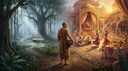
Viveka = judicious-seclusion
not just 'seclusion'
+1 – Viveka
all
+1.0 – viveka = judicious-seclusion, not just 'seclusion'
Almost everyone translates viveka as 'seclusion'.
But look at where the word comes from.
Its pre-Buddhist usage (viveka 1.1) and the Sanskrit dictionary (viveka 1.2) agree:
viveka was originally understood as discernment, the ability to tell one thing apart from another.
The Digital Pāḷi Dictionary (viveka 1.3) treats it as two words with two meanings for two contexts,
1. seclusion and 2. discernment,
even though it gives both the same root (vi + √vic, to sift apart).
My theory is that the Buddha intended discernment, as the word had always meant,
and augmented it with seclusion. Hence 'judicious-seclusion': seclusion that comes from discernment.
The augmentation makes a point.
In the Buddha's dispensation, a theoretical understanding that one should discern skillful from unskillful is not enough.
That understanding is sealed only when one is actually secluded from unskillful Dharmas, both mentally and physically,
because right view and discernment have done their work together with samādhi,
and have arrived at genuine behavior that reflects that understanding.
That is very different from blindly following the Buddha's injunction to physically seclude oneself from unskillful Dharmas.
The evidence follows: the word's history and dictionary meanings in sections 1.1 to 1.3,
suttas where context decides between 'discernment' and 'seclusion' in viveka 2,
and suttas where viveka is at work even though the word never appears in viveka 2.4.
Two short video clips show the difference.
Just 'seclusion': the body leaves, the desire comes along
He leaves the palace for the forest because he was told to, without having seen the drawbacks of sensual pleasures for himself.
Sitting alone, the pull of what he left behind returns, and he runs back to it.
Judicious-seclusion: secluded by discernment
He has seen through sensual pleasures for himself, so his seclusion is in the mind, not just the location.
When the temptations come to him in the forest, they pass by without moving him.
+1.1 – 'Viveka', pre-Buddhist meaning
all
+§1.1 – viveka = differentiation
Gabriel Sep '20 wrote
https://discourse.suttacentral.net/t/alternative-translation-for-viveka/17120/3?replies_to_post_number=16
The (current sanskrit) dictionary entries are misleading in that they mostly refer to post-Buddha literature.
There are not many pre-Buddha examples.
I could basically only find one example,
namely in Chand.
Up.
6.9.2:
"Now, take the bees, son.
They prepare the honey by gathering nectar from a variety of trees and by reducing that nectar to a homogeneous whole.
In that state the nectar from each different tree is not able to differentiate (na vivekaṃ labhante):
‘I am the nectar of that tree,’ and
‘I am the nectar of this tree.’
+1.2 – 'Viveka', Sanskrit dictionary
Primary meaning is ‘discrimination’.
Other meanings:
(1) true knowledge,
(2) discretion,
(3) right judgement,
(4) the faculty of distinguishing and classifying things according to their real properties’.
Wikipedia
Viveka (Sanskrit: विवेक, romanized: viveka) is a Sanskrit and
Pali term translated into English as discernment or discrimination.[1] According to Rao and Paranjpe,
viveka can be explained more fully as:
Sense of discrimination; wisdom; discrimination between the real and the unreal,
between the self and the non-self, between the permanent and
the impermanent; discriminative inquiry; right intuitive discrimination;
ever present discrimination between the transient and the permanent.[2]: 348
The Vivekachudamani is an eighth-century Sanskrit poem in dialogue form that addresses the development of viveka.
Within the Vedanta tradition, there is also a concept of vichara which is one type of viveka.
+1.3 – From Digital Pāḷi Dictionary
viveka 1
masc.
seclusion; solitude; detachment; disengagement.
[vi + √vic + *a]
viveka 2
masc.
discrimination; understanding; true knowledge.
[vi + √vic + *a]
+1.4 – viveka of first jhāna is the same viveka as in the 7 awakening factors
The first jhāna is 'judiciously-secluded from sensual pleasures, judiciously-secluded from unskillful Dharmas',
with rapture and pleasure 'born of judicious-seclusion' (viveka-jaṃ).
The same viveka appears in the refrain of every one of the seven awakening factors (7sb☀️):
each factor is developed relying on viveka, relying on dispassion, relying on cessation, and ripening as release.
Here is the first of the seven, from SN 46.1.3; the other six repeat the refrain word for word.
| Idha, bhikkhave, bhikkhu sati-sam-bojjh-aṅgaṁ bhāveti | It’s when a monk develops the awakening factor of remembering and applying Dharma, | |
| viveka-nissitaṁ | which relies on judicious-seclusion, | |
| virāga-nissitaṁ | dispassion, | |
| nirodha-nissitaṁ | and cessation, | |
| vossagga-pariṇāmiṁ; | and ripens as release [into Nirvana]. | |
Notice the company viveka keeps in that refrain.
Seclusion by itself does not lead to dispassion, to the cessation of suffering, or ripen as release into nirvana.
Prisoners are secluded.
Followers of a religion who are told that sex is a sin, and who try to seclude themselves from it, fight a losing battle.
They rely on suppression and repression, and lie to themselves that they are secluded from sex because it is sinful.
Desire held down by force is still desire, and that kind of seclusion lasts only as long as the force does.
What does lead to dispassion and cessation is judicious-seclusion: seclusion based on discernment and right view.
One understands what is skillful and what is unskillful, sees for oneself the drawbacks of sensual desire,
genuinely wants to give them up, and so secludes oneself from unskillful Dharmas.
Dispassion (virāga) then follows naturally, because one no longer wants what one has seen through.
Sections viveka 2.4.3 and viveka 2.4.4 show that discernment at work.
That is why the refrain needs judicious-seclusion, not just 'seclusion'.
❧
+2 – suttas (alphabetical) justifying different definitions of viveka
all
+2.1 – ‘seclusion’ doesn’t make sense, ‘discernment’ does
all
+§1.1 – AN 3.93 sutta title is 'pa-viveka'
AN 3.93 sutta title is 'pa-viveka'
+§1.2 – DN 33 viveka as 'seclusion' clearly doesn't fit here, in three types of wisdom section
DN 33 viveka as 'seclusion' clearly doesn't fit here,
in three types of wisdom section
| Tīṇāvudhāni— | Three weapons: | |
| sutāvudhaṃ, pavivekāvudhaṃ, paññāvudhaṃ. (44) | learning, seclusion, and wisdom. |
+§1.3 – KN Iti 38 viveka leads to vitakka thoughts discriminating between skillful and not
Iti 38 is especially noticeable
is a great example of viveka as 'discernment
'.
(link to sutta in pali + eng) ● KN Iti 38 Vitakka: thoughts
(brief synopsis)
Two thoughts occur to the Buddha.
1) Thoughts of safety, based on non ill will,
may all creatures not be harmed.
2) thoughts on seclusion-&-discernment such as
'what is skillful?','
what should be abandoned?'
relevant part: (modified sujato trans.)
| Pavivekārāmā, bhikkhave, viharatha pavivekaratā. | You too should relish seclusion and delight in it, | |
| Tesaṁ vo, bhikkhave, tumhākaṁ pavivekārāmānaṁ viharataṁ pavivekaratānaṁ eseva vitakko bahulaṁ samudācarissati: | then this thought will often occur to you: | |
| ‘kiṁ akusalaṁ, kiṁ appahīnaṁ, kiṁ pajahāmā’”ti. | ‘What is unskillful? What is not given up? What should I give up?’” | |
| Etamatthaṁ bhagavā avoca. Tatthetaṁ iti vuccati: | That is what the Buddha said. On this it is said: | |
Sujato translated viveka there as 'seclusion
',
and it does makes sense.
However, discrimination and discernment makes even more sense.
Think about it.
If you were relishing viveka (as seclusion) by going to a nice,
peaceful nature spot,
what kind of thoughts are you likely to have immediately?
Wow, being alone in this beautiful place is nice.
Peaceful.
Inspiring.
Relaxing.
Whereas if you were relishing viveka (as mental discernment,
sharply discriminating mind), what would be the natural thoughts that occur to you?
Exactly what KN Iti 38 says:
‘What is unskillful?
What is not given up?
What should I give up?’”
And if you followed up on those thoughts,
then that would tend to lead to seclusion (from unskillful Dharmas,
unskillful thoughts, etc.).
But if you had started with viveka as seclusion (rather than discernment),
that does not naturally lead to,"
Hmm.., let me investigate the nature of kusala and akusala and what should be abandoned."
+§1.4 – KN Snp 5.6 Dhotaka
Snp 5.6 Dhotaka
| “Anusāsa brahme karuṇāyamāno, | “Teach me, brahmin, out of compassion, | |
| Viveka-dhammaṁ yamahaṁ vijaññaṁ; | the dharma of judicious-seclusion (viveka ) so that I may understand. |
(… nothing to do with physical seclusion!
Viveka here is discrimination, judgement,
understanding, discernment…)
| … | … | |
| “Yaṁ kiñci sampajānāsi, | “Once you have understood that everything,” | |
| (dhotakāti bhagavā) | (replied the Buddha), | |
| Uddhaṁ adho tiriyañcāpi majjhe; | “you are aware of in the world— | |
| Etaṁ viditvā saṅgoti loke, | above, below, all round, between— | |
| Bhavābhavāya mākāsi taṇhan”ti. | is a snare, don’t crave for life after life.” |
+§1.5 – MN 3
❧
+2.2 – both 'discernment' and 'seclusion' apply together in conjunction
first jhāna formula 7 awakening factors formula: viveka nissitam,
viraga...
nirodha...
vossagga parinamim viveka not just
'seclusion',
but 'judicious seclusion': SN 16.4,
MN 4, AN 8.30
Snp 4.2: person trapped in cave is physically secluded,
but not mentally secluded.
very strong first jhāna context here,
contrasting sensual pleasures and viveka,
showing that viveka must include both discernment and mental seclusion from sensual pleasures and unskillful Dharmas.
SN 5.1: yena andhavanaṁ tenupasaṅkami vivekatthinī
(the nun) went to the Dark Forest seeking seclusion.
frankk: yes, definitely there is meaning of physical seclusion there.
But Māra talks about tempting the nun with sensual pleasure,
and the nun replies she is no longer tempted by sensual pleasures,
because she has seen through wisdom they are suffering.
So it’s not the physical seclusion of viveka that frees her from lust,
it’s the mental seclusion from discernment and wisdom understanding the nature of lust and sensual pleasures.
Therefore viveka here has to incorporate discernment and physical seclusion.
SN 9.1: In the “Viveka Sutta” a mendicant stuck on thoughts of the household life is urged to desire seclusion,
having entered the forest.
frankk: agree physical seclusion is part of the equation here,
but see reasoning for SN 5.1. viveka here is more importantly
focused on mental seclusion from defilments and the discernment required to do that.
+2.3 – 'seclusion' makes sense here, 'discernment' doesn't
According to sujato, these suttas have to mean
'seclusion'
Snp 4.7: A mendicant is urged to “train in seclusion” (Vivekaññeva sikkhetha),
alone.
frankk: disagree with sujato here.
Physical seclusion does not remove desire for sex.
It’s discernment + mental seclusion from defilelments.
See viveka 2.2 comments for Snp 4.2, this is also first jhāna context.
SN 5.1: yena andhavanaṁ tenupasaṅkami vivekatthinī
(the nun) went to the Dark Forest seeking seclusion.
frankk: yes, definitely there is meaning of physical seclusion there.
But Māra talks about tempting the nun with sensual pleasure,
and the nun replies she is no longer tempted by sensual pleasures,
because she has seen through wisdom they are suffering.
So it’s not the physical seclusion of viveka that frees her from lust,
it’s the mental seclusion from discernment and wisdom understanding the nature of lust and sensual pleasures.
Therefore viveka here has to incorporate discernment and physical seclusion.
SN 9.1: In the “Viveka Sutta” a mendicant stuck on thoughts of the household life is urged to desire seclusion,
having entered the forest.
frankk: agree physical seclusion is part of the equation here,
but see reasoning for SN 5.1. viveka here is more importantly
focused on mental seclusion from defilments and the discernment required to do that.
In the Vinaya, a monastic who lives in too-close company with others is urged to be “secluded”.
(Bhikkhuni pacittiya 36)
+2.4 – Implicit gloss of viveka
all
Unlike viveka 2.1, which explicitly contains the term viveka and then an explanation of the term,
here are some examples of suttas where viveka is glossed without explicitly using the term viveka,
but we know that is the term discussed because of context.
The excerpts below are only a few examples of implicit viveka glosses.
You can find many more on All sutta references to STED 4 jhānas,
which lists every occurrence of the STED four jhāna formula in AN, DN, MN and SN.
Look at what happens right before each occurrence.
The first jhāna formula opens with 'vivicc'eva kāmehi, vivicca akusalehi dhammehi',
'judiciously-secluded from sensual pleasures, judiciously-secluded from unskillful Dharmas',
and its rapture and pleasure are 'viveka-jaṃ', born of that judicious-seclusion.
What a sutta describes just before the formula often shows viveka at work:
the discernment that sees why sensual pleasures and unskillful Dharmas are a problem,
separates them from what is skillful, and lets them go.
Not every occurrence does this, but where one does, that passage is viveka spelled out in practice, even though the word itself never appears.
+§4.1 – Snp 5.12 seeing renunciation as security
Snp 5.12 Jatukaṇṇī: seeing renunciation as security.
All 16 disciples in Snp 5 start with 4 jhānas, as given explicitly,
and they're looking to break through to full enlightenment, seeking tips from the Buddha.
| “Kāmesu vinaya gedhaṁ, | “With sensual desire dispelled,” | |
| (jatukaṇṇīti bhagavā) | (replied the Buddha), | |
| Nekkhammaṁ daṭṭhu khemato; | “seeing renunciation as sanctuary, | |
| Ug-gahītaṁ nirattaṁ vā, | don’t be taking up or putting down | |
| Mā te vijjittha kiñcanaṁ. | anything at all. | |
+§4.2 – MN 19 seeing danger in unskillful thoughts, no danger in skillful ones
MN 19 is one of the most detailed suttas on working toward first jhāna.
Before his awakening, the Bodhisatta sorts his thoughts into two kinds:
unskillful (sensuality, ill will, harmfulness) and skillful (renunciation, non-ill will, harmlessness).
Then, as each thought arises, he examines it ('I discerned', pajānāmi)
and sees for himself where it leads.
An unskillful thought leads to affliction, obstructs discernment and does not lead to nirvana,
so he sees danger in it and abandons it.
A skillful thought in accordance with Dharma leads to none of that,
so he sees no danger in it, and could think it all night and all day.
The word viveka never appears, but this is exactly what it describes:
the discernment that separates what is dangerous from what is safe.
What keeps the mind on track toward first jhāna is that discernment,
not a blind adherence to going off into physical seclusion.
Compare 'seeing renunciation as sanctuary' in viveka 2.4.1:
below, the Bodhisatta likewise sees 'the reward of renunciation' in skillful thoughts.
MN 19.2.1 unskillful thought: discerning its danger
| “tassa mayhaṃ, bhikkhave, | “And as I | |
| evaṃ appamattassa ātāpino pahitattassa viharato | remained thus assiduous, ardent, & resolute, | |
| uppajjati kāma-vitakko. | thinking imbued with sensuality arose in me. | |
| so evaṃ pajānāmi — ‘uppanno kho me ayaṃ kāma-vitakko. | I discerned that ‘Thinking imbued with sensuality has arisen in me; | |
| so ca kho attabyābādhāyapi saṃvattati, | and that leads to my own affliction | |
| parabyābādhāyapi saṃvattati, | or to the affliction of others | |
| ubhayabyābādhāyapi saṃvattati, | or to the affliction of both. | |
| paññā-nirodhiko | It obstructs discernment, | |
| vighātapakkhiko | promotes vexation, | |
| a-nibbāna-saṃvattaniko’ . | & does not lead to nirvana.’ | |
MN 19.2.11 conclusion of the cowherd simile: danger in the unskillful, the reward of renunciation in the skillful
| evameva kho ahaṃ, bhikkhave, addasaṃ | In the same way, monks, I foresaw | |
| a-kusalānaṃ dhammānaṃ | (in) un-skillful Dharmas | |
| ādīnavaṃ okāraṃ saṃ-kilesaṃ, | drawbacks, degradation, & defilement, | |
| kusalānaṃ dhammānaṃ | (and I foresaw in) skillful Dharmas | |
| nekkhamme ānisaṃsaṃ vodāna-pakkhaṃ. | renunciation (related) awards, & {promoting}-cleansing. | |
MN 19.3.1 skillful thought: discerning that it is safe
| “tassa mayhaṃ, bhikkhave, | “And as I, | |
| evaṃ appamattassa ātāpino pahitattassa viharato | thusly assiduous, ardent, resolute (I) remained, | |
| uppajjati nekkhamma-vitakko. | (there) arose renunciation-thinking. | |
| so evaṃ pajānāmi — | This I discerned - | |
| ‘uppanno kho me ayaṃ nekkhamma-vitakko. | ‘arisen in me, this renunciation-thinking. | |
| so ca kho nev-atta-byābādhāya saṃvattati, | and that leads neither to my own affliction, | |
| na para-byābādhāya saṃvattati, | nor to the affliction of others, | |
| na ubhaya-byābādhāya saṃvattati, | nor to the affliction of both. | |
| paññā-vuddhiko | discernment (it) fosters, | |
| A-vighāta-pakkhiko | lack (of) vexation (it) promotes, | |
| nibbāna-saṃvattaniko’. | (to) Nirvana (it) leads. | |
| … | … | |
| rattiṃ cepi naṃ, bhikkhave, | even for a night | |
| anu-vitakkeyyaṃ anu-vicāreyyaṃ, | (if I should) excessively-think (and) excessively-ponder, | |
| neva tatonidānaṃ bhayaṃ samanupassāmi. | I do not envision any danger that would come from it, | |
❧
+§4.3 – MN 13 discerning gratification, drawback and escape for sensual pleasures and material form
MN 13 asks the same three questions about three things:
what is the gratification, the drawback and the escape when it comes to sensual pleasures,
material form (rūpa), and sensations (vedanā)?
For sensations, the gratification is the four jhānas.
In each jhāna a monk does not intend to afflict himself, others or both,
and feels only sensations that cause no affliction.
Freedom from affliction, the Buddha says, is the highest gratification of sensations.
The first jhāna there opens with the formula discussed in viveka 2.4:
'vivicc'eva kāmehi, vivicca akusalehi dhammehi', judiciously-secluded from sensual pleasures and unskillful Dharmas.
So how does one come to know which pleasures afflict and which do not?
Through viveka, which the two sections before it show in action, even though the word itself is never used.
For sensual pleasures, and then for material form, the practitioner discerns the gratification,
sees the drawback clearly, and understands the escape.
That discernment is what 'judiciously-secluded from sensual pleasures and unskillful Dharmas' rests on.
The section on material form is a kind of bonus feature.
Its example is a girl of fifteen or sixteen, at the height of her beauty and desirability,
and it amounts to a close study of the most insidious and addictive of the five cords of sensual pleasure:
the desire for sex and romance, for an illusory, desirable romantic partner.
The drawback is shown by seeing that same girl at eighty, then gravely ill,
then as a corpse decaying in a charnel ground:
the impermanence and suffering that always attend that illusory beauty (subha).
That clear seeing is implicit viveka at work.
It discriminates: it discerns the illusory beauty from the impermanence and suffering that lie beneath it,
and from that discernment comes the escape, removing and giving up desire and greed for it.
The seclusion that results is grounded in wisdom,
not in a blind injunction to physically seclude oneself because the Buddha said to.
MN 13.1 sensual pleasures: gratification … escape
| Ko ca, bhikkhave, kāmānaṃ assādo? | And what is the gratification of sensual pleasures? | |
| Pañcime, bhikkhave, kāmaguṇā. | There are these five kinds of sensual stimulation. | |
| Yaṃ kho, bhikkhave, ime pañca kāmaguṇe paṭicca uppajjati sukhaṃ somanassaṃ—ayaṃ kāmānaṃ assādo. | The pleasure and happiness that arise from these five kinds of sensual stimulation: this is the gratification of sensual pleasures. | |
| … | … | |
| Kiñca, bhikkhave, kāmānaṃ nissaraṇaṃ? | And what is the escape from sensual pleasures? | |
| Yo kho, bhikkhave, kāmesu chandarāgavinayo chandarāgappahānaṃ—idaṃ kāmānaṃ nissaraṇaṃ. | Removing and giving up desire and greed for sensual pleasures: this is the escape from sensual pleasures. | |
MN 13.2 material form: the girl at the height of her beauty, and the same girl at eighty
| Ko ca, bhikkhave, rūpānaṃ assādo? | And what is the gratification of material-form? | |
| Seyyathāpi, bhikkhave, khattiyakaññā vā brāhmaṇakaññā vā gahapatikaññā vā pannarasavassuddesikā vā soḷasavassuddesikā vā, nātidīghā nātirassā nātikisā nātithūlā nātikāḷī nāccodātā paramā sā, bhikkhave, tasmiṃ samaye subhā vaṇṇanibhāti? | Suppose there was a girl of the brahmins, warrior-nobles, or householders in her fifteenth or sixteenth year, neither too tall nor too short, neither too thin nor too fat, neither too dark nor too fair. Is she not at the height of her beauty and prettiness?” | |
| ‘Evaṃ, bhante’. | “Yes, sir.” | |
| Yaṃ kho, bhikkhave, subhaṃ vaṇṇanibhaṃ paṭicca uppajjati sukhaṃ somanassaṃ— | “The pleasure and happiness that arise from this beauty and prettiness | |
| ayaṃ rūpānaṃ assādo. | is the gratification of material-form. | |
| … | … | |
| Ko ca, bhikkhave, rūpānaṃ ādīnavo? | And what is the drawback of material-form? | |
| Idha, bhikkhave, tameva bhaginiṃ passeyya aparena samayena āsītikaṃ vā nāvutikaṃ vā vassasatikaṃ vā jātiyā, jiṇṇaṃ gopānasivaṅkaṃ bhoggaṃ daṇḍaparāyanaṃ pavedhamānaṃ gacchantiṃ āturaṃ gatayobbanaṃ khaṇḍadantaṃ palitakesaṃ, vilūnaṃ khalitasiraṃ valinaṃ tilakāhatagattaṃ. | Suppose that some time later you were to see that same sister—eighty, ninety, or a hundred years old—bent double, crooked, leaning on a staff, trembling as they walk, ailing, past their prime, with teeth broken, hair grey and scanty or bald, skin wrinkled, and limbs blotchy. | |
| Taṃ kiṃ maññatha, bhikkhave, | What do you think, monks? | |
| yā purimā subhā vaṇṇanibhā sā antarahitā, ādīnavo pātubhūtoti? | Has not that former beauty vanished and the drawback become clear?” | |
| ‘Evaṃ, bhante’. | “Yes, sir.” | |
| Ayampi, bhikkhave, rūpānaṃ ādīnavo. | "This is the drawback of material-form. | |
| … | … | |
| Kiñca, bhikkhave, rūpānaṃ nissaraṇaṃ? | And what is the escape from material-form? | |
| Yo, bhikkhave, rūpesu chandarāgavinayo chandarāgappahānaṃ—idaṃ rūpānaṃ nissaraṇaṃ. | Removing and giving up desire and greed for material-form: this is the escape from material-form. | |
MN 13.3.1 sensations: the four jhānas, free from affliction
| Ko ca, bhikkhave, vedanānaṃ assādo? | And what is the gratification of sensations? | |
| Idha, bhikkhave, bhikkhu vivicceva kāmehi vivicca akusalehi dhammehi savitakkaṃ savicāraṃ vivekajaṃ pītisukhaṃ paṭhamaṃ jhānaṃ upasampajja viharati. | It’s when a monk, quite secluded from sensual pleasures, secluded from unskillful Dharmas, enters and remains in the first jhāna, which has the mental-joy and pleasure born of seclusion, while directing-thought and evaluation. | |
| Yasmiṃ samaye, bhikkhave, bhikkhu vivicceva kāmehi vivicca akusalehi dhammehi savitakkaṃ savicāraṃ vivekajaṃ pītisukhaṃ paṭhamaṃ jhānaṃ upasampajja viharati, neva tasmiṃ samaye attabyābādhāyapi ceteti, na parabyābādhāyapi ceteti, na ubhayabyābādhāyapi ceteti; | At that time a monk doesn’t intend to hurt themselves, hurt others, or hurt both; | |
| abyābajjhaṃyeva tasmiṃ samaye vedanaṃ vedeti. | they feel only sensations that are not hurtful. | |
| Abyābajjhaparamāhaṃ, bhikkhave, vedanānaṃ assādaṃ vadāmi. | Freedom from being hurt is the ultimate gratification of sensations, I say. | |
| … | … | |
| Puna caparaṃ, bhikkhave, bhikkhu vitakkavicārānaṃ vūpasamā ajjhattaṃ sampasādanaṃ cetaso ekodibhāvaṃ avitakkaṃ avicāraṃ samādhijaṃ pītisukhaṃ dutiyaṃ jhānaṃ upasampajja viharati … pe … | Furthermore, a monk enters and remains in the second jhāna … | |
| yasmiṃ samaye, bhikkhave, bhikkhu pītiyā ca virāgā, upekkhako ca viharati, sato ca sampajāno sukhañca kāyena paṭisaṃvedeti yaṃ taṃ ariyā ācikkhanti: ‘upekkhako satimā sukhavihārī’ti tatiyaṃ jhānaṃ upasampajja viharati … pe … | third jhāna … | |
| yasmiṃ samaye, bhikkhave, bhikkhu sukhassa ca pahānā dukkhassa ca pahānā pubbeva somanassadomanassānaṃ atthaṅgamā adukkhamasukhaṃ upekkhāsatipārisuddhiṃ catutthaṃ jhānaṃ upasampajja viharati, neva tasmiṃ samaye attabyābādhāyapi ceteti, na parabyābādhāyapi ceteti, na ubhayabyābādhāyapi ceteti; | fourth jhāna. At that time a monk doesn’t intend to hurt themselves, hurt others, or hurt both; | |
| abyābajjhaṃyeva tasmiṃ samaye vedanaṃ vedeti. | they feel only sensations that are not hurtful. | |
| Abyābajjhaparamāhaṃ, bhikkhave, vedanānaṃ assādaṃ vadāmi. | Freedom from being hurt is the ultimate gratification of sensations, I say. | |
❧
+§4.4 – MN 14 discerning the danger in sensual pleasures: jhāna's pleasure over a king's
MN 14 gives the reason a noble disciple turns away from sensual pleasures,
and the reason is discernment, not obedience.
First, seeing the danger is not enough by itself.
A noble disciple may have clearly seen with right wisdom that sensual pleasures give little gratification and much suffering,
and still return to them.
What makes the turning stable is experiencing something better:
the rapture and pleasure 'apart from sensual pleasures, apart from unskillful Dharmas'
(aññatreva kāmehi aññatra akusalehi dhammehi pītisukhaṃ).
That is the first jhāna formula's 'vivicc'eva kāmehi, vivicca akusalehi dhammehi' in other words,
and vivicca is the verb that viveka comes from.
The disciple compares two pleasures, discerns which is coarse and dangerous and which is refined and safe,
and chooses.
Then the sutta makes the comparison concrete.
King Bimbisāra enjoys the highest sensual pleasures a mortal can have,
yet he cannot experience perfect happiness for even one day and night without moving his body or speaking.
The Buddha, in jhāna, can do it for seven.
Even a king's pleasures are coarse next to the pleasure of jhāna.
Nowhere does the Buddha simply order anyone off into seclusion.
He shows the danger, shows the better pleasure, and leaves the disciple to discern the difference.
Physical seclusion may follow from that choice, but it is the discernment, viveka, that makes it.
MN 14.1 seeing the danger is not enough until one finds a better pleasure
| ‘Appassādā kāmā bahudukkhā bahupāyāsā, ādīnavo ettha bhiyyo’ti— | Sensual pleasures give little gratification and much suffering and distress, and they are all the more full of drawbacks. | |
| iti cepi, mahānāma, ariyasāvakassa yathābhūtaṃ sammappaññāya sudiṭṭhaṃ hoti, so ca aññatreva kāmehi aññatra akusalehi dhammehi pītisukhaṃ nādhigacchati, aññaṃ vā tato santataraṃ; | Even though a noble-one's-disciple has clearly seen this with right wisdom, so long as they don’t achieve the mental-joy and pleasure that are apart from sensual pleasures and unskillful Dharmas, or something even more peaceful than that, | |
| atha kho so neva tāva anāvaṭṭī kāmesu hoti. | they might still return to sensual pleasures. | |
| Yato ca kho, mahānāma, ariyasāvakassa ‘appassādā kāmā bahudukkhā bahupāyāsā, ādīnavo ettha bhiyyo’ti—evametaṃ yathābhūtaṃ sammappaññāya sudiṭṭhaṃ hoti, so ca aññatreva kāmehi aññatra akusalehi dhammehi pītisukhaṃ adhigacchati aññaṃ vā tato santataraṃ; | But when they do achieve that mental-joy and pleasure, or something more peaceful than that, | |
| atha kho so anāvaṭṭī kāmesu hoti. | they will not return to sensual pleasures. | |
MN 14.5 who lives in greater pleasure, King Bimbisāra or the Buddha?
| Taṃ kiṃ maññathāvuso nigaṇṭhā, pahoti rājā māgadho seniyo bimbisāro, | What do you think, reverends? | |
| aniñjamāno kāyena, abhāsamāno vācaṃ, satta rattindivāni ekantasukhaṃ paṭisaṃvedī viharitun’ti? | Is King Bimbisāra capable of experiencing perfect happiness for seven days and nights without moving his body or speaking?’ | |
| ‘No hidaṃ, āvuso’. | ‘No he is not, reverend.’ | |
| … | … | |
| ‘Ahaṃ kho, āvuso nigaṇṭhā, pahomi aniñjamāno kāyena, abhāsamāno vācaṃ, ekaṃ rattindivaṃ ekantasukhaṃ paṭisaṃvedī viharituṃ. | ‘But I am capable of experiencing perfect happiness for one day and night without moving my body or speaking. | |
| Ahaṃ kho, āvuso nigaṇṭhā, pahomi aniñjamāno kāyena, abhāsamāno vācaṃ, dve rattindivāni … | I am capable of experiencing perfect happiness for two days … | |
| tīṇi rattindivāni … | three days … | |
| cattāri rattindivāni … | four days … | |
| pañca rattindivāni … | five days … | |
| cha rattindivāni … | six days … | |
| satta rattindivāni ekantasukhaṃ paṭisaṃvedī viharituṃ. | seven days. | |
| Taṃ kiṃ maññathāvuso nigaṇṭhā, evaṃ sante ko sukhavihāritaro rājā vā māgadho seniyo bimbisāro ahaṃ vā’ti? | What do you think, reverends? This being so, who lives in greater pleasure, King Bimbisāra or I?’ | |
| ‘Evaṃ sante āyasmāva gotamo sukhavihāritaro raññā māgadhena seniyena bimbisārenā’”ti. | ‘This being so, Venerable Gotama lives in greater pleasure than King Bimbisāra.’” | |
❧
+§4.5 – AN 6.73 'First jhāna': viveka from the five hindrances
AN 6.73 is titled 'First jhāna' (paṭhama-jhāna),
and its whole subject is what must be given up before one can enter it.
Five of the six things are the five hindrances:
desire for sensual pleasures, ill will, dullness and drowsiness, restlessness and remorse, and doubt.
The sixth is not having seen the drawbacks of sensual pleasures, as they actually are, with right discernment (sammappaññā).
That blindness has to be given up too.
So 'vivicc'eva kāmehi, vivicca akusalehi dhammehi', the opening of the first jhāna formula,
is unpacked here as two things working together:
separation from the five hindrances, and the discernment that sees why they must go.
Seclusion from the hindrances, grounded in seeing their danger clearly: that is viveka, though the word is never used.
| “Cha, bhikkhave, dhamme appahāya abhabbo paṭhamaṃ jhānaṃ upasampajja viharituṃ. | “monks, without giving up these [bad] dharmas you can’t enter and remain in the first jhāna. | |
| Katame cha? | What six? | |
| Kāma-c-chandaṃ, | 1. Desire for sensual pleasures, | |
| byāpādaṃ, | 2. ill will, | |
| thina-middhaṃ, | 3. dullness and drowsiness, | |
| uddhacca-kukkuccaṃ, | 4. restlessness and remorse, | |
| vicikicchaṃ, | 5. doubt, | |
| kāmesu kho panassa ādīnavo | 6. And the drawbacks of sensual pleasures | |
| na yathā-bhūtaṃ samma-p-paññāya su-diṭṭho hoti. | have not been {well-seen}, as-they-actually-are, (with) right-discernment. | |
| Ime kho, bhikkhave, cha dhamme appahāya abhabbo paṭhamaṃ jhānaṃ upasampajja viharituṃ. | Without giving up these six [bad] dharmas you can’t enter and remain in the first jhāna. | |
| … | … | |
| Ime kho, bhikkhave, cha dhamme pahāya bhabbo | After giving up these six [bad] dharmas | |
| paṭhamaṃ jhānaṃ upasampajja viharitun”ti. | you can enter and remain in the first jhāna.” | |
+§4.6 – AN 6.74 'First jhāna': viveka from the three wrong resolves
AN 6.74 has the same title, 'First jhāna', and the same structure,
but frames what must be given up differently:
thoughts and perceptions of sensuality, ill will and harming.
These are the three wrong resolves,
the opposites of the three right resolves of the noble eightfold path: renunciation, non-ill will and harmlessness.
Giving them up takes exactly the discernment shown in viveka 2.4.2 (MN 19):
recognizing each thought as it arises, seeing where it leads,
and letting go of the ones that lead to affliction.
Two suttas with the same title give two framings of what the first jhāna is secluded from,
and in both, the seclusion depends on discernment: viveka.
| “Cha, bhikkhave, dhamme appahāya abhabbo paṭhamaṃ jhānaṃ upasampajja viharituṃ. | “monks, without giving up these six [bad]-dharmas you can’t enter and remain in the first jhāna. | |
| Katame cha? | What six? | |
| Kāma-vitakkaṃ, | 1. sensual-pleasure-thought, | |
| byāpāda-vitakkaṃ, | 2. ill-will-thought, | |
| vihiṃsā-vitakkaṃ, | 3. harming-thought, | |
| kāma-saññaṃ, | 4. sensual-pleasure-perception, | |
| byāpāda-saññaṃ, | 5. ill-will-perception, | |
| vihiṃsā-saññaṃ— | 6. harming-perception, | |
| ime kho, bhikkhave, cha dhamme appahāya abhabbo paṭhamaṃ jhānaṃ upasampajja viharituṃ. | Without giving up these six [bad]-dharmas you can’t enter and remain in the first jhāna. | |
| … | … | |
| ime kho, bhikkhave, cha dhamme pahāya bhabbo paṭhamaṃ jhānaṃ upasampajja viharitun”ti. | After giving up these six [bad]-dharmas you can enter and remain in the first jhāna.” | |
❧
+10 – misc.
Forum discussion sujato lists some suttas where viveka must be seclusion, gabriel lists one where seclusion doesn't fit 🔗sutta central disc. viveka
+11 – excerpt: Keren Arbel's book
excerpt: Keren Arbel's book on Early Buddhist Meditation on
'viveka'
III Viveka
The Pāli English Dictionary, and consequently most translators,
translates viveka as ‘detachment’, ‘separation’ and ‘seclusion’.34
Buddhaghosa explains that viveka means either the disappearance of the hindrances,
or that the jhāna factors are secluded from the hindrances.35 However,
according to the Sanskrit dictionary,
the first meaning of viveka is ‘discrimination’.36 The Sanskrit
dictionary further describes viveka as ‘(1) true knowledge,
(2) discretion, (3) right judgement,
and (4) the faculty of distinguishing and classifying things according to their real properties’.
These meanings of the term viveka seem to assist in interpreting this term in the Buddhist context as well,
since viveka has no clear definition in the Nikāyas and it seems to be used in different ways.
I suggest that the use of vivicca and viveka,
in the description of the first jhāna (both from the verb vi + vic),
plays with both meanings of the verb; namely,
its meaning as discernment and the consequent ‘seclusion’ and letting go.
Although there are times that the Buddha changes the meaning of a Sanskrit term completely,
sometimes he does not; for example,
he retains the meanings of terms such as dukkha,
sukha and so on.
I believe that the term viveka retained in the Nikāyas also its Sanskrit meaning as ‘discernment’.
This interpretation is supported by a description from SN V 301. In this sutta,
the quality of viveka is developed by the practice of the four satipaṭṭhānas.
Anuruddha declares that
[i]ndeed friends, when that bhikkhu is developing and cultivating the four establishings of mindfulness,
it is impossible that he will give up the training and return to the lower life.
For what reason?
Because for a long time his mind has slanted,
sloped, and inclined towards viveka.
37
Here Anuruddha clearly states that by seeing clearly (anupassati) body,
feeling, mind and dhammas (the four focuses of mindfulness) the practitioner develops the quality of viveka.
In this context, it seems that viveka is a quality connected to clear seeing,
to discernment of the nature of experience.38 We also see here
that the jhānas follow the development of the four satipaṭṭhānas
and not some practice of onepointed concentration.39 The preceding
also indicates that the development of the four satipaṭṭhānas inclines the mind towards discerning
the true nature of phenomena; discernment that allows the mind to see the disadvantage of sense pleasures and,
hence, let go of the desire for them and other unwholesome states (such as clinging and aversion,
for example).That is, the cultivation of the four satipaṭṭhānas
develops the ability to recognize and discern the mechanism of
mind and body for seeing clearly into the nature of the various physical and mental phenomena.
I would suggest that this discernment of phenomena (dhammas),
and the consequent detachment (vivicca) is indicated by the term viveka,
the same viveka from which pīti and sukha of the first jhāna
are born.40 Discerning the nature of phenomena enables the mind to change its inclinations; that is,
it allows us to let go of our basic unwholesome tendencies and desires,
which are based on a mistaken perception of reality.
This letting go (vossagga) is the proximate cause for entering the first jhāna.
❧